Daddy Come And Get Me

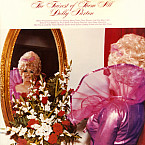
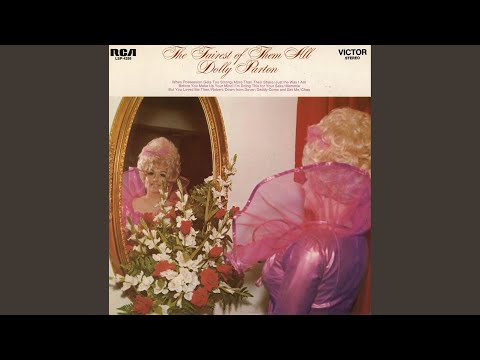
Album: The Fairest Of Them All (1969)
Play Video

Songfacts®:

  • In this harrowing track, a woman's husband checks her into a mental institution after his infidelity emotionally destroys her. With nowhere to turn, she pleads for her father to come and get her. Dolly Parton wrote the song with her aunt Dorothy Jo Hope about real women they knew who went through the same experience, including one who was locked up by her cheating husband simply to "get her out of the way so he could go on with his life."

    Dolly noted in her 2020 book, Songteller: "We thought, how sad it must be to have to reach out to your father to say, 'I'm in this mental institution looking out through these iron bars. How could he put me in here? How could he go that far?' She couldn't call on her husband, obviously. You can always count on your parents, although in the song, you can't tell if the daddy will rescue her or not."
  • When she spoke with the podcast Dolly Parton's America in the episode "Sad Ass Songs," Dolly revealed the primary inspiration came from her own family, where her aunt (she didn't specify which aunt) had a nervous breakdown after being cheated on by her husband, who subsequently had her committed. "She was begging her daddy, trying to get a message to her daddy to come and get her out of the insane asylum," she said.
  • The song's story was a sad reality for many women in the Victorian Era all the way through to the mid-20th century, who were wrongfully institutionalized by male family members for being "hysterical" or breaking social norms. Some were deemed insane due to taking medicine to prevent conception, masturbating, causing domestic trouble, having overt political opinions, going through menopause, nagging, or reading novels. In 1860, Elizabeth Packard was famously confined to an asylum by her pastor husband for disagreeing with his religious beliefs and his views on child rearing and finances. After three years, a jury trial swiftly proved her sanity and she went on to become an advocate for women's rights through her Anti-Insane Asylum Society.
  • This was the only single released from her fifth solo album, The Fairest Of Them All. It peaked at #40 on the Country chart.
  • The album is also known for another sad story song: "Down From Dover."
  • Between her solo output and her duet albums with Porter Wagoner, Dolly was receiving critical acclaim for her vocal prowess and songwriting skills, but it would be a few more years before she really broke through as a solo artist with her first #1 single, "Joshua," in 1971 a pair of chart-toppers in 1974: "Jolene" and "I Will Always Love You."

Comments

Be the first to comment...

Editor's Picks

Christmas Songs

Christmas SongsFact or Fiction

Rudolf, Bob Dylan and the Singing Dogs all show up in this Fact or Fiction for seasonal favorites.

Rickie Lee Jones

Rickie Lee JonesSongwriter Interviews

Rickie Lee Jones on songwriting, social media, and how she's handling Trump.

80s Video Director Jay Dubin

80s Video Director Jay DubinSong Writing

Billy Joel and Hall & Oates hated making videos, so they chose a director with similar contempt for the medium. That was Jay Dubin, and he has a lot to say on the subject.

The Girl in That Song

The Girl in That SongFact or Fiction

Billie Jean, Delilah, Sara, Laura and Sharona - do you know who the girls in the songs really are?

Steely Dan

Steely DanFact or Fiction

Did they really trade their guitarist to The Doobie Brothers? Are they named after something naughty? And what's up with the band name?

Jonathan Cain of Journey

Jonathan Cain of JourneySongwriter Interviews

Cain talks about the divine inspirations for "Don't Stop Believin'" and "Faithfully."