B's On The Table
by Drake (featuring 21 Savage)

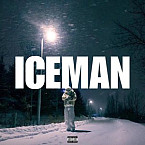
Album: Iceman (2026)
Charted: 12
Play Video

Songfacts®:

  • "B's On The Table" continues Drake's long-running creative partnership with 21 Savage, following previous collaborations like "Rich Flex," "Knife Talk," and "Sneakin." This time, though, 21 Savage plays a deliberately restrained role, handling the hypnotic hook instead of delivering a full guest verse, leaving Drake with the bulk of the runtime.
  • The title's "B's" stand for billions, not millions, a subtle but important distinction in Drake's world. Most rappers still brag about "M's"; Drake has apparently moved on to a tax bracket where the conversations require more lawyers. The repeated phrase "B's on the table" works both as literal shorthand for billion-dollar negotiations and as a broader symbol of leverage, influence, and the kind of private discussions that happen in rooms ordinary people never see unless they're carrying sparkling water or fixing the Wi-Fi.
  • The song arrived during a particularly turbulent chapter in Drake's public life, following his lawsuit against Universal Music Group over what he described as the spread of a "false and malicious narrative" portraying him as a pedophile. The line that drew the most attention was:

    I'm fighting the man, not suing the rapper, you boys is not listening

    With that, Drake directly separates his legal dispute from his feud with Kendrick Lamar, clarifying that his lawsuit targets UMG and the corporate machinery of the music industry, not Kendrick as an individual.
  • London Cyr, O Lil Angel, Rogét Chahayed, Dylan Hyde, Jeek and B4U produced "B's On The Table," building it on dark, minimalist trap, sharp percussion, cold synth layers, and bass-heavy drops.

    Rogét Chahayed is a notable name in the credits. A highly sought-after Los Angeles-based producer and musician, his background in classical and jazz music often brings a sense of melodic sophistication to trap-influenced records. His resumé includes Travis Scott's "Sicko Mode," Drake's "Laugh Now Cry Later," Doja Cat's "Kiss Me More" and Jack Harlow's "First Class."
  • Sitting at track 10 on the 18-track Iceman album, "B's On The Table" highlights the album's cold, strategic persona: Drake as a man not rattled by controversy but recalibrating, with billions on the table and receipts filed away.
  • The music video follows a Catwoman-inspired figure moving through Toronto's iconic CN Tower, while Drake appears throughout in a series of performance and dance scenes. The visuals match the track's dark, luxurious atmosphere. It's one of eight videos that director Theo Skudra helmed for the album.
  • "B's on the Table" originated in a summer 2025 session between Rogét Chahayed and Canadian producer London Cyr. The pair built an early version of the beat with bright, slightly theatrical synth horns.

    The track took on a far more complicated life once Drake became involved. "I heard Drake really liked the beat and was doing something to it," Chahayed recalled to Billboard. "I thought maybe it didn't make the cut until London hit me like, 'Drake wants that same exact horn sound we did on a newer beat he's doing.' He wanted the exact same sound and I forgot the sound."

    What followed was a prolonged and slightly obsessive hunt through digital brass patches. Chahayed and his engineer reportedly spent days combing through every synth horn they could find, trying to recreate something that now existed more vividly in memory than in any software folder. "I started to get tendonitis," he said. Even bringing in a dedicated sound designer to replicate the tone failed to fully satisfy the brief.

    The challenge didn't end there. B4u told Chahayed that Drake wanted a more organic horn sound, leading to a cascade of revisions. "He had me sending 30 different versions of the horns you hear on the second half," Chahayed explained. "That's my part on the song. I'd get hit up at 1 a.m., 6 a.m. and 10 a.m., and I'd run home and try to finesse it."

    Chahayed described the process as emblematic of how Iceman came together: collaborative, fragmented, and constantly evolving. "This whole album was a team effort," he said. "Communication is important. I knew 21 Savage was on it, but I didn't know what it sounded like. They had just sent me the instrumental and a placeholder in the second half where the horns go. That's the real rap motto, you got to be on call."

Comments

Be the first to comment...

Editor's Picks

Joe Jackson

Joe JacksonSongwriter Interviews

Joe talks about the challenges of of making a Duke Ellington tribute album, and tells the stories behind some of his hits.
Scott Stapp

Scott StappSongwriter Interviews

The Creed lead singer reveals the "ego and self-fulfillment" he now sees in one of the band's biggest hits.
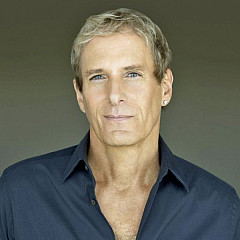
Michael Bolton

Michael BoltonSongwriter Interviews

Into the vaults for this talk with Bolton from the '80s when he was a focused on writing songs for other artists.
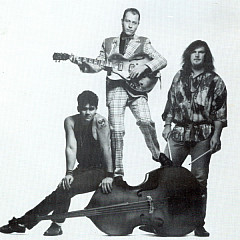
Reverend Horton Heat

Reverend Horton HeatSongwriter Interviews

The Reverend rants on psychobilly and the egghead academics he bashes in one of his more popular songs.
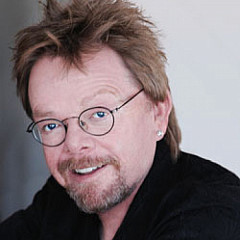
Paul Williams

Paul WilliamsSongwriter Interviews

He's a singer and an actor, but as a songwriter Paul helped make Kermit a cultured frog, turned a bank commercial into a huge hit and made love both "exciting and new" and "soft as an easy chair."
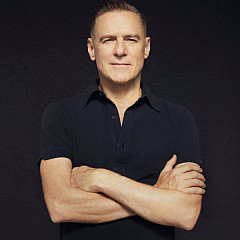
Bryan Adams

Bryan AdamsSongwriter Interviews

What's the deal with "Summer of '69"? Bryan explains what the song is really about, and shares more of his songwriting insights.