Make Them Cry

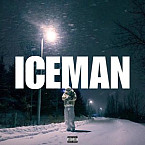
Album: Iceman (2026)
Play Video

Songfacts®:

  • "Make Them Cry" opens Drake's ninth album, Iceman. The track plays as a slow, methodical dismantling of his own mythology; less "started from the bottom," more "not entirely sure where the bottom is anymore."
  • Five distinct emotional currents run through the track:

    (1) Right from the outset, Drake flips the expected family dynamic on its head.

    I have to father my mother and treat my son's grandfather like my older brother

    Drake positions himself as the caretaker of his own parents rather than the one being supported.

    (2) The long shadow of his feud with Kendrick Lamar hangs over the song.

    What died back in 2024 was a big piece

    Rather than sounding triumphant, Drake describes a kind of identity fog ("this is me, but it isn't me") as if the battle left him less victorious than slightly misplaced.

    (3) Romantic relationships don't fare much better under inspection. Drake admits to engineering dependency in relationships through luxury gifts and paid rent, only to be cheated on at an apartment he provided.

    (4) He lists a cascade of ongoing fights: with his label, the major labels, radio stations, and fake fans.

    (5) Drake ends the song with the revelation that his father, Dennis Graham, is battling cancer.
  • Drake references various people throughout the track:

    (1) His family:

    I'm an only child, no one could've made another
    I have to father my mother and treat my son's grandfather like my older brother


    Drake's father Dennis Graham divorced Drake's mother Sandi Graham when he was 5 years old. Drake maps a family hierarchy that has collapsed inward: the only child who had no one to rely on has become the sole adult in the room, mothering his mother, brothering his father, and navigating fatherhood himself without ever having had a stable model for any of it.

    In the song's emotional climax: "My dad got cancer right now, we battlin' stages," Drake publicly reveals his father's cancer diagnosis. The lyric prompted an immediate public response: the day after Iceman dropped, Dennis Graham told TMZ he had indeed battled lung cancer but had since received news that it had disappeared. "I'm okay now. I'm wonderful," he said, calling his recovery a miracle, suggesting Drake wrote the line during the height of the diagnosis, capturing a fear that had since, thankfully, passed.

    (2) 40 (Noah Shebib): Drake's longtime producer and close confidant is referenced in a raw passage:

    Feel like 40 won't even listen to my words when he knows I'm in a load of trouble

    Drake feels 40 won't listen when he's in trouble and instead demands he "prove" his strength; 40's challenge ("Show your muscles. Prove to me that you're still as strong when it's only us two") cuts to Drake's deepest insecurity about whether his toughness is genuine or performative.

    (3) An unnamed brother: Drake describes a close friend or family member who sold a chain and lied that it had been snatched, calling it selling "the only thing that has ever mattered," a betrayal of shared loyalty and history.

    (4) His therapist

    Sometimes I only see myself in my therapist's glasses
    But I'm not taking it serious 'cause she's very attractive


    Drake uses humor as a deflection from emotional unpacking

    (5) BTS: Drake compares himself to the Korean pop supergroup

    I'm feeling like BTS 'cause it took the whole career for me to be so discovered

    Drake draws a parallel between his and BTS' delayed sense of recognition.

    (6) Taz's Angels:

    Random intrusive thought, but what happened to Taz's Angels?
    So many people that's not around from that generation


    Taz's Angels was a Toronto-originated collective of glamorous, curvy women founded by Taz VanAlstyne around 2010–2013. They became prominent in hip-hop circles through club appearances, music video work, and social media presence. Drake was regularly spotted socializing with the Angels at clubs and events, as were peers like Big Sean, Trey Songz, Amber Rose and Justin Bieber. He uses Taz's Angels as a shorthand for an entire vanished social world - the Toronto/hip-hop party scene of his come-up years - and mourning how many people from that era have simply disappeared from his life.
  • Musically, the track leans on a sparse, cinematic production from a team of five producers - Boi Yanel, Maneesh, Manny Manhattan, O Lil Angel, and Skeyez - giving Drake's densely packed verses room to breathe.
  • The second half of "Make Them Cry" samples "What Am I" (1979) by New York soul singer-songwriter Roger Ridley. The song appears on Ridley's sole album, Raindrops.

    Ridley was a street musician who busked on the streets of Santa Monica, California. His performances were among the earliest recordings made by the nonprofit organization Playing for Change, which aims to connect musicians worldwide.
  • "Make Them Cry" is one of four tracks on Iceman that follows a thematic naming pattern. The other three songs are:

    "Make Them Pay" (track 7
    "Make Them Remember" (track 14)
    "Make Them Know" (track 18: closer)
  • Iceman is Drake's ninth album and his first solo project in three years. The album finds him processing fractured relationships, public feuds, and the emotional cost of sustained fame and composure. "Make Them Cry" sets the tone for the project immediately. "Ice," repeated in the intro and outro, works as a conceptual bookend, but the song's raw vulnerability permanently reframes what "Iceman" means. The persona is not emotional coldness; it is the numbness required to survive what Drake confesses in the very first track.
  • Three months ahead of the album's release, Drake posted a screenshot of a chroma-key blue screen bearing the words "MAKE THEM CRY" on his Instagram Story. Fans identified it as a frame from Kiss the Girls: Make Them Cry (1979), a celebrated video artwork by American artist Dara Birnbaum (1946–2025), who died just months before. The piece deconstructs footage from the TV game show Hollywood Squares to expose how television manufactures and enforces gender stereotypes; its title drawn from Toto's 1979 song "Georgy Porgy." Drake's reference suggested the album's title carried a commentary on media manipulation alongside its personal meaning.

Comments

Be the first to comment...

Editor's Picks

Dr. John

Dr. JohnSongwriter Interviews

The good doctor shares some candid insights on recording with Phil Spector and The Black Keys.

Taylor Dayne

Taylor DayneSongwriter Interviews

Taylor talks about "The Machine" - the hits, the videos and Clive Davis.

Album Cover Inspirations

Album Cover InspirationsSong Writing

Some album art was at least "inspired" by others. A look at some very similar covers.

Dave Mason

Dave MasonSongwriter Interviews

Dave reveals the inspiration for "Feelin' Alright" and explains how the first song he ever wrote became the biggest hit for his band Traffic.

Real or Spinal Tap

Real or Spinal TapMusic Quiz

They sang about pink torpedoes and rocking you tonight tonight, but some real lyrics are just as ridiculous. See if you can tell which lyrics are real and which are Spinal Tap in this lyrics quiz.

Todd Rundgren

Todd RundgrenSongwriter Interviews

Todd Rundgren explains why he avoids "Hello It's Me," and what it was like producing Meat Loaf's Bat Out of Hell album.