Enigma Machine

Album: Dream Theater (2013)
Play Video

Songfacts®:

  • The second instrumental on Dream Theater following "False Awakening Suite," they were the first vocal-less tracks the band had recorded since "Stream of Consciousness" on their 2003 album, Train of Thought.
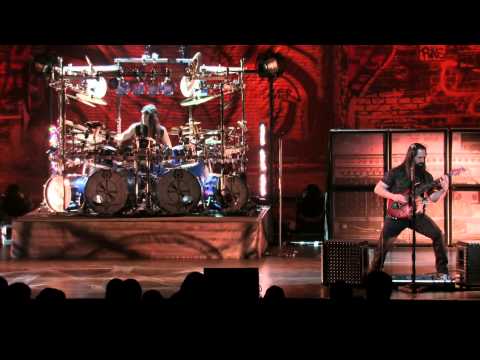
  • Guitarist John Petrucci told Ultimate-Guitar.com that it was inconceivable that the band couldn't have made the album without his JP13 guitar. He explained: "In a rock band or a metal band whatever, the guitar sounds kind of dictates the way the album is gonna sound. Because it's a featured instrument and it takes up so much and it will sort of shape the direction and overall sound of the song. If it's really heavy, percussive and aggressive, that's the way the song is gonna sound. It's a very powerful instrument because it dictates the landscape you're setting up. So that guitar and especially the 7-string version of it. I used on a lot of songs on the album. You can hear it on the instrumental 'Enigma Machine' and when that 7-string comes in it's just so heavy and huge. That couldn't have been done with another instrument - it had to sound like that."
  • Keyboardist Jordan Rudess' main riff came to him in his sleep the night before the band wrote the song. He recalled to MusicRadar: "I was running everything in my mind, 'it's gotta be catchy, it's gotta be progressive, there should be a theme,' all of that, and there it was! It reminded me of the riff to a TV show, but it was also Dream Theater-like. I went to the studio and said to John Petrucci, 'I got something, but I don't know it you're going to like it.' I was having a moment of self-doubt. But he really liked it. He added to it, and we went back and forth, and it was extended, and that was that."
  • An Enigma Machine was an electro-mechanical rotor cipher device used by Nazi Germany for enciphering and deciphering secret messages before and during World War II. In 1939, the British secret service set up the Ultra project at Bletchley Park, for the purpose of intercepting the German Enigma signals. The intelligence gleaned from this source was a substantial aid to the Allied war effort.

Comments

Be the first to comment...

Editor's Picks

David Gray

David GraySongwriter Interviews

David Gray explains the significance of the word "Babylon," and talks about how songs are a form of active imagination, with lyrics that reveal what's inside us.

Jon Oliva of Trans-Siberian Orchestra

Jon Oliva of Trans-Siberian OrchestraSongwriter Interviews

Writing great prog metal isn't easy, especially when it's for 60 musicians.

Martyn Ware of Heaven 17

Martyn Ware of Heaven 17Songwriter Interviews

Martyn talks about producing Tina Turner, some Heaven 17 hits, and his work with the British Electric Foundation.

Corey Hart

Corey HartSongwriter Interviews

The Canadian superstar talks about his sudden rise to fame, and tells the stories behind his hits "Sunglasses At Night," "Boy In The Box" and "Never Surrender."

Waiting For The Break of Day: Three Classic Songs About All-Nighters

Waiting For The Break of Day: Three Classic Songs About All-NightersSong Writing

These Three famous songs actually describe how they were written - late into the evening.

Director Paul Rachman on "Hunger Strike," "Man in the Box," Kiss

Director Paul Rachman on "Hunger Strike," "Man in the Box," KissSong Writing

After cutting his teeth on hardcore punk videos, Paul defined the grunge look with his work on "Hunger Strike" and "Man in the Box."