Rockin' in Rhythm

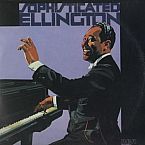
Album: Sophisticated Ellington (1931)
Play Video

Songfacts®:

  • Of the four recordings of "Rockin' in Rhythm" that Duke Ellington made in 1931, there is debate about which one is the best. Most refer to the Brunswick recording from January 14, although the band also made one for Okeh and two for Victor. The Victor recordings remained in the vault for eight years, which may say something about which versions Victor thought were better.

    Regardless of which of the recordings is being discussed, the birth of "Rockin' in Rhythm" is the product of one of Ellington's closest business relationships. Harry Carney was the longest serving member of Ellington's band and, when needed or if Ellington simply wanted to create a show with a grand entrance, Carney filled in as conductor. The talented saxophone and clarinet player is credited as a co-writer for the "Rockin' in Rhythm." It was not unusual for Ellington to incorporate work from a member of his band and develop it into one of his own arrangements, as was the case with Carney's contribution to "Rockin' in Rhythm."
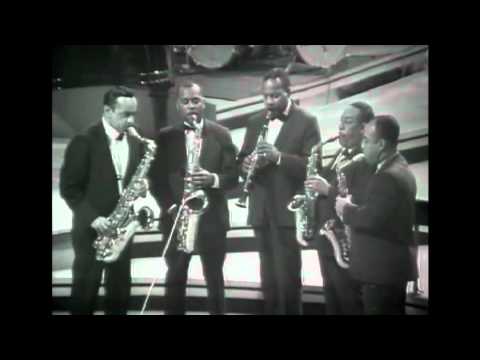
  • Ellington was known for allowing his talented musicians to shine in solos and this song provides that for Barney Bigard in a brief but memorable solo on the clarinet. Overall, though, "Rockin' in Rhythm" shows off Ellington's skill at arranging an ensemble piece. With its upbeat, lively tempo, the song helped pave the way for the big band swing music that was to come later in the decade and into the 1940s. Ellington said of the song that it is "as close as an arrangement gets to sounding spontaneous."
  • "Rockin' in Rhythm" was part of Ellington's playlist for decades and spawned several variations along the way. Many times, Ellington made up different arrangements on the fly, which was not always appreciated by Ella Fitzgerald. The legendary singer performed with Ellington's band many times in the 1950s and in 1957 she collaborated with Ellington and Billy Strayhorn on 1957's Ella Fitzgerald Sings the Duke Ellington Songbook. Fitzgerald said of the recording sessions for the album that the spontaneity, "while fun at times, was kind of nerve-wracking." "Rockin' in Rhythm" is the lead track of the album, pairing up Fitzgerald's improvisational scat singing with Ellington's orchestra. The album was part of a series of Songbooks in which Fitzgerald paid tribute to composers such as Irving Berlin, Johnny Mercer, and George and Ira Gershwin. After she died in 1996, Frank Rich wrote for The New York Times that Fitzgerald "performed a cultural transaction as extraordinary as Elvis's contemporaneous integration of white and African American soul."

    As for Carney, who left home at the age of 17 to join Ellington's band, he worked with Ellington until Ellington's death in 1974. Devastated, Carney said he had nothing left to live for with Ellington gone and, indeed, Carney died four months later. "Rockin' in Rhythm" lives on, though, as an essential piece of not just the Duke Ellington catalog, but of Jazz history.

Comments

Be the first to comment...

Editor's Picks

Album Cover Inspirations

Album Cover InspirationsSong Writing

Some album art was at least "inspired" by others. A look at some very similar covers.

How The Beatles Crafted Killer Choruses

How The Beatles Crafted Killer ChorusesSong Writing

The author of Help! 100 Songwriting, Recording And Career Tips Used By The Beatles, explains how the group crafted their choruses so effectively.
Holly Knight ("The Best," "Love Is A Battlefield")

Holly Knight ("The Best," "Love Is A Battlefield")Songwriter Interviews

Holly Knight talks about some of the hit songs she wrote, including "The Warrior," "Never" and "The Best," and explains some songwriting philosophy, including how to think of a bridge.

Randy Newman

Randy NewmanSongwriting Legends

Newman makes it look easy these days, but in this 1974 interview, he reveals the paranoia and pressures that made him yearn for his old 9-5 job.

Phil Hurtt ("I'll Be Around")

Phil Hurtt ("I'll Be Around")Songwriter Interviews

Phil was a songwriter, producer and voice behind many Philadelphia soul classics. When disco hit, he got an interesting project: The Village People.

The Punk Photography of Chris Stein

The Punk Photography of Chris SteinSong Writing

Chris Stein of Blondie shares photos and stories from his book about the New York City punk scene.