Take the A Train

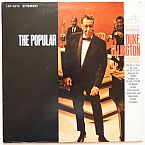
Album: The Popular Duke Ellington (1941)
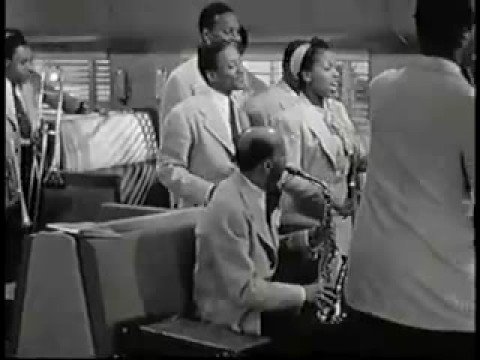
Play Video

Songfacts®:

  • This song was written by Billy Strayhorn, who played piano and wrote arrangements for Duke Ellington's band. Strayhorn recalled that the song that became the signature opening piece for Duke Ellington and his Orchestra came to him with very little effort. In fact, he said that the music and lyrics for "Take the A Train," originally recorded on February 15, 1941 by Ellington for Victor Records, came more quickly than the subject of the song itself – the New York subway line to the Sugar Hill District of Harlem. It was so easy for him, he said it was "like writing a letter to a friend."

    The fact that Ellington used the song as his orchestra's opening theme, making it his signature song, says a great deal about it and his appreciation for Strayhorn. Most bandleaders would not put a song that is not their own composition in the spotlight in this way, but the relationship between Strayhorn and Ellington was not typical. Ellington wrote in his autobiography that Strayhorn "was not, as he was often referred to by many, my alter ego. Billy Strayhorn was my right arm, my left arm, and the eyes in the back of my head."
  • Strayhorn had played for Ellington after a show in Pittsburgh in 1938. He mimicked the orchestra's rendition of "Sophisticated Lady," then boldly played his own version. Ellington was so impressed, it eventually led to an invitation to Ellington's home in the wealthy Sugar Hill neighborhood. Using the subway directions that Ellington gave him, Strayhorn wrote, "Take the A Train." He composed it in his head at a party, and then put it all on paper when he was done. He said all of his most meaningful work was written this way. When Strayhorn played the song for Ellington after a show in Newark, a partnership that would last the rest of Strayhorn's life had begun.
  • Even though Strayhorn wrote lyrics to go with the music, which calls to mind a subway running on its track, the lyrics that were recorded were written by vocalist Joya Sherrill. The song was already receiving radio play as an instrumental when Sherrill wrote lyrics based on what she heard in her home in Detroit.
  • Ella Fitzgerald has the most well known of the song's recordings, with the first coming in 1957. She performed the song numerous times during her long association with Ellington and it also appears on her 1957 critically acclaimed album Ella Fitzgerald Sings the Duke Ellington Songbook.
  • This song was used in several films including Paris Blues, starring Paul Newman and Joanne Woodward in 1961, the 1998 romantic-comedy, The Pallbearer, and it is on the soundtrack of the 2002 Leonardo DiCaprio film, Catch Me if You Can. It has also been used on stage in at least four different musicals.
  • Fans of the song the song are undoubtedly familiar with the trumpet solo performed by Ray Nance. It is frowned upon in jazz, which prides itself as an improvisational style of music, to repeat an ad-libbed solo. However, Nance's solo is the definitive one and Ellington said that no trumpet player can play the song without borrowing from what Nance offered. Nance was also an accomplished violinist. He invented a new way to play "Take the A Train," using the violin and accompanied on piano by Dr. Billy Taylor in 1967. The two men performed the normally uptempo song as a slow funeral march. The occasion was the memorial service for Strayhorn and so much was the song intertwined with both Strayhorn and Ellington, it was performed at Ellington's memorial, too, seven years later.

Comments: 3

  • Harvey Wachtel from Kew Gardens, NyAs far as I can determine, from 1933 until around 1950 the C train also provided express service from Penn Station [which is where I assume Strayhorn arrived in New York from Pittsburgh] to Sugar Hill. I guess Duke advised the A train because the C would have left Billy on the lower level at 145th Street, a reasonable consideration for someone carrying his luggage and a musical instrument. Good thing; I don't think "Take the 'A' or 'C' train" would have made the cut.
  • Kim from Kearney, MoI believe Billy Strayhorn wrote the music and original lyrics - except the four measures of chords that introduce the big band version.
  • Pat from Meelick Thanks for information.
see more comments

Editor's Picks

Why Does Everybody Hate Nu-Metal? Your Metal Questions Answered

Why Does Everybody Hate Nu-Metal? Your Metal Questions AnsweredSong Writing

10 Questions for the author of Precious Metal: Decibel Presents the Stories Behind 25 Extreme Metal Masterpieces
Bryan Adams

Bryan AdamsSongwriter Interviews

What's the deal with "Summer of '69"? Bryan explains what the song is really about, and shares more of his songwriting insights.
TV Theme Songs

TV Theme SongsFact or Fiction

Was a Beatles song a TV theme? And who came up with those Fresh Prince and Sopranos songs?
Tommy James

Tommy JamesSongwriter Interviews

"Mony Mony," "Crimson and Clover," "Draggin' The Line"... the hits kept coming for Tommy James, and in a plot line fit for a movie, his record company was controlled by the mafia.
Songs in Famous Movie Scenes: Tarantino Edition

Songs in Famous Movie Scenes: Tarantino EditionMusic Quiz

Whether he's splitting ears or burning Nazis, Quentin Tarantino uses memorable music in his films. See if you can match the song to the scene.
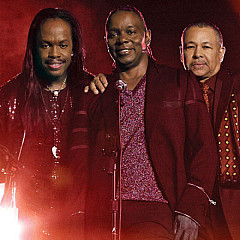
Verdine White of Earth, Wind & Fire

Verdine White of Earth, Wind & FireSongwriter Interviews

The longtime bassist of Earth, Wind & Fire discusses how his band came to do a holiday album, and offers insight into some of the greatest dance/soul tunes of all-time.