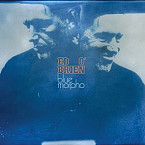
"Obrigado" is the 9:53 closing track on Blue Morpho, the second solo album by Radiohead guitarist Ed O'Brien, released on May 22, 2026. It is the longest track on the album and brings the record's long, dark journey out into the open.
The title is Portuguese for "thank you," though its literal translation leans closer to "obliged" or "indebted." O'Brien picked the word to express his deep connection to Brazil, a place where he and his family found real peace.
O'Brien and his wife, Susan "Suzi" Kobrin, first visited Brazil together in 2002 and kept going back, eventually moving there with their two young children, Salvador and Oona, for six months. That stint became the wellspring for "Obrigado," much like it had for "
Brasil," the closing track on his 2020 solo debut,
Earth (released under his EOB moniker).
O'Brien's obsession with Brazil started with football. Growing up, he fell in love with the Brazilian national team's flamboyant style of play, but music soon took over. Around 1997, while Radiohead were putting the finishing touches on OK Computer, he picked up a compilation of Brazilian music featuring Tamba Trio, Jorge Ben, Caetano Veloso, and Gilberto Gil. The sound floored him.
Five years later, he and Suzi made their first trip over. "We're all seeking places of beauty and transcendence, and I feel it in abundance in Brazil," O'Brien told Uncut magazine. "Nature is so dominant, and when you're living in the countryside, the people work in harmony with that rather than against it. We lived out there for six months in 2012–13 when the children were small, and it was such an extraordinary time. I do feel like I left part of my heart there."
"Obrigado" is co-credited to Paul Epworth, who produced the entire Blue Morpho album. Epworth, best known for his work with Adele, Florence + the Machine, and Rihanna, first met O'Brien because their kids went to the same school. What started as casual musical jam sessions between neighbors turned into a full recording partnership when. Epworth and engineer Riley MacIntyre set up shop with O'Brien for a series of week-long sessions at his home studio in Wales.
The album took shape between 2020 and 2025, but the headspace behind it was considerably darker than the finished tracks suggest.
During the first COVID lockdown, O'Brien fell into the deepest depression of his life. It wasn't just isolation; it was five decades of buried personal trauma surfacing all at once. To cope, O'Brien locked himself in his Wales studio almost every day. He turned to Wim Hof breathing exercises and cold exposure to keep centered, while his wife Suzi played a major role in keeping him grounded. Meanwhile, Thom Yorke offered a classic bit of Radiohead advice: "Be a good librarian." O'Brien took that to mean cataloging every stray musical idea so he could piece them together later.
"Obrigado" came out of those dark sessions and was eventually recorded across O'Brien's Seven Sound studio in Wales and The Church Studios in London.
In the end, "Obrigado" acts as a literal thank-you note to the people and places that helped him survive that period.
O'Brien's 2020 debut came out under the cryptic name EOB, but Blue Morpho was issued under his full name. So, why the name change? "I just stopped hiding," O'Brien told Uncut magazine. "The first time I did this, it felt very strange and there was an element of discomfort that accompanied the process for me. I didn't want to put myself front and center. But now I think the flow from the mothership Radiohead into this seems very seamless."
"Obrigado" splits cleanly into two halves. It starts with a bossa-tinged, trip-hop groove before building into a massive guitar climax that draws obvious comparisons to David Gilmour's work with Pink Floyd.
Estonian composer Tõnu Kõrvits, whom O'Brien met over dinner in Estonia, arranged the string parts, which were performed by the Tallinn Chamber Orchestra. Between the electronic textures, Brazilian rhythms, classical strings, and soaring guitar work, the track sounds like it picked up a few different passport stamps on its way out of the studio.
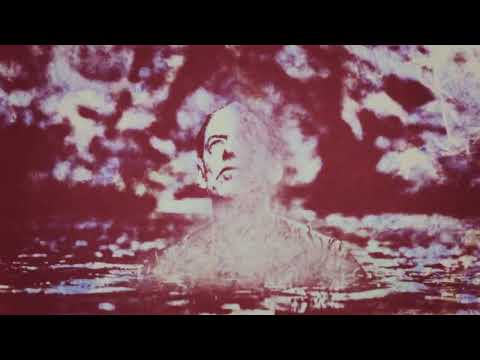
The song serves as the climax of Blue Morpho: The Three Act Play, a 16-minute short film directed by Kit Monteith that premiered at SXSW in March 2026. At a screening, Monteith explained that the film's final act mirrors the track's theme with a "ceremony of thanks" set in the Welsh woods, showing O'Brien gathering moss, wood, and stone as ritual offerings before a fire.
That visual imagery ties back to the album's central symbol: the butterfly. O'Brien noted that the ancient Greek word psyche translates to both "butterfly" and "soul."
"You've got the caterpillar, the pupa, where it goes into the darkness," O'Brien explained. "And when it's in that place it has to eat itself, the body has to disintegrate, and then it becomes a butterfly."