Land Of Hope And Glory

Album: Crown Imperial: The Ultimate Classical Celebration (1902)
Play Video

Songfacts®:

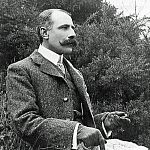
  • This patriotic tune was originally the instrumental "trio" theme from Edward Elgar's 1901 "Pomp and Circumstance March No. 1." It was the soon-to-be-crowned King Edward VII who suggested that it would make a great song if words were added to the melody. When Elgar was asked to write a work for the King's coronation, he worked the suggestion into his Coronation Ode. The last section of the Ode uses the march's melody.
  • The poet and essayist Arthur Benson wrote the words to "Land Of Hope And Glory." He was the older brother of Mapp and Lucia author EF Benson.
  • The song is often used as a sporting anthem. It is sung by English fans at home England rugby union games in Twickenham after the home and away National Anthems. It has also been adapted by football fans over the years for their own chants. Supporters of Wolverhampton Wanderers FC (the team Elgar supported) sing a version with the lyrics changed to "We will follow the Wanderers over land sea and water."
  • "Land of Hope and Glory" has traditionally been sung by the audience amidst flag-waving at the climax of the Last Night of the BBC Proms. The lyrics were reputedly inspired by mining magnate and politician Cecil Rhodes, who has been attacked by some historians as a ruthless imperialist and white supremacist. Some critics wanted "Land of Hope And Glory" and "Rule, Britannia!" to be removed from the 2020 Last Night Of The Proms concert in the context of the Black Lives Matter debate, so the BBC came up with a compromise. They decided the two songs would remain, but be performed instrumentally and also moved away from the event's traditional grand finale.

    After a huge public outcry, the BBC backtracked on their decision a week later and announced both songs would now be sung by a select group of vocalists during the 2020 Last Night of the Proms.
  • In the US, it is the original Trio theme from Elgar's "Pomp & Circumstance March No. 1" that is better known. It is synonymous there with graduation, and is played as the processional tune at virtually all high school and some college graduation ceremonies.

    "The Graduation March," as it is known in the US, was first played at such a ceremony on June 28, 1905, at Yale University, where the Professor of Music, Samuel Sanford, had invited his friend Elgar to receive an honorary doctorate of music.
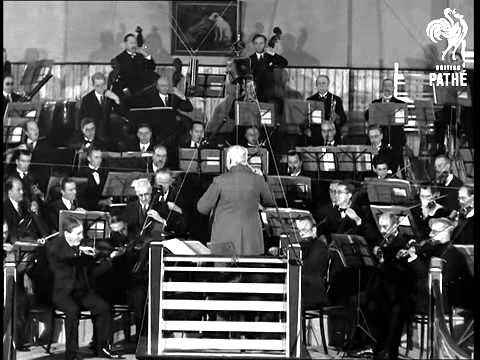
  • When the famous Abbey Road Studios opened in 1931, the first person to record there was Elgar, who conducted "Land Of Hope And Glory" for the British National Symphony Orchestra. Elgar was filmed by Pathé for a newsreel depicting the recording session. It is believed to be the only surviving sound film of the composer.
  • The Pomp and Circumstance march was used on the popular American television 1950s and 1960s game show Queen for a Day to accompany the announcement of the winner's list of prizes.
  • This received its London premiere on June 2, 1902 when it was sung by Clara Butt at a "Coronation Concert" in the Albert Hall.

Comments

Be the first to comment...

Editor's Picks

Jackie DeShannon - "Put a Little Love in Your Heart"

Jackie DeShannon - "Put a Little Love in Your Heart"They're Playing My Song

It wasn't her biggest hit as a songwriter (that would be "Bette Davis Eyes"), but "Put a Little Love in Your Heart" had a family connection for Jackie.

Kristian Bush of Sugarland

Kristian Bush of SugarlandSongwriter Interviews

Kristian talks songwriting technique, like how the chorus should redefine the story, and how to write a song backwards.

Gary Numan

Gary NumanSongwriter Interviews

An Electronic music pioneer with Asperger's Syndrome. This could be interesting.

Who Wrote That Song?

Who Wrote That Song?Music Quiz

Do you know who wrote Patti Smith's biggest hit? How about the Grease theme song? See if you can match the song to the writer.

Pete Anderson

Pete AndersonSongwriter Interviews

Pete produced Dwight Yoakam, Michelle Shocked, Meat Puppets, and a very memorable track for Roy Orbison.

Charles Fox

Charles FoxSongwriter Interviews

After studying in Paris with a famous composition teacher, Charles became the most successful writer of TV theme songs.