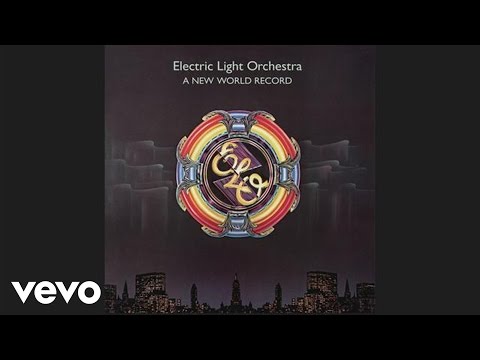
Album: A New World Record (1976)
Play Video

Songfacts®:

  • Shangri-La is a fictional paradise in James Hilton's 1933 novel Lost Horizon. It is often associated as a place of Earthly paradise. This song seems to have two meanings: One referring to a loved one that is never going to come or never come back, the other being that it could be the main characters referring to the mystical lands itself.
  • The line, "Faded like The Beatles on Hey Jude" is a reference to the famous Beatles song that contains an extraordinarily long fade-out. It's not the first time ELO quoted The Beatles, one of group leader Jeff Lynne's favorite bands. On "Evil Woman" he sings, "There's a hole in my head where the rain comes in," a reference to the Beatles song "Fixing a Hole."
  • "Shangri-La" is the closing track on ELO's sixth album, A New World Record. It's an album cut that never got much airplay but has a following among their faithful.

Comments: 6

  • Jim from Northern IrelandMy favourite ELO song. Brings back great memories as a 13 year old in 1976. I've been an ELO follower now for almost 50 years.
  • Lisa Stephens from CaliforniaI agree with everyone. I really love the whole thing, but the last 2 minutes is genius. Jeff Lynne is incredible.
  • Ken from Eugene, OregonI agree with Melissa 100%. The ending of Shangri-La is a stroke of musical genius! It has a feeling of overwhelming sadness, but a sense of hope when you hear the words "I will return to Shangri-La." ELO's finest moment!
  • Aidan from FloridaI love this song, the feeling of a desperate lover and the overall music of the song is amazing.
  • Sim from Cleveland RocksA musical masterpiece. Great guitar. Riffs by Jeff Lynn. A hauntingly delightful closing as well. This song pretty much covers all the bases. A true GEM.
  • Melissa from Windsor, CanadaI love this song so much! The last 2 minutes of this song are incredibly beautiful. The last 2 minutes are probably my favourite because of their sad and haunting beauty.
    As for the meaning of the song, to me it's about loss, and lament, but also hope despite everything. Perhaps at the end, there is also a hint not just of hope and the possibility for gaining what was lost, but also an inevitable struggle that might be necessary to regain what was lost.
see more comments

Editor's Picks

Holly Knight ("The Best," "Love Is A Battlefield")

Holly Knight ("The Best," "Love Is A Battlefield")Songwriter Interviews

Holly Knight talks about some of the hit songs she wrote, including "The Warrior," "Never" and "The Best," and explains some songwriting philosophy, including how to think of a bridge.

Soul Train Stories with Stephen McMillian

Soul Train Stories with Stephen McMillianSong Writing

A Soul Train dancer takes us through a day on the show, and explains what you had to do to get camera time.

John Parr

John ParrSongwriter Interviews

John tells the "St. Elmo's Fire (Man In Motion)" story and explains why he disappeared for so long.

Graham Bonnet (Alcatrazz, Rainbow)

Graham Bonnet (Alcatrazz, Rainbow)Songwriter Interviews

Yngwie Malmsteen and Steve Vai were two of Graham's co-writers for some '80s rock classics.

Wolfgang Van Halen

Wolfgang Van HalenSongwriter Interviews

Wolfgang Van Halen breaks down the songs on his debut album, Mammoth WVH, and names the definitive Van Halen songs from the Sammy and Dave eras.

Loreena McKennitt

Loreena McKennittSongwriter Interviews

The Celtic music maker Loreena McKennitt on finding musical inspiration, the "New Age" label, and working on the movie Tinker Bell.