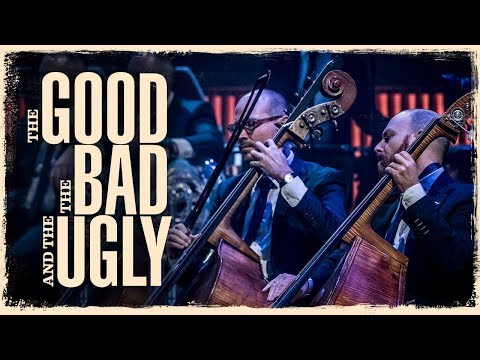
The Good, The Bad And The Ugly - Main Title

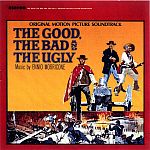
Album: The Good, The Bad And The Ugly soundtrack (1966)
Play Video

Songfacts®:

  • The Good, The Bad And The Ugly is the third installment in Sergio Leone's Dollars trilogy, a series of classic Spaghetti Westerns starring Clint Eastwood as an unnamed stranger. This time around, Eastwood and his partner in a bounty-hunting scam search for a fortune in Confederate gold buried in a cemetery before a dangerous mercenary can get his hands on it first.

    The famous title theme, composed by Ennio Morricone, builds the atmosphere of the story set in the Southwestern US during the American Civil War. It teases the action with the sounds of coyote howls, gunshots, galloping horses, whip lashes, train whistles, military bugles, cannon fire, church bells, and rattlesnakes.

    Bruno Battisti D'Amario, heard on "A Fistful Of Dollars" and "For A Few Dollars More - Main Theme," also returns on the guitar, and Alessandro Alessandroni reprises his role as whistler.
  • Morricone used different instruments and sounds to represent the three main characters: the flute for Eastwood's character, nicknamed Blondie ("The Good"), the ocarina for Lee Van Cleef's mercenary, Angel Eyes ("The Bad"), and voices for Eli Wallach's gold-hungry Tuco ("The Ugly").

    "All three of them are scoundrels, each in his own way," Morricone noted in his 2019 autobiography. "The lives of the three hobos, moreover, intertwined with the development of the American Civil War - in one way or another, history knocks at their conscience's door, at least for an instant."
  • In his autobiography, Morricone also explained how he created the musical coyote call that opens the piece, which was meant to convey the idea of animal violence in the Wild West. "I thought that I might come close to the effect by overlaying two hoarse male voices, one singing the vowel 'A,' the other singing 'E' in a pronounced way, somewhere in between sforzando and falsetto," he recalled.

    "I went to the recording room, talked about it with the singers, we recorded the voices and added light reverb, and the effect worked. Then I continued this incipit by emulating vocal sounds through the wah-wah effect, which trumpets and trombones obtain by moving the damper back and forth, and effect typical of brass bands in the '20s and '30s."
  • As with the previous films in the trilogy, Morricone wrote the music based on Leone's descriptions of the story before the movie was even shot. For The Good, The Bad And The Ugly, the director also established a new practice where he brought the tracks on set to play for the actors while they were shooting to help them tap into the energy of their characters.
  • The film's soundtrack went to #4 on the US albums chart.
  • American orchestra leader Hugo Montenegro recorded a hit cover on a Moog synthesizer that peaked at #2 on the Billboard Hot 100 in 1968. It was held off from the top spot by another cinematic song: Simon & Garfunkel's "Mrs. Robinson."
  • The iconic theme is often used in pop culture to conjure the vibe of Wild West-style showdowns. It shows up in these TV shows:

    Supernatural ("Black" - 2014)
    Being Human ("Sticks And Rope" - 2013)
    Ugly Betty ("Family/Affair" - 2007)
    The Simpsons ("The Lastest Gun In The West" - 2002)
    The Sopranos ("Fortunate Son" - 2001)
    Rocko's Modern Life ("Snowballs/Frog's Best Friend" - 1995)
    Married…With Children ("Dud Bowl" - 1994)
    The Fresh Prince Of Bel-Air ("Fresh Prince: The Movie" - 1994)
    The Wonder Years ("Nemesis" - 1989)
    Moonlighting ("A Womb With A View" - 1988)
    Miami Vice ("The Cows Of October" - 1988)
    The Jeffersons ("A Case Of Self-Defense" - 1982)

    And these movies:

    Alvin and the Chipmunks: The Road Chip (2015)
    The Expendables 2 (2012)
    Faster (2010)
    Wall Street: Money Never Sleeps (2010)
    The Time That Remains (2009)
    Madagascar: Escape 2 Africa (2008)
    We Are Marshall (2006)
    Zoom (2006)
    Rumor Has It… (2005)
    The Pacifier (2005)
    Racing Stripes (2005)
    The New Guy (2002)
    Say It Isn't So (2001)
    Inspector Gadget (1999)
    Major League: Back To The Minors (1998)
    The Odd Couple II (1998)
    Made In America (1993)
  • This was used in commercials for the Nissan Altima in 2014.
  • Several other songs contain samples of the main riff, including "Bad Meets Evil" by Eminem, "Hey Young World" by Slick Rick, "The Intro" by LL Cool J, "Golden" by Kylie Minogue, and "Country Boy" by Soulja Boy.

Comments

Be the first to comment...

Editor's Picks

Eric Clapton

Eric ClaptonFact or Fiction

Did Eric Clapton really write "Cocaine" while on cocaine? This question and more in the Clapton edition of Fact or Fiction.

Trans Soul Rebels: Songs About Transgenderism

Trans Soul Rebels: Songs About TransgenderismSong Writing

A history of songs dealing with transgender issues, featuring Pink Floyd, David Bowie, Morrissey and Green Day.

John Waite

John WaiteSongwriter Interviews

"Missing You" was a spontaneous outpouring of emotion triggered by a phone call. John tells that story and explains what MTV meant to his career.

The Truth Is Out There: A History of Alien Songs

The Truth Is Out There: A History of Alien SongsSong Writing

The trail runs from flying saucer songs in the '50s, through Bowie, blink-182 and Katy Perry.

Deconstructing Doors Songs With The Author Of The Doors Examined

Deconstructing Doors Songs With The Author Of The Doors ExaminedSong Writing

Doors expert Jim Cherry, author of The Doors Examined, talks about some of their defining songs and exposes some Jim Morrison myths.

Ian Anderson: "The delight in making music is that you don't have a formula"

Ian Anderson: "The delight in making music is that you don't have a formula"Songwriter Interviews

Ian talks about his 3 or 4 blatant attempts to write a pop song, and also the ones he most connected with, including "Locomotive Breath."