Everything Is Free

Album: Time (The Revelator) (2001)
Play Video

Songfacts®:

  • "Everything Is Free" sprang from a moment of pure existential dread. It was the early 2000s, and services like Napster were turning the industry on its head by making music available for free. The song is Gillian Welch's quiet, mournful response to this brave new world where art, once the lifeblood of an artist's career, was suddenly expected to be as freely available as tap water.

    "It came from a moment when I just felt the bottom fall out of what I thought was going to be my life and career," Welch told the Guardian in 2024.

    Imagine the shock: you spend years honing your craft, pouring your soul into song, only to find that, overnight, it's all out there, gratis. "I felt really threatened," she said, "and somehow turned it into a threat."

    The threat being simple and rather chilling: if musicians can't make a living, you won't get to hear their music. "I am never going to stop playing music, but if I can't make a living at it, then I will stop playing it outside my living room."
  • Welch wrote "Everything Is Free" with her longtime musical partner, the guitarist David Rawlings. He provides guitar accompaniment and harmonies on the track, complementing Welch's lead vocals and guitar.
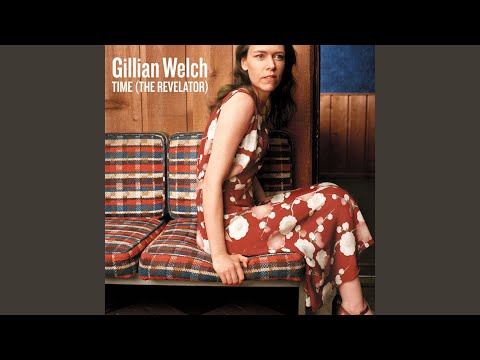
  • The song was recorded at RCA Studio B in Nashville shortly after Welch and Rawlings parted ways with their old label and decided to strike out on their own, launching Acony Records. It was included on her third album, Time (The Revelator), which marked a shift from Welch's earlier, more traditional Americana sound to something altogether more introspective and minimalist. The album, sparse but emotionally loaded, blurs the lines between folk, country, and roots music.
  • Critics were floored by the album. Time (The Revelator) received heaps of praise for its emotional depth and elegant simplicity, with Welch's songwriting being hailed as both deeply personal and universally resonant. It earned a Grammy nomination for Best Contemporary Folk Album and continues to exert a gravitational pull on a wide range of singer-songwriters today.
  • As for "Everything Is Free," the song has only grown more relevant as the years have passed. In the streaming era, where artists still struggle to be properly compensated, its message feels more appropriate than ever.

    "That song was a bit of a sleeper," Welch reflected in 2024, "and over the years has gained strength." She's saddened, of course, that the song still strikes such a chord, but it's also a reminder that some truths don't change, even if the medium does.
  • The song has been covered by:

    Chris Pureka for his 2006 album Dryland.

    Father John Misty for a 2018 Spotify session. By performing this song for Spotify, a streaming platform often criticized for its low payouts to artists, Father John Misty directly addressed the issue in a provocative way.

    Phoebe Bridgers in 2018 with Julien Baker. "This is my favorite song about music streaming," she said.

    Secret Machines for their 2019 album Allaire Sessions.

Comments

Be the first to comment...

Editor's Picks

Kerry Livgren of Kansas

Kerry Livgren of KansasSongwriter Interviews

In this talk from the '80s, the Kansas frontman talks turning to God and writing "Dust In The Wind."

Lou Gramm - "Waiting For A Girl Like You"

Lou Gramm - "Waiting For A Girl Like You"They're Playing My Song

Gramm co-wrote this gorgeous ballad and delivered an inspired vocal, but the song was the beginning of the end of his time with Foreigner.

Jim McCarty of The Yardbirds

Jim McCarty of The YardbirdsSongwriter Interviews

The Yardbirds drummer explains how they created their sound and talks about working with their famous guitarists.

Rupert Hine

Rupert HineSongwriter Interviews

Producer Rupert Hine talks about crafting hits for Tina Turner, Howard Jones and The Fixx.

Gene Simmons of Kiss

Gene Simmons of KissSongwriter Interviews

The Kiss rocker covers a lot of ground in this interview, including why there are no Kiss collaborations, and why the Rock Hall has "become a sham."

Strange Magnetics

Strange MagneticsSong Writing

How Bing Crosby, Les Paul, a US Army Signal Corps Officer, and the Nazis helped shape rock and Roll.