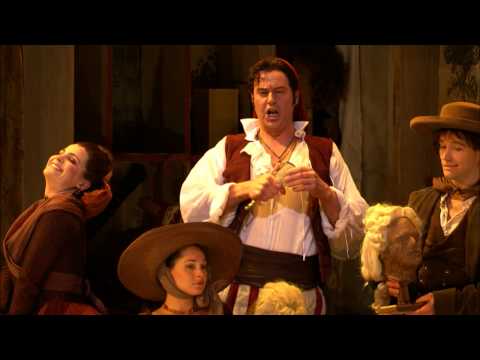
Largo al Factotum

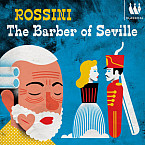
Album: The Barber of Seville (1816)
Play Video

Songfacts®:

  • This iconic piece is an aria from The Barber of Seville by Italian composer Gioachino Rossini. It is sung at the first entrance of the title character and the repeated Figaros are one of the most familiar parts of operatic singing in popular culture.
  • "Largo al Factotum" translates into English as "Make way for the factotum." The term "factotum" refers to a general servant and comes from the Latin where it literally means "do everything."
  • The Barber of Seville was completed by Rossini in 13 days and is based on Pierre Beaumarchais's comedy, Le Barbier de Séville, which took Paris by storm in 1775. The opera was premeried in Rome on February 20, 1816 and its first night was a disastrous failure, the audience hissing and jeering throughout. Everything went wrong, a guitar string snapped, a cat walked on stage and there were protestations originated by a rival composer who had recently written his own version of the same story. Rossini quickly added some additional humorous lyrics for characters like the resourceful, witty servant Figaro but apprehensive he missed the second night pretending to be ill. Unaware that this time, the audience loved his opera, the composer heard a commotion on the street and fearing the crowds were out to get him, he was relieved to find they were out to congratulate him.
  • Figaro in The Barber of Seville is the same character as in Mozart's The Marriage of Figaro opera.
  • The aria and the overture of The Barber of Seville have been parodied in numerous animated cartoons including Woody Woodpecker (The Barber of Seville), Bugs Bunny (Rabbit of Seville and Long Haired Hare), Tom and Jerry (The Cat Above and the Mouse Below and Kitty Foiled), and The Simpsons Homer of Seville).
  • The Seinfeld episode The Barber uses music from The Barber of Seville instead of its usual incidental music.
  • The aria is sung by a Robin Williams voiced animated bird in the opening credits of the 1993 film Mrs. Doubtfire.
  • The famous 1979 "hand built by robots" Fiat Strada advertisement used this piece as its accompanying music.
  • The melody for Mika's 2007 hit single, "Grace Kelly" was based on this aria.

Comments

Be the first to comment...

Editor's Picks

Bands Named After Real People (Who Aren't In The Band)

Bands Named After Real People (Who Aren't In The Band)Song Writing

How a gym teacher, a janitor, and a junkie became part of some very famous band names.

John Parr

John ParrSongwriter Interviews

John tells the "St. Elmo's Fire (Man In Motion)" story and explains why he disappeared for so long.

Tommy James

Tommy JamesSongwriter Interviews

"Mony Mony," "Crimson and Clover," "Draggin' The Line"... the hits kept coming for Tommy James, and in a plot line fit for a movie, his record company was controlled by the mafia.

Dwight Twilley

Dwight TwilleySongwriter Interviews

Since his debut single "I'm On Fire" in 1975, Dwight has been providing Spinal-Tap moments and misadventure.

Barry Dean ("Pontoon," "Diamond Rings And Old Barstools")

Barry Dean ("Pontoon," "Diamond Rings And Old Barstools")Songwriter Interviews

A top country songwriter, Barry talks about writing hits for Little Big Town, Tim McGraw and Jason Aldean.

Chris Squire of Yes

Chris Squire of YesSongwriter Interviews

One of the most dynamic bass player/songwriters of his time, Chris is the only member of Yes who has been with the band since they formed in 1968.