Operator

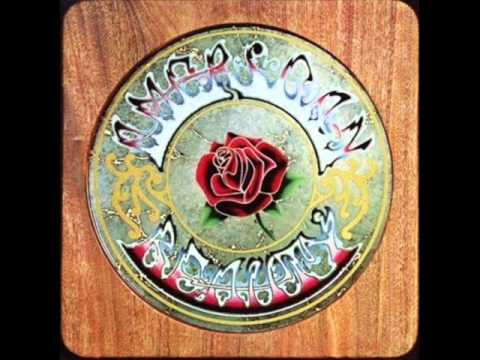
Album: American Beauty (1970)
Play Video

Songfacts®:

  • In "Operator," singer Ron "Pigpen" McKernan sings to a telephone operator in an attempt to get through to his "rider" (with "rider" being common '60s slang for a lover in the Black community). He tells the operator she left on "The Midnight Flyer," which some believe was the name for a bus or a bus route running out of Portland, Oregon. There is some evidence for that idea because the lyrics later talk about the rider on a bus heading out of Portland, but no one's sure if there was ever a specific bus named The Midnight Flyer running out of that city in the '60s. The song also never clarifies if it was Portland Oregon, or Maine, but Oregon is the safer bet because the Dead were a distinctly West Coast band. Few acts have ever been more connected with California lore.

    The whole Portland connection may actually be a common misinterpretation, though. "Operator" starts with Pigpen talking about the past event of his woman leaving on The Midnight Flyer. By the next mention of a bus leaving out of Portland, Pigpen is talking about a possible present.

    She could be hangin' 'round the steel mill,
    Working in a house of blue lights.
    Riding a getaway bus out of Portland, talking to the night


    In that second mention, he's talking about what she might be doing in that moment as he's trying to find her. In the first mention, he's talking about what has already happened. The commonality of the bus has caused some people to assume the connection, but the two thoughts are not actually the same.

    Regardless, Pigpen has no luck finding her. At least, he never locates her in the song.

    The song would make perfect sense to anybody born before the 2000s, but using phone operators in this way has almost ceased to exist today. Before the advent of cell phones, operators were people who worked in phone offices and helped callers find phone numbers and resolve technical problems. People used them very often, so they showed up in songs all the time.
  • At 2:25, this is easily the shortest song on the American Beauty album and the sixth-shortest Dead song ever recorded in studio.
  • Working in a house of blue lights

    Don Raye and Freddie Slack wrote a song titled "House of Blue Lights" in 1946. Pigpen may be referencing that in "Operator." It's more likely, though, that he's referencing "Good Golly Miss Molly" by Little Richard.

    You caught Miss Molly, Miss Molly's
    Rocking at the House of Blue Lights


    Pigpen was a lover of the blues, and "Good Golly Miss Molly" was a very popular song in his early teen years, so the Little Richard inspiration seems more likely. Still, in a sense, he'd then be referencing both songs at once, because Little Richard is referencing the '46 tune in "Good Golly, Miss Molly."

    In the Annotated Book of Grateful Dead Lyrics, Dead historian David Dodd writes that Professor Gary Haggerty of the Berklee College of Music suggests that The House of Blue Lights was a nightclub in Chicago, Illinois.

    An even stranger, less likely (but more intriguing) possibility is that he's referencing an infamously haunted house in Indianapolis, Indiana. It was called The House of Blue Lights for two reasons: (1) it was decorated year-round with blue Christmas lights, and (2) the owner of the house kept his dead wife in a glass casket wreathed with blue lights.

    That owner was named Skiles Edward Test, and he was a man of no little eccentricity.

    This connection of the house to the song is, of course, highly unlikely, but it sure is fun to imagine.
  • This is the only Dead song written and sung entirely by Ron "Pigpen" McKernan. He sang on many other Dead songs and co-wrote some, but this is the only tune that is all Pigpen.

    Pigpen was the Dead's original frontman, though he later faded out in favor of Jerry Garcia and Phil Lesh. He was primarily a blues guy, but his style has been described as "garage rock" in that it was raw and heavy. That sound simply didn't fit very well into the band's evolving sound as they moved into the freeform, psychedelic jam sound that became their signature. He died from a gastrointestinal hemorrhage on March 8, 1973, at only 27 years old. Heavy alcoholism caused the hemorrhage.
  • The Dead rarely performed this song live. There are only four known occasions, with the first being August 18, 1970, at the Fillmore West in San Francisco, California, and the last on November 8, 1970, at the Capital Theater in Port Chester, New York.

Comments

Be the first to comment...

Editor's Picks

Movie Stars In Music Videos

Movie Stars In Music VideosSong Writing

Johnny Depp, Angelina Jolie, Mila Kunis and John Malkovich are just a few of the film stars who have moonlighted in music videos.

Sub Pop Founder Bruce Pavitt On How To Create A Music Scene

Sub Pop Founder Bruce Pavitt On How To Create A Music SceneSong Writing

With $50 and a glue stick, Bruce Pavitt created Sub Pop, a fanzine-turned-label that gave the world Nirvana and grunge. He explains how motivated individuals can shift culture.

Leslie West of Mountain

Leslie West of MountainSongwriter Interviews

From the cowbell on "Mississippi Queen" to recording with The Who when they got the wrong Felix, stories from one of rock's master craftsmen.

Chrissie Hynde of The Pretenders

Chrissie Hynde of The PretendersSongwriter Interviews

The rock revolutionist on songwriting, quitting smoking, and what she thinks of Rush Limbaugh using her song.

Adam Young of Owl City

Adam Young of Owl CitySongwriter Interviews

Is Owl City on a quest for another hit like "Fireflies?" Adam answers that question and explains the influences behind many others.

Michael Franti

Michael FrantiSongwriter Interviews

Franti tells the story behind his hit "Say Hey (I Love You)" and explains why yoga is an integral part of his lifestyle and his Soulshine tour.