Rosemary

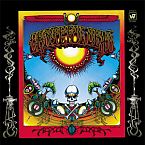
Album: Aoxomoxoa (1969)
Play Video

Songfacts®:

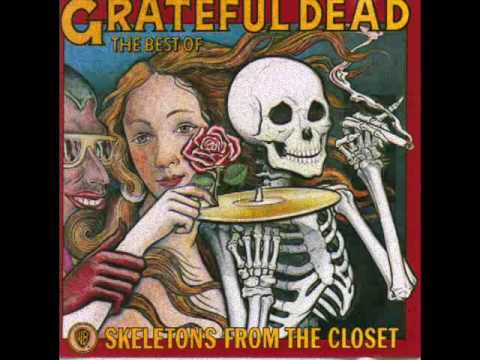
  • "Rosemary" is the third track on Aoxomoxoa. It's also included on Skeletons from the Closet: The Best of the Grateful Dead, where it is once again the third track.

    The song is one of the Dead's most mysterious. Just under two minutes long, it's a delicately beautiful tune with no percussion, driven by gentle guitar and ambiguous, poetic lyrics. Jerry Garcia's vocals are restrained and sung through a filter so that they sound distant and sort of otherworldly, which is fitting for a song that paints a mysterious scene of a woman sitting by a window with a garden growing around her before going away, leaving the garden to die and be sealed up. The song ends with the strange statement, "No one may come here, since no one may stay."
  • The song is so short that David Dodd at Dead.net suggests it may have been an intentional fragment. "I think this is one of those songs constructed intentionally by Garcia (and Hunter?) to be a fragment," Dodd says. "They've talk in interviews about loving the old, collected songs that were fragments."

    In the song, Rosemary sits before a mirror, which is interesting because Aoxomoxoa is a mirror-word that is spelled exactly the same forwards or backwards. Also, the whole album, as Dodd observes, "speaks to reflections."
  • Some have suggested that the song bears similarities to a novel titled The Secret Garden, published in 1911 by Frances Hodgson Burnett. The Secret Garden is about a 10-year-old girl named Mary (just a "rose" away from Rosemary) who finds a secret garden that has been locked ever since Mrs. Craven, the woman who once cared for the garden, died. Following his wife's death, Craven's husband locked the garden and buried the key.

    The novel doesn't precisely mirror the song, but it's close enough to spark the imagination of many Deadheads.
  • There's an herb named rosemary (Rosmarinus officinalis) that grows naturally in the Mediterranean region. It's used sometimes in perfumes and is also used as a symbol of remembrance, particularly in European an Australian war funerals and commemorations. In England, the custom was common for all funerals, military and non-military, up until the 19th century.

    The word Rosemary comes from Latin, with "ros" meaning dew" and mariunus meaning "sea," so that words means "dew of the sea."
  • It was long believed that Dead never played the song live, but a performance did eventually emerge. Played on December 7, 1968, at Bellarmine College in Louisville, Kentucky, this version didn't use the voice filter that's used on the studio version. The performance can be heard here.

Comments

Be the first to comment...

Editor's Picks

John Lee Hooker

John Lee HookerSongwriter Interviews

Into the vaults for Bruce Pollock's 1984 conversation with the esteemed bluesman. Hooker talks about transforming a Tony Bennett classic and why you don't have to be sad and lonely to write the blues.

Divided Souls: Musical Alter Egos

Divided Souls: Musical Alter EgosSong Writing

Long before Eminem, Justin Bieber and Nicki Minaj created alternate personas, David Bowie, Bono, Joni Mitchell and even Hank Williams took on characters.

Director Mark Pellington ("Jeremy," "Best Of You")

Director Mark Pellington ("Jeremy," "Best Of You")Song Writing

Director Mark Pellington on Pearl Jam's "Jeremy," and music videos he made for U2, Jon Bon Jovi and Imagine Dragons.

Donald Fagen

Donald FagenSongwriter Interviews

Fagen talks about how the Steely Dan songwriting strategy has changed over the years, and explains why you don't hear many covers of their songs.

Danny Clinch: The Art of Rock Photography

Danny Clinch: The Art of Rock PhotographySong Writing

One of rock's top photographers talks about artistry in photography, raising funds for a documentary, and enjoying a County Fair with Tom Waits.

00s Music Quiz 1

00s Music Quiz 1Music Quiz

Do you know the girl singer on Eminem's "Stan"? If so, this quiz is for you.