4.33

Album: Lifting the Veil (1952)
Play Video

Songfacts®:

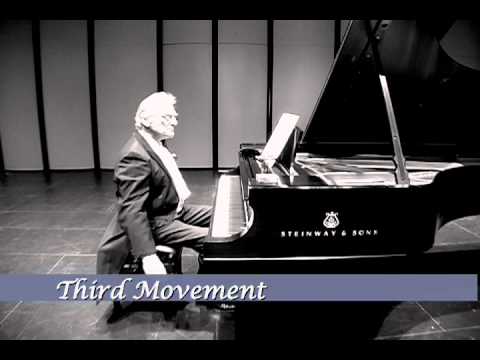
  • Sssh! Wanna hear about the quietest piece of music ever composed? It's by John Cage (1912-1992), who was at the center of the US avant-garde scene for several decades, and has probably had a greater influence on world music than any other 20th-century American composer. This three-movement composition, in which a performer sits at a piano for four minutes and thirty three seconds intentionally making no sounds, is possibly his most famous piece. The idea behind the work is that the audience should be driven to appreciate the ambient sounds around them. It was a reflection of the influence of Zen Buddhism, which Cage studied since the late forties.
  • David Tudor gave the premiere of 4.33 on August 29, 1952, at Woodstock, New York as part of a recital of contemporary piano music. The American pianist sat at the piano and, to mark the beginning of the piece, closed the keyboard lid. Some time later he opened it briefly, to mark the end of the first movement. This process was repeated for the second and third movements. No note was played or any deliberate made at any point during the performance of the piece and Tudor timed the three movements with a stopwatch while turning the pages of the score. Musicians and critics alike initially thought the piece a joke, but Tudor called it his most intense listening experience.
  • When the BBC Symphony Orchestra played the piece during a concert at the Barbican Centre in London on January 16, 2004, the performance was carried live on BBC Radio 3. One of the main challenges was that the station's emergency backup systems are designed to switch on and play emergency-standby music whenever apparent silence lasting longer than a preset duration is detected. They had to be switched off for the sole purpose of this performance.
  • Several rock artists have covered this oh so quiet work, including American avant-garde musician Frank Zappa as part of A Chance Operation: The John Cage Tribute and US rock band Living Colour, who included a version on their 2009 album, the Chair in the Doorway.
  • English producer Mike Batt is the man behind both The Wombles and Katie Melua. He has also been involved in a number of other projects and one of them was an eight piece classical band called The Planets, who recorded an album, Classical Grafitti, which topped the UK classical charts for three months. The record included a track called "A One Minute Silence," which was credited to 'Batt/Cage.' Batt was accused in July 2002 of copyright infringement by the estate of John Cage who claimed the piece sounded "uncannily like 4'33". The producer initially vowed to fight the suit, even going so far as to claim that his piece is "a much better silent piece. I have been able to say in one minute what Cage could only say in four minutes and thirty-three seconds." Batt argued his case in an interview with The Independent stating: "My silence is original silence, not a quotation from his silence." He eventually settled out of court for an undisclosed six figure sum two months later.
  • A charity version was recorded by a collection of artists with the moniker of Cage Against The Machine in an attempt to achieve the 2010 UK Christmas #1. The artists keeping quiet in the studio included Mr Hudson, The Kooks, Enter Shikari, Heaven 17, Suggs and Pendulum and telephones were placed on top of the piano during the recording allowing Billy Bragg and Imogen Heap to phone in their silent contributions. However the single sold a mere 14,000 in the Christmas week achieving a chart placing of #21.
  • The poet Ian McMillan chose this on the BBC radio program Desert Island Discs, as the piece of music he would choose to have with him if was cast away on an island. The presenter played a few seconds of the silent work, during which McMillan's stomach was heard to rumble.

Comments

Be the first to comment...

Editor's Picks

Tom Waits Lyrics Quiz

Tom Waits Lyrics QuizMusic Quiz

Pool balls, magpies and thorns without roses - how well do you know your Tom Waits lyrics?

Curt Kirkwood of Meat Puppets

Curt Kirkwood of Meat PuppetsSongwriter Interviews

The (Meat)puppetmaster takes us through songs like "Lake Of Fire" and "Backwater," and talks about performing with Kurt Cobain on MTV Unplugged.

Christopher Cross

Christopher CrossSongwriter Interviews

The man who created Yacht Rock with "Sailing" wrote one of his biggest hits while on acid.

Band Names

Band NamesFact or Fiction

Was "Pearl" Eddie Vedder's grandmother, and did she really make a hallucinogenic jam? Did Journey have a contest to name the group? And what does KISS stand for anyway?

Chris Frantz of Talking Heads

Chris Frantz of Talking HeadsSongwriter Interviews

Talking Heads drummer Chris Frantz on where the term "new wave" originated, the story of "Naive Melody," and why they never recorded another cover song after "Take Me To The River."

David Gray

David GraySongwriter Interviews

David Gray explains the significance of the word "Babylon," and talks about how songs are a form of active imagination, with lyrics that reveal what's inside us.