
Who Do We Think We Are?
by John Legend (featuring Rick Ross)

Album: Love in the Future (2013)
Play Video

Songfacts®:

  • This was the first single from John Legend's fourth solo album Love in the Future. Discussing why he chose this song as the lead release, Legend told Digital Spy that it was the "perfect mix of old and new John", adding: "I wanted there to be songs on the record that older fans can identify with, but it was also important to experiment with new sounds and keep it fresh."
  • The song features Rick Ross with whom Legend has collaborated in the past - including the rapper's single "Magnificent."
  • Legend explained the song's meaning to Billboard magazine: "The song is about living life to the fullest," he said. "About not being afraid to be a risk-taker and to pursue your dreams. But it's also about enjoying and luxuriating in your pursuits."
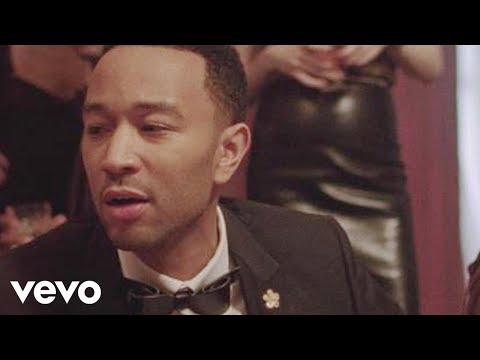
  • The song's visual follows the song's concept of "enjoying and luxuriating in your pursuits." Legend told Billboard: "In some ways we made a fantasy video that shows some reveling... a little sex. It's a gorgeous video that I think people will like."
  • This song uses three different samples. It borrows from Marvin Gaye's "If I Should Die Tonight," Jean Knight's "Mr. Big Stuff," and a clip from a live show of Lenny Kravitz saying, "This is our song and our song for the future."
  • Producer Dave Tozer's production was inspired by classic '60s and '70s Soul numbers with a harp played by classically trained harpist Brandee Younger, who has also worked with Common, Ryan Leslie and Drake. Tozer told SonicScoop: "What I was inspired by with that kind of instrumentation was classic '60s and '70s Curtis Mayfield, Philly soul, or Motown. That's when you had this great combination of soul music with these funky R&B rhythm sections, combined with this classical instrumentation on top. You hear it all over Curtis Mayfield records. It's this very percussive rhythm section, but with actual percussion, not just drum kit: you got bongos, congas, really driving African or Caribbean rhythms. Then you're topping that off with this European classical orchestration - harps, horns, French horns, strings, celeste."
  • Legend discussed the song's meaning during an interview with Tell Me More host Michel Martin on 89.9 WWNO. "People see me as pretty low key and in a lot of ways, and this song sort of goes against type for me because my brothers on the rap side, they usually are more flossy and more willing to talk about how much they floss," he explained. "But to me, the song, partly, is about being bold, being audacious, taking risks for love and also for life."

    "And for me, like, even choosing to be John Legend and to be who I am as a star, as an artist, it's a risk 'cause I - you know, I graduated from college and worked as a management consultant, and I could have had this very kind of buttoned-up life and worn suits to work every day," he continued. "I could've done very well for myself, but I chose a more risky path and a more kind of flashy path as well. Taking that risk meant that the possibility of failure was high, but the possibility of reward was worth it for me."

Comments

Be the first to comment...

Editor's Picks

Let Me Be Your Teddy Bear: Teddy Bears and Teddy Boys in Songs

Let Me Be Your Teddy Bear: Teddy Bears and Teddy Boys in SongsSong Writing

Elvis, Little Richard and Cheryl Cole have all sung about Teddy Bears, but there is also a terrifying Teddy song from 1932 and a touching trucker Teddy tune from 1976.

Michael Schenker

Michael SchenkerSongwriter Interviews

The Scorpions and UFO guitarist is also a very prolific songwriter - he explains how he writes with his various groups, and why he was so keen to get out of Germany and into England.

Edwin McCain

Edwin McCainSongwriter Interviews

"I'll Be" was what Edwin called his "Hail Mary" song. He says it proves "intention of the songwriter is 180 degrees from potential interpretation by an audience."

Wang Chung Pick The Top Songs Of The '80s

Wang Chung Pick The Top Songs Of The '80sSongwriter Interviews

'80s music ambassadors Wang Chung pick their top tracks of the decade, explaining what makes each one so special.

Stephen Christian of Anberlin

Stephen Christian of AnberlinSongwriter Interviews

The lead singer/lyricist for Anberlin breaks down "Impossible" and covers some tracks from their 2012 album Vital.

Philip Cody

Philip CodySongwriter Interviews

A talented lyricist, Philip helped revive Neil Sedaka's career with the words to "Laughter In The Rain" and "Bad Blood."