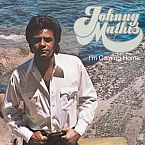

I'm Coming Home

Album: I'm Coming Home (1973)
Charted: 75
Play Video

Songfacts®:

  • This was written by Thom Bell and Linda Creed, who wrote many soul hits of the '60s and '70s for the Delfonics, the Stylistics, and the Spinners, among others, with Bell at the production helm for many of the songs. Although Johnny Mathis made a career out of singing popular easy listening ballads, "I'm Coming Home" was his only #1 hit on the Adult Contemporary chart. In the song, Mathis is disillusioned with fame and doesn't want to be part of an industry that chews people up and spits them out, so he waits for the train to bring him back home.
  • By the '70s, Mathis was ready for a change. His newer records garnered only modest sales and rarely surfaced on the pop charts. As luck would have it, Thom Bell was itching to work with the singer and approached Columbia president Clive Davis with the idea. Davis initially turned Bell down, because although Mathis was black, he didn't sing "black" music – he was a pop balladeer. "He made that mistake that a lot of people make," Bell told PopMatters in 2015. "Don't get the hue of the skin mixed up with the kind of music I make. It took awhile but I finally got Mathis."
  • Bell, who also produced the album, discovered the reason for the singer's waning success. "He was a catalog artist, so Columbia wasn't doing anything special for him but standard operating procedure," he explained. "There's a new Mathis album. They're going to put it out and it's going to sell 200,000. They could always depend on that type of profit all the time but then the sales dropped down to maybe 80,000. He was still Johnny, so where was the problem? I found out it was production. The product was not as strong as it could have been. The arrangements, the studio, the mixing, and the mastering were not there. What I had to do was make sure that his product was good. The songs had to be good and, to the best of my ability, the sound had to be good."
  • Part of Bell's plan was to record Mathis differently than any other producer ever had. "Everyone who recorded him had recorded his voice high," he said. "I took him from way in the air and brought him down. He has a much more mature, rich sound singing a little lower. He was so relieved. He couldn't believe I was taking him down."
  • Before I'm Coming Home, Mathis never sang songs that were written expressly for him. When Bell and Creed met with him to cull ideas from the singer's personal feelings and desires, he didn't know what to tell them, so he made stuff up. "I don't know whether I told the truth or not," he laughed. "They wanted something so I told them. That's the way they got the idea of the album. They're talking to me and getting my thoughts about different things. I thought that was the most marvelous thing. Nobody had ever done that before."
  • The album fared well critically but petered out at #115 on the albums chart. Mathis blames the commercial performance on Columbia, who wasn't interested enough to promote the album after the record label fired Clive Davis.
  • Bell produced the single again in 1974 for The Spinners, whose version peaked at #18 on the pop chart and #3 on the R&B chart.

Comments

Be the first to comment...

Editor's Picks

Sarah Brightman

Sarah BrightmanSongwriter Interviews

One of the most popular classical vocalists in the land is lining up a trip to space, which is the inspiration for many of her songs.

George Harrison

George HarrisonFact or Fiction

Did Eric Clapton really steal George's wife? What's the George Harrison-Monty Python connection? Set the record straight with our Fact or Fiction quiz.

Rick Astley

Rick AstleySongwriter Interviews

Rick Astley on "Never Gonna Give You Up," "Cry For Help," and his remarkable resurgence that gave him another #1 UK album.

Deconstructing Doors Songs With The Author Of The Doors Examined

Deconstructing Doors Songs With The Author Of The Doors ExaminedSong Writing

Doors expert Jim Cherry, author of The Doors Examined, talks about some of their defining songs and exposes some Jim Morrison myths.

Kip Winger

Kip WingerSongwriter Interviews

The Winger frontman reveals the Led Zeppelin song he cribbed for "Seventeen," and explains how his passion for orchestra music informs his songwriting.

Philip Cody

Philip CodySongwriter Interviews

A talented lyricist, Philip helped revive Neil Sedaka's career with the words to "Laughter In The Rain" and "Bad Blood."