John Cougar, John Deere, John 3:16

Album: Ripcord (2015)
Charted: 40
Play Video

Songfacts®:

  • The first single from Keith Urban's ninth studio album finds him name-checking the titular corporation, singer and Bible verse. The song title "resonated deeply" with the singer. "It's the poetic use of the three John's and what each represents to me," he said. The song also references many more well-known names, including John Wayne, Kris Kristofferson, Don McLean, and Marilyn Monroe.
  • Written by Shane McAnally, Ross Copperman and Josh Osborne, Urban first performed the up-tempo track at the 2015 Country Radio Seminar back in February 2015. "'John Cougar, John Deere, John 3:16' was sent to me a few months ago by one of the songwriters and I loved it immediately – loved it so much that right before I walked out on stage at the Ryman (Auditorium) for CRS a few months back, I thought I'd play the song solo acoustic to see what the audience thought," the singer said. "Flash forward and there's no doubt that their response that day helped make it the first single from what will be my next album."
  • Urban performed the full version of the song live on stage for the first time at the Bridgestone Arena during the CMT Music Awards on June 10, 2015.
  • Shane McAnally explained to Billboard magazine how the three titular Johns tie in together. "John Cougar references all the sort of sexual tension of teenage angst all of us were growing up in," he explained. "John Deere represents the way that our parents worked and what we saw living in the country, and of course [there's] the element of religion. And [there's] irony in John Cougar starting the line, and John 3:16 ending the line because that was the push and pull of that teenage thing."
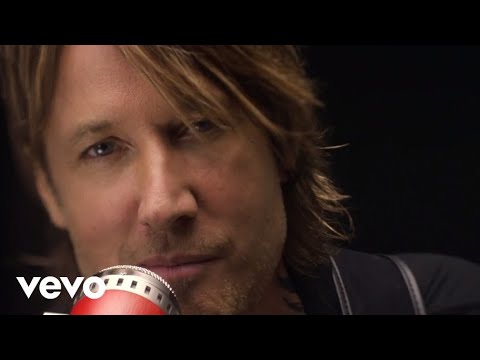
  • The music video was directed by Shane Drake. "It was a blast. I had a great time doing it with Shane Drake. We'd never worked before other than on the Tim McGraw and Taylor video for 'Highway Don't Care' said Urban. "It was a fun video to do. It was challenging, because we didn't want it to be a hundred percent literal about every lyric. That was the most important thing for me."

    "I like everybody to be able to paint their own picture of things, so there's sort of more random imagery," he continued, "I guess, of certain things that relate to the song, without it being so specific."
  • When Keith Urban first saw the title, he was immediately intrigued about the song. "I saw the title of the song first and was curious to what that song would be," he told Lon Helton, host of the syndicated Country Countdown USA. "Some songs grab me at first listen. Other songs creep up on me. I love those songs too, but this was immediate. I played it maybe three times, and then went and grabbed my guitar and came out and I sort of sang along with it, and I thought, 'I think this really, really suits me. I love this song, and I think it suits me.'"
  • John (formerly Cougar) Mellencamp has, of course, made multiple Hot 100 appearances. However, the equipment company, John Deere, has also featured on the chart before: Joe Diffie's "John Deere Green" peaked at #69 in 1994.
  • Referencing artists is not something most songwriters set out to do, as it can limit a song's potential in getting cut. "As a writer, you're concerned with 'Will the artist like the [referenced] artist? Is that going to kill the song?'" Ross Copperman explained to Billboard magazine. "So we try not to. 'John Cougar' was such a rare exception. It was just right. It had to be."
  • It was Keith Urban's wife, the actress Nicole Kidman, who suggested Ripcord's album title. "It's actually the name of a play that is opening in New York," urban told Billboard. "She brought up the name and I was intrigued. I thought it really suited the songs. I hadn't found an album title that had really seemed to fit the energy of the record, particularly. The energy that I felt when I heard the name 'Ripcord' just really seemed to fit. I also liked the metaphor of the ripcord being that thing that you reach for to save your life when you are hurdling to earth at a great speed. It just seemed to really fit the record for me."

Comments

Be the first to comment...

Editor's Picks

Jim Adkins of Jimmy Eat World

Jim Adkins of Jimmy Eat WorldSongwriter Interviews

Jim talks about the impact of "The Middle" and uses a tree metaphor to describe his songwriting philosophy.

80s Video Director Jay Dubin

80s Video Director Jay DubinSong Writing

Billy Joel and Hall & Oates hated making videos, so they chose a director with similar contempt for the medium. That was Jay Dubin, and he has a lot to say on the subject.

Into The Great Wide Open: Made-up Musicians

Into The Great Wide Open: Made-up MusiciansSong Writing

Eddie (played by Johnny Depp in the video) found fame fleeting, but Chuck Berry's made-up musician fared better.

Kip Winger

Kip WingerSongwriter Interviews

The Winger frontman reveals the Led Zeppelin song he cribbed for "Seventeen," and explains how his passion for orchestra music informs his songwriting.

Music Video Director David Hogan

Music Video Director David HoganSong Writing

David talks about videos he made for Prince, Alabama, Big & Rich, Sheryl Crow, DMB, Melissa Etheridge and Sisters of Mercy.

Adam Young of Owl City

Adam Young of Owl CitySongwriter Interviews

Is Owl City on a quest for another hit like "Fireflies?" Adam answers that question and explains the influences behind many others.