
How Can I Ease The Pain

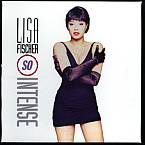
Album: So Intense (1991)
Charted: 11
Play Video

Songfacts®:

  • Lisa Fischer is a veteran backing singer who's lent her vocals to the likes of Luther Vandross, Aretha Franklin, Tina Turner, Sting, and The Rolling Stones. But in 1991, she took center stage with her first and only solo album, So Intense, which boasted the #1 R&B single "How Can I Ease The Pain."

    Fischer wrote the ballad with the album's producer Narada Michael Walden - who is accustomed to writing hits tailored for powerhouse voices like Aretha Franklin's ("Freeway Of Love") and Whitney Houston ("How Will I Know") - and co-producer Louis Biancaniello. But they weren't supposed to be working on a ballad at all. In fact, they were explicitly told not to. Fischer's label, Elektra, had conducted a survey to determine whether people were interested in uptempo songs or ballads, and decided uptempo was the way to go. Fischer did her best to follow orders, but her ear kept being swayed by one of Walden's choruses.

    She told the story to Pop Culture Classics in 2017: "Elektra was asking us to write an uptempo song. And we kept trying and trying and I just wasn't feeling it and I was still kind of a new writer. And we kept coming back to this chorus of 'How Can I Ease The Pain' that Narada had written. And that's all he had. And I said, 'Oh, that's so pretty. I so want to sing that.' He says, 'Yeah, yeah, yeah, but we're supposed to write an uptempo song.' I'm like, 'Yeah, I'll get back to that. But I want to work on this.'

    And I'm just so thankful that I didn't choke my own inner voice by just trying to serve the record company's wants and needs and being supportive in that way. Being the background singer, in my head, I'm like, 'Well, gee, my homework for the record company is - to do an uptempo song.' … I was like, 'Yeah, I'll get to it,' but something in my gut is going, 'Work on this right now.' So we did. And we worked on uptempo. We worked on this ballad. But my heart was really close to the ballad. And it was a great lesson in learning how to listen to your intuition."
  • In the song, Fischer desperately tries to resist letting the no-good man she loves back into her life. Producer Narada Michael Walden had to get creative to evoke the right mood in the studio and coax the vocal performance he wanted from Fischer.

    "We put a brass bed in the room for Lisa Fischer for 'How Can I Ease the Pain,'" he told Hits Daily Double in 2024. "We were trying to capture the mood of a woman who's been taken advantage of by someone she loves. Lisa, Mariah and Shanice Wilson ("I Love Your Smile") were the only three who could muster that five-octave range."
  • In a tie with Patti LaBelle's Burnin', this won the Grammy Award for Best Female R&B Vocal Performance in 1992. Fischer actually appeared on LaBelle's album, singing backing vocals on the track "When You Love Somebody (I'm Saving My Love for You)."
  • Fischer started working on a second album but a combination of factors made her ditch the project - and her solo career - altogether. She wasn't making enough money as a solo artist and couldn't afford to give up her session work, so she tried to juggle both. All the while, she struggled under the mounting pressure to produce a worthy followup to her acclaimed debut. When a new record deal with a different label fell through, she returned to background singing full-time. She was unexpectedly thrust back into the spotlight, however, when she was featured in 20 Feet From Stardom, a 2013 documentary about the lives of background singers. Thanks to the newfound attention, she went on a solo tour accompanied by her band Grand Baton the following year.
  • This was used in the 2013 movie Madea Gets A Job.

Comments

Be the first to comment...

Editor's Picks

Loudon Wainwright III

Loudon Wainwright IIISongwriter Interviews

"Dead Skunk" became a stinker for Loudon when he felt pressure to make another hit - his latest songs deal with mortality, his son Rufus, and picking up poop.

Into The Great Wide Open: Made-up Musicians

Into The Great Wide Open: Made-up MusiciansSong Writing

Eddie (played by Johnny Depp in the video) found fame fleeting, but Chuck Berry's made-up musician fared better.

Adam Duritz of Counting Crows

Adam Duritz of Counting CrowsSongwriter Interviews

"Mr. Jones" took on new meaning when the song about a misguided view of fame made Adam famous.

Lace the Music: How LSD Changed Popular Music

Lace the Music: How LSD Changed Popular MusicSong Writing

Starting in Virginia City, Nevada and rippling out to the Haight-Ashbury, LSD reshaped popular music.
Andy McClusky of OMD

Andy McClusky of OMDSongwriter Interviews

Known in America for the hit "If You Leave," OMD is a huge influence on modern electronic music.
Goodbye, Hello: Ten Farewell Tour Fake-Outs

Goodbye, Hello: Ten Farewell Tour Fake-OutsSong Writing

The 10 biggest "retirement tours" that didn't take.