Rock The Bells

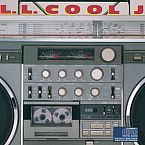
Album: Radio (1985)
Play Video

Songfacts®:

  • Based on the title, you expect to hear the famous Bob James "Take Me to the Mardi Gras" sample on this track. Those breakbeat-friendly bells found their way to many hip-hop tracks of this era, including Run-DMC's "Peter Piper" and Eric B and Rakim's "Don't Sweat the Technique."

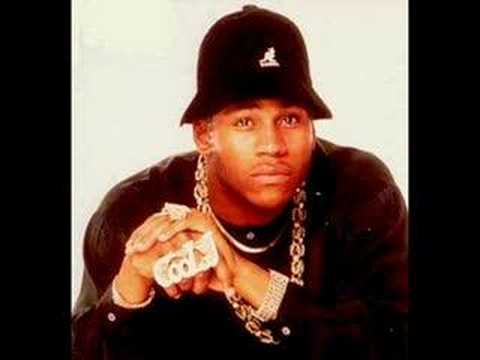
    This song, however, isn't about the actual bells of hip-hop, but about LL's dominance in the rap game, which he was never shy in expressing, even on this first album, Radio. According to Mr. Cool J., the phrase "rock the bells" was a popular saying around his parts, and he thought it would make a good title.
  • This song was produced and co-written by Rick Rubin, who was just beginning his extraordinary career. Rubin went on to produce the Beastie Boys, Run-DMC, Red Hot Chili Peppers, Johnny Cash and many other musical luminaries.

    The first version of this song was released as a 12" single and was 7 minutes long. This one did have tinny bell sounds throughout. LL wasn't happy with this version, so he asked Rubin to redo it. "He wasn't busy, he had time," said LL in Entertainment Weekly. "Ad-Rock of the Beastie Boys played a tape for him, and I went and met him in his dorm room. Back then he only had Def Jam Productions. Rick Rubin and Russell Simmons and myself - they formed the label, and I was the flagship artist."

    The 4-minute reworking of this song was the one used on the Radio album, and the most popular version of the song.
  • Along with Rubin and his DJ, Cut Creator, LL used an 808 drum machine to form the basis for this track, mixing in a guitar scratch sampled from the AC/DC song "Flick The Switch" and some synth from the song "Rocket In My Pocket" by Cerrone (electro-disco producer Jean-Marc Cerrone). Beats from the Trouble Funk song "Saturday Night In the Park" were also sampled on the track.
  • Thanks to this song, the phrase "rock the bells" became synonymous with old-school rap, and in 2004 the first Rock The Bells festival took place in San Bernardino, California, featuring a reunited Wu-Tang Clan in what would be their final performance. This festival was documented in the movie of the same name, which was released in 2006.
  • In 2017, SiriusXM satellite radio rebranded their classic hip-hop channel Backspin as "Rock The Bells Radio," with programing curated by LL Cool J.

Comments: 2

  • K-delabass from SouthsideIt's worth hearing the original 12" version, it's like a completely different track, however I'm glad he re-recorded it for the album!
  • Moosehead from ScBeat biter. you rocked the bells, but you stole my beat! never could figure out why anyone would believe LL stole this from marley and shan...until i heard the original version. shame on you, LL!!!! but, you did make it better (hard for a Shan fan to admit).
see more comments

Editor's Picks

Donnie Iris (Ah! Leah!, The Rapper)

Donnie Iris (Ah! Leah!, The Rapper)Songwriter Interviews

Before "Rap" was a form of music, it was something guys did to pick up girls in nightclubs. Donnie talks about "The Rapper" and reveals the identity of Leah.

Bass Player Scott Edwards

Bass Player Scott EdwardsSong Writing

Scott was Stevie Wonder's bass player before becoming a top session player. Hits he played on include "I Will Survive," "Being With You" and "Sara Smile."

Chris Fehn of Slipknot

Chris Fehn of SlipknotSongwriter Interviews

A drummer for one of the most successful metal bands of the last decade, Chris talks about what it's like writing and performing with Slipknot. Metal-neck is a factor.

Carol Kaye

Carol KayeSongwriter Interviews

A top session musician, Carol played on hundreds of hits by The Beach Boys, The Monkees, Frank Sinatra and many others.

James Bond Theme Songs

James Bond Theme SongsMusic Quiz

How well do you know the 007 theme songs?

Annie Haslam of Renaissance

Annie Haslam of RenaissanceSongwriter Interviews

The 5-octave voice of the classical rock band Renaissance, Annie is big on creative expression. In this talk, she covers Roy Wood, the history of the band, and where all the money went in the '70s.