Shape Of Things To Come

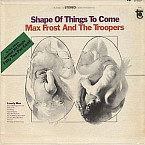
Album: Shape Of Things To Come (1968)
Charted: 22
Play Video

Songfacts®:

  • This song comes from Wild in the Streets, which may be the most "'60s" movie ever made. It stars Christopher Jones, Hal Holbrook, and Shelley Winters.

    Released on May 29, 1968, the film is about an acid-dealing hippie named Max Flatow (Christopher Jones) who blows up his father's car with dynamite, changes his name to Max Frost to become the world's biggest rock star, then uses his fame to break into politics and lower the voting age to 14.

    The film is intentionally absurd, but it touched upon real concerns of the era. The Baby Boomer generation was starting outnumber their elders, meaning young people were having an outsized influence on the country in a way no one was used to dealing with.

    LSD was a concern, as well, and it plays a major role in the film as Frost and his hippie army spike the Washington DC water supply with it and "turn on" the entirety of Congress.

    Frost's character, while somewhat cartoonish, stems from an abusive household with a domineering, materialistic mother and a boyish father who fight endlessly. Though Frost becomes King of the Hippies, he's not portrayed as a loving sort. Instead, he's an angry, resentful young man, the result of an emotionally abusive upbringing. This shows a more nuanced view of the era's revolutionary counterculture personalities.
  • The chorus of "Shape of Things to Come" is:

    Nothing can change the shape of things to come

    This is a warning to the old people (everyone over 30) that the revolution is coming. Frost has set in motion his plan to mobilize the youth and lower the voting age to 14, making the young the real power base in America. He uses his live performance of this song both to threaten the oldies and to rally the youngsters.
  • Most of the songs written for the soundtrack sound relatively legitimate - you could imagine hearing them on the radio - but "Shape Of Things To Come" is clearly a cut above the rest. It sounds like a real hit song from 1968, and it actually became one when the film's soundtrack was released with the song as its flagship single.

    Though only 1:57 long, the song was successful. It peaked at #22 in the US and reached #2 in Canada, where for a time it reigned over Janis Joplin's "Piece of My Heart," Jimi Hendrix' "All Along the Watchtower," and Steppenwolf's "Magic Carpet Ride."
  • The band may have been fictional, but the songwriters were very real and quite good. Barry Mann and Cynthia Weil wrote the Shape Of Things To Come. The duo wrote many of pop music's most popular songs, including "You've Lost That Lovin' Feelin'." Mann is also known for his own recordings, including "Who Put the Bomp (In the Bomp, Bomp, Bomp)."
  • Mike Curb produced the song. He was a major figure in music in the 1960s and '70s. He also owned race cars and was the 42nd Lieutenant Governor of California in the early 1980s.
  • In the movie, 28-year-old Richard Pryor plays the drummer for Max Frost and the Troopers. His character was named Stanley X.

    Pryor went on to become a successful actor and a highly influential comedian. Dave Chappelle called him "the highest evolution of comedy."
  • Fuzz guitar maestro Davie Allan and the Arrows released a version of the song without vocals. It's on his 1968 album Wild in the Streets.
  • The B-side of the single was "Free Lovin'," by Guy Hemric and Paul Wibier.
  • In 1993, The Ramones covered the song on the album Acid Eaters.
  • Retail chain Target used the song for a series of commercials in 2006.
  • The real singer on this song appears to be Paul Wibier, who did a song called "Satan" in 1969.

Comments: 1

  • Jerrica Lee from San Diego, CaPaul Wibier is brilliant! He did music for 'Satan's Sadist's' as well, and it's impossible to find any information on him! He deserved a lot more attention (still does!).
see more comments

Editor's Picks

John Lee Hooker

John Lee HookerSongwriter Interviews

Into the vaults for Bruce Pollock's 1984 conversation with the esteemed bluesman. Hooker talks about transforming a Tony Bennett classic and why you don't have to be sad and lonely to write the blues.

Soul Train Stories with Stephen McMillian

Soul Train Stories with Stephen McMillianSong Writing

A Soul Train dancer takes us through a day on the show, and explains what you had to do to get camera time.

Ron and Russell Mael of Sparks

Ron and Russell Mael of SparksSongwriter Interviews

The men of Sparks on their album Hippopotamus, and how Morrissey handled it when they suggested he lighten up.

Charles Fox

Charles FoxSongwriter Interviews

After studying in Paris with a famous composition teacher, Charles became the most successful writer of TV theme songs.

Chris Squire of Yes

Chris Squire of YesSongwriter Interviews

One of the most dynamic bass player/songwriters of his time, Chris is the only member of Yes who has been with the band since they formed in 1968.

Colbie Caillat

Colbie CaillatSongwriter Interviews

Since emerging from MySpace with her hit "Bubbly," Colbie has become a top songwriter, even crafting a hit with Taylor Swift.