There is a long tradition in pop music of young artists discovering that the castle comes with a dungeon. From the eerily prophetic confessions of Britney Spears' "
Lucky" (2000) (a third-person fable about a Hollywood actress who "cry, cry, cries in her lonely heart" that only grew more devastating in retrospect) to the clear-eyed disillusionment of Billie Eilish's "
Getting Older" (2021) (where the burnout of early fame is laid bare in the lyric, "Things I once enjoyed. Just keep me employed now"), the entertainment industry has often been portrayed less a dream factory and more a slightly haunted theme park with excellent lighting.
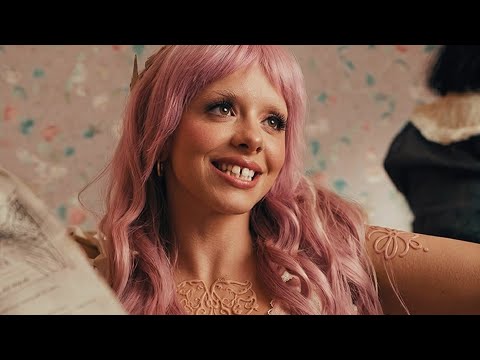
Into this funfair strolls Melanie Martinez with "Disney Princess," a track that manages the neat trick of sounding like bubblegum while tasting faintly of brimstone.
In the intro, Martinez sets the scene with a creepy voice effect that makes her sound like a warped fairy godmother, narrating the transformation of an innocent girl into a commodified pop product.
From the jump, the opening lines introduce a character who's fallen into making horrible decisions, dragged down by the "monsters and demons" of the industry. In the pre-chorus, she describes the Hollywood hell she's found herself in; the chorus then presents the bleak side effects of childhood fame: drug abuse, lost innocence, and mental health struggles the public never sees.
The second verse sharpens the knife. While parents profit, strange men circle bars.
One line lands like a snapped tiara:
I traded my bows
For strapless bras and snow
Early in her career, Martinez wore bows, a symbol of childlike purity. Now the bows are gone, replaced by adult image and chemical coping mechanisms.
"I love writing about the entertainment industry and how it affects women," Martinez said. "It's a perfect microcosm of the world around us, how numb and disconnected you can become if you allow others to commodify you."
The song ends with a visceral sequence of sounds that fans interpreted as flesh being torn apart, as if the audience that created her is ultimately consuming her.
The track carries a guitar riff that interpolates "
What the Hell" by Avril Lavigne. Back in 2011, that riff underscored teenage abandon and cheerful rebellion. Fifteen years later, Martinez repurposes it as a caution sign. The spirit of "what the hell" - go on, have another drink, sign another contract - becomes something more ominous. Rebellion, she suggests, is delightful until someone else owns the copyright.
Martinez wrote the song with producer CJ Baran, who handles bass, guitar, keys, sequenced drums and synth programming, with live drums from Rhys Hastings.
"Disney Princess" is the second single from
Hades, Martinez's fourth album, which introduces a new character, Circle, a young woman extracted from a secluded cult and engineered into pop stardom by a dystopian AI corporation called Hades Tech. The first single, "
Possession," presents Circle as something owned; "Disney Princess" shows the completed transformation: the prettiest girl in the land, stripped of soul and rebuilt for outrage, obsession and profit.
Martinez added the spoken word/narrative intro at the very end of the recording process. She felt it was necessary to set up the story given the song's title,
explaining to Genius, "I just felt like it made the most sense."
The song is a deliberate counter-narrative to party-culture anthems. Martinez noted there are already plenty of songs glamorizing the party lifestyle of being an artist, and she wanted to contribute a different perspective - what she called "the traumatic reality of being an artist," especially for young, impressionable women entering the industry.
The lines in the first verse about drunk driving and doing cocaine ("20 bumps in deep") are parody. Martinez wanted to create a satirical, over-the-top representation of that energy. "Just right off the bat," she said." So you know, like, okay, she's not serious, like this is a character."
Please don't go
You're the only one
Who sees my soul
The pre-chorus reflects the isolation of fame. Martinez explained that being an artist is an isolating experience, and when you do form friendships, abandonment issues can set in - wondering whether people are genuine or just using you. The section captures "just the yearning for a real authentic friendship in a really fake kind of world."
The "signing the dotted line" lyric is a nod to conspiracy theories about selling your soul. Martinez said she loves the conspiracy theories about artists signing their soul away to the devil and thinks "people aren't wrong" about them - not in the literal cloning sense, but in the way the industry commodifies artists, turning them into products both for corporations and sometimes even their own audiences.