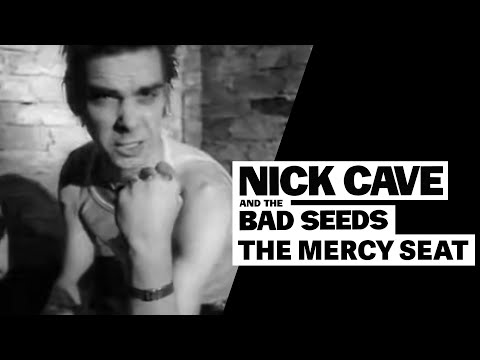
The Mercy Seat

Album: Tender Prey (1987)
Play Video

Songfacts®:

  • The lead single from Tender Prey, this harrowing track finds Nick Cave taking on the persona of a death row prisoner, awaiting execution. As Cave's appointment with the electric chair gets closer, he moves from pleading his innocence to admitting his crime. During a 2017 interview with The Sun, it was suggested there's some ambiguity over the man's guilt. Cave retorted:

    "You mean, do I know what the f--k I'm talking about? I think that's why we can continue to play it at pretty much every concert. It remains mysterious and ambiguous but genuinely thoughtful."
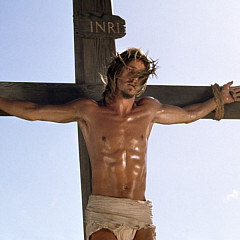
  • The anthem of death row defiance is laden with allusions to Christianity; the mercy seat is both the electric chair and a symbol of the throne of God, where following his execution, Cave will be judged.
  • Johnny Cash is a man whose entire life found him hovering close to the mercy seat. He recorded a stripped back cover of this song for his 2000 album American III: Solitary Man. Cash's version is pointedly unambiguous, the death row inmate declares himself "totally innocent', as opposed to the original's "nearly wholly Innocent."

    "Pure Johnny Cash," said Cave to Mojo of the country legend's cover. "Been f---ed over by the system, he's an innocent man in jail, he's going to die."

    "I always thought it was clear that the guy did it," he continued. "What's in question is the concept of guilt and innocence, in the sense that he may have done it but that doesn't mean he's a guilty person in a broader sense. My version is more conflicted. Which is pure Nick Cave, I suppose."
  • Nick Cave recalled in his 2020 book Stranger Than Kindness how he came to write "The Mercy Seat."

    "Songs are ingenious devices that have their own demands. They find their way, whether you like it or not. In the early 80s I was fully engaged in the writing of my novel And the Ass Saw the Angel (1989). I sat in a small room in Berlin, typing away, day and night, sleeping little. When I reached an impasse with the novel, I would scroll the odd lyric line on a scrap of paper beside me, ostensibly a song about a man going to the electric chair. The song was at best a distraction, a doodle, a song I never looked fully in the eye, or thought much about. But songs have their own journeys and in time assert their sovereignty. 'The Mercy Seat' was such a song.

    Even when I was singing it I had no idea that the song was important or that I would play it at every gig for the next 35 years, or that my hero Johnny Cash would one day record it. It was, as far as I was concerned, an afterthought. I often find that when it comes to songwriting I am the last to know. The songs hold within them a far greater understanding of their potential than I do."

Comments: 2

  • Eb from KeysI cannot believe that there is only one other comment about this brilliant song in 2025.
  • Steve Baldwin from Williamstown Victoria It was part of a Sam Beckett story line ....as in the Magdalen Mercy Seat was in the book Murphy I pretty sure Nick said as much
see more comments

Editor's Picks

Eric Clapton

Eric ClaptonFact or Fiction

Did Eric Clapton really write "Cocaine" while on cocaine? This question and more in the Clapton edition of Fact or Fiction.

Trans Soul Rebels: Songs About Transgenderism

Trans Soul Rebels: Songs About TransgenderismSong Writing

A history of songs dealing with transgender issues, featuring Pink Floyd, David Bowie, Morrissey and Green Day.

John Waite

John WaiteSongwriter Interviews

"Missing You" was a spontaneous outpouring of emotion triggered by a phone call. John tells that story and explains what MTV meant to his career.

The Truth Is Out There: A History of Alien Songs

The Truth Is Out There: A History of Alien SongsSong Writing

The trail runs from flying saucer songs in the '50s, through Bowie, blink-182 and Katy Perry.

Deconstructing Doors Songs With The Author Of The Doors Examined

Deconstructing Doors Songs With The Author Of The Doors ExaminedSong Writing

Doors expert Jim Cherry, author of The Doors Examined, talks about some of their defining songs and exposes some Jim Morrison myths.

Ian Anderson: "The delight in making music is that you don't have a formula"

Ian Anderson: "The delight in making music is that you don't have a formula"Songwriter Interviews

Ian talks about his 3 or 4 blatant attempts to write a pop song, and also the ones he most connected with, including "Locomotive Breath."