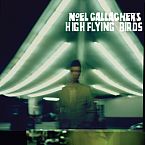
The lead single from Noel Gallagher's High Flying Birds debut self-titled album did not impress the singer/guitarist's brother Liam. The ex-Oasis vocalist tweeted after it was premiered: "One Word. Dido." The country-esqe tune was released on August 21, 2011.
When asked at a press conference whether the song's meaning is connected to the broken relationship between himself and Liam, Noel denied that was the case, explaining instead it was based on the saying "If we don't leave this place, it'll be the death of you and me." The singer/guitarist added that it more to do with his wife Sara saying, it is "a romantic song about people escaping the surroundings they're in and having a jolly good time and living happily ever after."
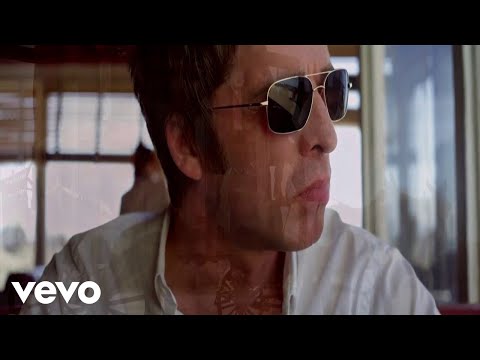
Filmed in Los Angeles, California and set in a roadside diner, the video tells the story of a bored waitress.
Gallagher explained the band's name to Q magazine: "I didn't want to change my name to Gary Stardust or Johnny Osbourne. I'm too associated with who I am. So one day I was sitting at home listening to the radio and heard 'I Need Your Love' by Peter Green's Fleetwood Mac. I went, That's it! Noel Gallagher's… something. I thought about it for months, then I was listening to the Grateful Dead song 'High Flying Bird.' F--k me! I wrote it down and toyed with the spelling - 'flying' without a 'g,' bird with a 'y.."
Gallagher explained the lyric, "I can feel the storm clouds sucking up my soul," to Mojo magazine: "It's about the feeling that however good things are, you always know a little bit of it will be s--t. Americans can be ultra-corporate, professional people and that's why they're so loaded - everyone in LA's got their own studio. In England we're a bit more: F--k it. It'll do. We don't care if it rains. Get the cricket bat out. Like the line at the end: 'I see another new day dawning, it was rising over me with my mortality.' Yes, it's a new day but I've just got another day older. I'm not one to blow my own trumpet with the lyrics but I was quite pleased with that."
The song is strikingly different to the material Gallagher wrote for Oasis. He told Mojo: "People think it was a conscious decision to say; Right, I'm going to do something different. But this is what just came out. It's my favourite song on the album because when the brass kicks in you're in New Orleans."
Gallagher told NME magazine how he experimented with the song's instrumentation: "The only song I've ever written where I kept going back to it and chipping away at it, changing little bits. I came up with the melody and I'd tried it on different instruments: piano, guitar, organ, and it didn't work. So by a process of elimination we got to trumpets. I don't know any trumpet players, so I called Serge, and then Gary, who plays trumpets with Kasabian. Sent it to him, and said, 'I need three of you, and I want it to sound like New Orleans.' He went, 'Oh…right..' and then we did it round one real old mic."
The album has a definite narrative of escape, hope and love. Gallagher told Spin magazine how this song relates to the theme: "[It's] about two people just saying, 'Let's run away.' When I was writing these songs, I never wrote the lyrics down. They were lodged in my brain. When I went into the studio the engineer, David Sardy (Oasis), said, 'Have you got any lyric sheets?' I said [points to his head] 'they're all in here!' I walked up to the mic and they all came out. But the theme of the album didn't dawn on me until I had finished the record and my publisher said, 'We need the words,' and I had to type them out. And as I was typing and reading them, I thought, 'Wow, there's a story unfolding here. It's all about hope, love, escapism, the journey, and the longing to be somewhere else."
The Independent asked Liam Gallagher whether this song bothered him. "Not one bit," he replied. "The title's good, though – when I first heard it I thought, 'You cheeky...' But that's life, innit?"