Hallelujah

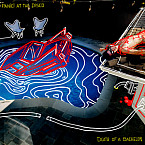
Album: Death Of A Bachelor (2015)
Charted: 81 40
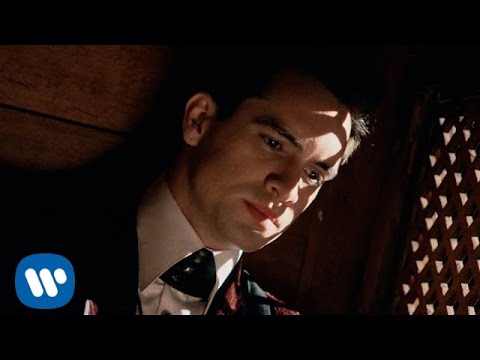
Play Video

Songfacts®:

  • This gospel rocker is the first song released by Panic! At The Disco following the departure of drummer Spencer Smith, making it a one-man band of mainman Brendon Urie. The track was influenced by Urie's Mormon upbringing. He explained during an interview with Los Angeles radio station ALT 98.7: "I grew up in a religious family and, like, that was a very big part of my life, and still, very much, is even though I don't affiliate with any specific religion.

    It's just, for me, you know, the spirituality of being able to own up to your sins, as they're called, and take responsibility for your actions really hit me this time around, and so that song really is about that, it's, you know, taking responsibility for things that you felt guilty for in the past and just owning it, because, now, that's a piece of you and you can't get rid of that history, so, that's really what it was.

    But it was a chance to, kind of also, you know, there's a little tagline in there that I throw out to our fans, I like to call them 'my sinners', and I'm a fellow sinner, and so I think that's a little special little throw-out to them."
  • Brendon Urie posted the song alongside a note for his "fellow sinners," which sees the Panic! At The Disco frontman referencing the new stage in his life without his longtime bandmate, Spencer Smith. "As I begin what feels like a new chapter of my life, I'm filled with immense excitement and a fresh sense of hope," he wrote. "I've seen this band through every phase, every change, every hardship. And yet my appreciation and love grows with every breath."
  • This samples Chicago's 1969 hit "Questions 67 And 68."
  • The song is a celebration of unity between Panic! At The Disco and their fans. Brendon Urie explained to Radio.com: "In the last five years I've felt less resentful about where I came from, my roots in religion, in spirituality. I wanted to touch on that and make it a point to recognize our fans and just how much of my work, my job, is my religion. Touring is my religion. Music is all-encompassing - my religion. So, I wanted to celebrate that."
  • Along with Urie, the writers on this track are Aron Wright, Imad-Roy El-Amine, Morgan Kibby, and his producer, Jake Sinclair. Robert Lamm of Chicago also gets a writing credit because he wrote "Questions 67 And 68," which "Hallelujah" samples.
  • Brendon Urie commented to Genius: "'Hallelujah' is such a strong word. It meant nothing when I said it growing up in church. It is something that I learned through music instead of religion. I love both Jeff Buckley's and Leonard Cohen's 'Hallelujah' songs, too. They are phenomenal."
  • This won Song Of The Year at the 2016 Alternative Press Music Awards.

Comments

Be the first to comment...

Editor's Picks

Donnie Iris (Ah! Leah!, The Rapper)

Donnie Iris (Ah! Leah!, The Rapper)Songwriter Interviews

Before "Rap" was a form of music, it was something guys did to pick up girls in nightclubs. Donnie talks about "The Rapper" and reveals the identity of Leah.
Bass Player Scott Edwards

Bass Player Scott EdwardsSong Writing

Scott was Stevie Wonder's bass player before becoming a top session player. Hits he played on include "I Will Survive," "Being With You" and "Sara Smile."

Chris Fehn of Slipknot

Chris Fehn of SlipknotSongwriter Interviews

A drummer for one of the most successful metal bands of the last decade, Chris talks about what it's like writing and performing with Slipknot. Metal-neck is a factor.

Carol Kaye

Carol KayeSongwriter Interviews

A top session musician, Carol played on hundreds of hits by The Beach Boys, The Monkees, Frank Sinatra and many others.

James Bond Theme Songs

James Bond Theme SongsMusic Quiz

How well do you know the 007 theme songs?

Annie Haslam of Renaissance

Annie Haslam of RenaissanceSongwriter Interviews

The 5-octave voice of the classical rock band Renaissance, Annie is big on creative expression. In this talk, she covers Roy Wood, the history of the band, and where all the money went in the '70s.