Gloria: In Excelsis Deo

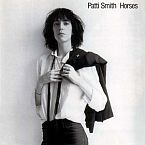
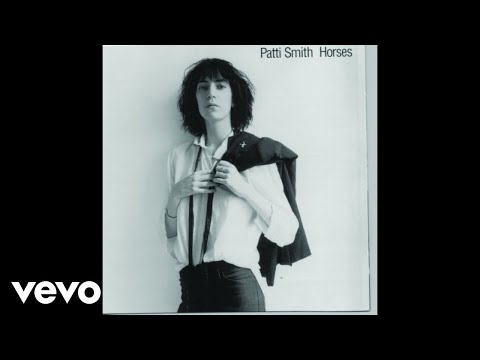
Album: Horses (1975)
Play Video

Songfacts®:

  • Hang on, this will get confusing. Van Morrison originally wrote a song called "Gloria," released in 1964 by Morrison's band Them, on their album The Angry Young Them. The Catholic church also has a hymn called "Gloria in Excelsis Deo," also known as the Greater Doxology - it's part of both Byzantine and Roman rites and has been since the 2nd or 3rd century. So we come to this song, where Patti Smith is covering Van Morrison's "Gloria" but giving it the Catholic hymn name. Because that's the way they do it in New York!

    Patti Smith was clearly aiming for deliberate sacrilege and shock value with the title - the opening lines "Jesus died for somebody's sins, but not mine" are one of the seminal protopunk lyrics.

    Did we say "protopunk"? In New York? In 1975? Why, yes, in fact, John Cale (of Velvet Underground fame) did produce Patti Smith's Horses album! How did you guess? Cale, after leaving Velvet Underground and swinging into the beginnings of his solo career, worked as a producer and A&R man. Amongst other credits, he also produced for Jennifer Warnes, The Modern Lovers, Squeeze, Iggy and The Stooges, and Sham 69. Patti Smith, by the way, was inducted into the Rock and Roll Hall of Fame in 2007.
  • Of Van Morrison's original composition, Dave Barry said that the three-chord song is so easy to play that "If you drop a guitar down a flight of stairs, it'll play 'Gloria' on its way to the bottom."

    As you might expect with a "three chords and the truth" song, it's been covered by a virtual who's-who of rock 'n' roll: Grateful Dead, Rick Springfield, R.E.M., Bruce Springsteen, Eric Clapton, Jimi Hendrix, Tom Petty, John Cougar Mellencamp, David Bowie, U2, The Doors, Eddie and the Hot Rods, and AC/DC. To name the top-tier acts, and only the English versions at that. Bill Murray, too, at the 2007 Crossroads Guitar Festival.
  • The origin of the Horses album lies in the inception of a poem Patti Smith wrote called "Oath" when she was around 20. It began, "Jesus died for somebody's sins but not mine." She explained to Mojo magazine: "It was my statement of independence from being fettered by any particular religious institution, not any statement against Jesus Christ. That's the start of my evolution as a young person that got me to Horses."
  • Guitarist Lenny Kaye recalled: "'Gloria' started as a jam. We'd do chordal riffs over which Patti would chant, poeticize, and tell stories. We never thought about it becoming as big as it did. We were satisfied playing for local art audiences, We just liked doing what we were doing. It didn't have a category. It was an attitude."
  • Patti Smith originally sang "Jesus died for somebody's sins" very aggressively. She recalled to Mojo: "I had so much energy."

    It was Smith's keyboardist and then boyfriend Allen Lanier who suggested the more laid-back delivery she used on Horses: "Why don't you pull back and do it a little slinkier? Make people come to you."

Comments

Be the first to comment...

Editor's Picks

The End Of The Rock Era

The End Of The Rock EraSong Writing

There are no more rock stars - the last one died in 1994.

Supertramp founder Roger Hodgson

Supertramp founder Roger HodgsonSongwriter Interviews

Roger tells the stories behind some of his biggest hits, including "Give a Little Bit," "Take the Long Way Home" and "The Logical Song."

Angelo Moore of Fishbone

Angelo Moore of FishboneSongwriter Interviews

Fishbone has always enjoyed much more acclaim than popularity - Angelo might know why.

Little Big Town

Little Big TownSongwriter Interviews

"When seeds that you sow grow by the wicked moon/Be sure your sins will find you out/Your past will hunt you down and turn to tell on you."

Joe Ely

Joe ElySongwriter Interviews

The renown Texas songwriter has been at it for 40 years, with tales to tell about The Flatlanders and The Clash - that's Joe's Tex-Mex on "Should I Stay or Should I Go?"

Ian Anderson: "The delight in making music is that you don't have a formula"

Ian Anderson: "The delight in making music is that you don't have a formula"Songwriter Interviews

Ian talks about his 3 or 4 blatant attempts to write a pop song, and also the ones he most connected with, including "Locomotive Breath."