Self Defense

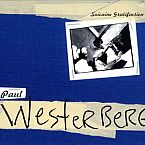
Album: Suicane Gratification (1999)
Play Video

Songfacts®:

  • You think you've had to sit through some uncomfortable dinners in your day? In "Self Defense," Paul Westerberg sits through one so bad that he starts thinking about literally killing himself.

    "Self Defense" is a song of alienation, angst, and doubt-themes Westerberg has been exploring since his 1979 start with The Replacements. He was one of the first to do so in a serious and consistent fashion. In the process he became a trailblazer for '90s grunge and alternative music, even though those scenes were mostly ignoring him by the time he recorded "Self Defense" for Suicane Gratification, his third solo album.

    "Self Defense" is all fragile piano and ragged vocals - sounds of a broken man teetering on the edge. Westerberg sings about holding his true feelings inside while eating dinner with unnamed others. He wants to spill his dinner to escape the situation, yet he remains. "Self Defense" becomes a self-portrait of a man who made himself a legend with drunken debauchery and his combative attitude towards record executives, fans, and Tom Petty alike. Only in his later years did he drop some hints about the anxiety and self-doubt that had fueled those behaviors.

    His need to escape the dinner scene builds through "Self Defense" until we reach the finale, in which Westerberg reveals how deep his angst truly runs:

    And it's wrong to commit a suicide
    It's only in self-defense
  • Westerberg has sung about suicide without actually using the word in songs such as "Crackle And Drag" and "Can't Hardly Wait."
  • Don Was co-produced Suicane Gratification in 1999, the same year he worked on Ziggy Marley and the Melody Makers' final album, Spirit of Music. Was was a Westerberg fan. He listened to 14 Songs, Westerberg's first solo album, as inspiration for Voodoo Lounge, the Rolling Stones' 22nd studio album.
  • Lying through dinner
    And your rock and roll teeth again


    In Seeing Through Paul, a documentary covering Westerberg's creation of Suicane Gratification, Westerberg says his only regret was not getting his teeth fixed earlier in his career. "It's too late now," he says, "I've become accustomed to them."
  • Then you wouldn't have to sit here
    On the fence


    To sit "on the fence" is to be indecisive or stuck between two sides of a problem.

Comments: 1

  • John from Levittown, NyShawn Colvin sings backup on this song. Westerberg has said this song took him six months to write, as opposed to most of his stuff, which tends to be quickly written when the inspiration hits him. A truly underappreciated musician and lyricist.
see more comments

Editor's Picks

Christopher Cross

Christopher CrossSongwriter Interviews

The man who created Yacht Rock with "Sailing" wrote one of his biggest hits while on acid.

Martyn Ware of Heaven 17

Martyn Ware of Heaven 17Songwriter Interviews

Martyn talks about producing Tina Turner, some Heaven 17 hits, and his work with the British Electric Foundation.

Jon Anderson

Jon AndersonSongwriter Interviews

Jon Anderson breaks down the Yes classic "Seen All Good People" and talks about his 1000 Hands album, which features Chick Corea, Rick Derringer, Ian Anderson, and many other luminaries.

Julian Lennon

Julian LennonSongwriter Interviews

Julian tells the stories behind his hits "Valotte" and "Too Late for Goodbyes," and fills us in on his many non-musical pursuits. Also: what MTV meant to his career.

Gavin Rossdale On Lyric Inspirations and Bush's Album The Kingdom

Gavin Rossdale On Lyric Inspirations and Bush's Album The KingdomSongwriter Interviews

The Bush frontman on where he finds inspiration for lyrics, if his "machine head" is a guitar tuner, and the stories behind songs from the album The Kingdom.

Paul Stanley of Kiss, Soul Station

Paul Stanley of Kiss, Soul StationSongwriter Interviews

Paul Stanley on his soul music project, the Kiss songs with the biggest soul influence, and the non-make-up era of the band.