
Crackle And Drag

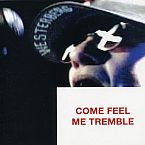
Album: Come Feel Me Tremble (2003)
Play Video

Songfacts®:

  • "Crackle And Drag" is about the suicide of poetess Sylvia Plath. The title is taken from the final line of her poem "Edge": "Her blacks crackle and drag."

    The "blacks" are stage curtains being drawn close.

    "Edge" is about a recently deceased woman, possibly Plath's future self. It might be the last poem she ever wrote. Uncertainties in her personal records make it unclear if the last was "Edge" or "Balloons," but historians lean towards "Edge."
  • And as her babies slept, she took a long deep breath
    Now they're zipping her up in a bag


    Plath committed suicide by sealing herself in her kitchen and running a gas oven as her children slept. Her nurse found her on February 11, 1963. She's still widely read and taught in university English classes.
  • In a 2003 interview with the Minneapolis/Saint Paul City Pages (Volume 24, Issue 1193), Westerberg explained that he read Plath's novel, The Bell Jar, and some of her collected journals and diaries. He was struck by the calculated way she killed herself.

    "Just the way she made the pillows so neat in the oven door," he said. In typical, grim Westerberg fashion, he added, "I always go back and forth: Would I have done that and saved the children, to see their dead mother? Or would I have killed the kids with me?"
  • Westerberg included two versions of the song on Come Feel Me Tremble, his fifth solo studio album. The songs appear back-to-back, with the first being a faster rock version that harkens back to his days in The Replacements, and the second being slowed-down and acoustic. >>
    Suggestion credit:
    John - Levittown, NY
  • On July 1, 2002, before releasing Come Feel Me Tremble, Westerberg played "Crackle And Drag" at the Guthrie Theater in Minneapolis. He joked that he didn't include the song on his fourth studio album, Stereo, because it had "too many words." He fumbled through the beginning but then found his groove and delivered an emotional, evocative rendition.

Comments

Be the first to comment...

Editor's Picks

Howard Jones

Howard JonesSongwriter Interviews

Howard explains his positive songwriting method and how uplifting songs can carry a deeper message.

Susanna Hoffs - "Eternal Flame"

Susanna Hoffs - "Eternal Flame"They're Playing My Song

The Prince-penned "Manic Monday" was the first song The Bangles heard coming from a car radio, but "Eternal Flame" is closest to Susanna's heart, perhaps because she sang it in "various states of undress."

Brandi Carlile

Brandi CarlileSongwriter Interviews

As a 5-year-old, Brandi was writing lyrics to instrumental versions lullabies. She still puts her heart into her songs, including the one Elton John sings on.

Meshell Ndegeocello

Meshell NdegeocelloSongwriter Interviews

Meshell Ndegeocello talks about recording "Wild Night" with John Mellencamp, and explains why she shied away from the spotlight.

Dave Alvin - "4th Of July"

Dave Alvin - "4th Of July"They're Playing My Song

When Dave recorded the first version of the song with his group the Blasters, producer Nick Lowe gave him some life-changing advice.

Bass Player Scott Edwards

Bass Player Scott EdwardsSong Writing

Scott was Stevie Wonder's bass player before becoming a top session player. Hits he played on include "I Will Survive," "Being With You" and "Sara Smile."