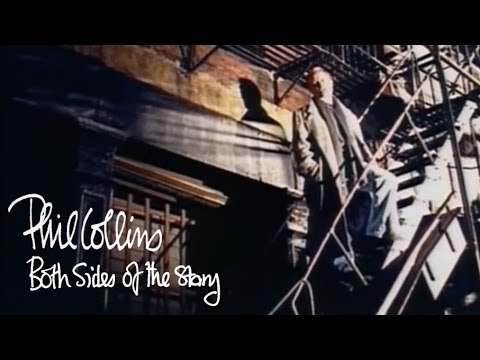
Both Sides Of The Story

Album: Both Sides (1993)
Charted: 7 25
Play Video

Songfacts®:

  • In this song, Collins reminds us to examine both sides of the story in various scenarios - including a homeless man who desperately wants a job, a couple on the brink of a divorce, and a boy from the ghetto threatening a stranger with a gun - rather than make snap judgments. It's a very personal song that Collins wrote after splitting up with his second wife, Jill Tavelman. He told The Mail on Sunday: "Here I am trying to show the need to stand back and see things from the other person's point of view. The lyrics speak for themselves."
  • This was the lead single from Phil Collins' fifth solo album, Both Sides. The song reached #7 on the UK Singles Chart, but was Collins' first lead single since "Thru These Walls" in 1982 to fail to hit the Top 10 on the US Billboard Hot 100.
  • Collins did just about everything himself in making the Both Sides album: he played all the instruments, wrote all the songs and produced it. He says that the album sealed his departure from Genesis, since he now had little interest in working as a group and making the necessary compromises.
  • The music video was mostly filmed in New York City and depicts the events described in the song. As Collins sings about homelessness ("find yourself in the gutter in a lonely part of town"), there are images of homeless people in the streets. He witnesses a domestic battle in the home of a couple with children ("young faces hide in the shadows, while they watch their mother and father fight"). The last scenario, including the lyric, was inspired by the opening scene of the 1991 Lawrence Kasdan drama Grand Canyon. He watches a crime unfold as a ghetto kid with a gun corners a stranger ("Would you respect me if I didn't have this gun 'cos without it, I don't get it, and that's why I carry one"). But as the title suggests, there are two sides to the story and the gangbanger isn't entirely at fault.

    "It's wrong that he has been driven to have a gun," Collins explained in a Chicago Tribune interview. "One of the reasons we have sympathetic faces in the video is so people will look at them and think to themselves, 'This guy isn't a killer. He's not a malevolent character. He's had to resort to this because he's been crapped on.' It's about not getting respect. This gun is their American Express Gold Card for getting respect."

Comments: 1

  • Melissa A Klaus from CaThank you for your music it inspires hope.,your words and genius inspire people to see the reality of the world in which we live.The storys you tell in your songs are the real understanding of humanity .Musicians can connect the disconnected and inspire through song and frequency to find the beat. And the rhythm of our hearts ! Thank You
see more comments

Editor's Picks

Jeff Trott

Jeff TrottSongwriter Interviews

Sheryl Crow's longtime songwriting partner/guitarist Jeff Trott reveals the stories behind many of the singer's hits, and what its like to be a producer for Leighton Meester and Max Gomez.

Mac Powell of Third Day

Mac Powell of Third DaySongwriter Interviews

The Third Day frontman talks about some of the classic songs he wrote with the band, and what changed for his solo country album.

Brandi Carlile

Brandi CarlileSongwriter Interviews

As a 5-year-old, Brandi was writing lyrics to instrumental versions lullabies. She still puts her heart into her songs, including the one Elton John sings on.

JJ Burnel of The Stranglers

JJ Burnel of The StranglersSongwriter Interviews

JJ talks about The Stranglers' signature sound - keyboard and bass - which isn't your typical strain of punk rock.

Andy McClusky of OMD

Andy McClusky of OMDSongwriter Interviews

Known in America for the hit "If You Leave," OMD is a huge influence on modern electronic music.

Meshell Ndegeocello

Meshell NdegeocelloSongwriter Interviews

Meshell Ndegeocello talks about recording "Wild Night" with John Mellencamp, and explains why she shied away from the spotlight.