Farmers Market
by Pulp

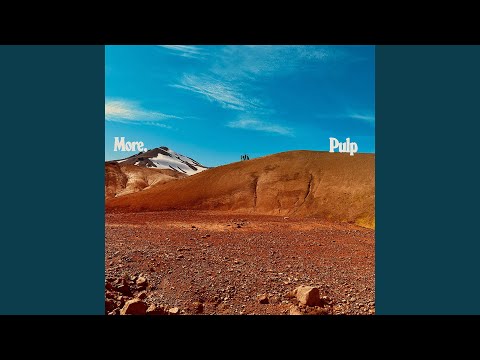
Album: More (2025)
Play Video

Songfacts®:

  • "Farmers Market" is Pulp's existential love story recorded for their eighth album, More. Jarvis Cocker uses a chance encounter in a Los Angeles car park to ask whether you keep trudging through adult routines or finally choose feeling over fear.

    "It sums up the approach to More," Cocker told Uncut magazine, "where I was trying to deal with feelings rather than thoughts."
  • A central image has Jarvis Cocker and others "wear[ing] our dreams out on the dance floor," jokingly trying futures on for size without realizing "we'd be stuck with them for the rest of our natural lives."

    It's a thematic cousin to "Disco 2000," which also glances nostalgically at youthful possibility, except here the tone is less starry-eyed and more gently alarmed by how quickly those possibilities turned into permanent fixtures.
  • The titular Farmers Market car park is where the future breaks through: Cocker spots someone "backlit by the sunset, or maybe the fires marking the end of the world," and the moment prompts him to question whether the groceries clutched in his hands are really more important than "getting your number and finding out who you actually are."

    From there, the chorus keeps pushing a simple question: "Ain't it time we started living?... Ain't it time we started feeling?", implying that the apocalypse isn't literal fire but the slow death by routine when you never act on what you feel.
  • "Farmers Market" is credited to the core Pulp lineup of Jarvis Cocker, Candida Doyle, Mark Webber and Nick Banks, along with contributions from touring collaborators - bassist Andrew McKinney, violinist Emma Smith and keyboardist Jason Buckle - with Cocker handling lyrics in his customary role as a chronicler of awkward emotional awakenings.

    "I came up with the piano bit in lockdown, but it was around 25 minutes, which even I knew was a bit long," Cocker told Uncut magazine. "Whenever I was near a piano, I'd work on it and make it into more of a conventional song. I also had this long drone thing and had a breakthrough when I decided to combine them - so it starts off with all the chord changes and a tune and then abruptly goes into the two-chord thing where I talk about meeting someone and realizing something."

    Cocker noted that while his early musical influences - particularly late-1960s and early-1970s pop - ingrained traditional verse-chorus structures into his songwriting instincts, he takes particular pride when a composition veers off those neatly paved roads.
  • Pulp gave "Farmers Market" its live debut at the Hollywood Palladium in Los Angeles on September 18, 2024. Cocker introduced it by saying they'd been trying new songs and that this one was "partly written about a place in LA, actually, Farmers Market," pointing to the historic Original Farmers Market complex at the corner of Fairfax Avenue and 3rd Street as the loose setting.
  • During the introduction at the Palladium, Cocker hinted the track was loosely connected to his wife, Kim Sion, a London-based creative consultant and gallerist whom he married in 2024 after roughly 15 years together. The Farmers' Market setting functions less as a literal meet-cute and more as a poetic staging ground for the anxieties and revelations that accompany late-life commitment.
  • Within the sequencing of More, "Farmers Market" occupies track 5, arriving immediately after "Grown Ups" and "My Sex." While "Grown Ups" dissects the performance of adulthood and "My Sex" tackles desire head-on, "Farmers Market" is the pivot point where those themes crystallize into a simple question: if life is this fragile and absurd, why wouldn't you put the groceries down and reach for another person?
  • Jarvis Cocker described "Farmer's Market" as a key track on the album, telling Mojo magazine it grew out of a recurring theme in his writing: the tension between logic and instinct. "It's easier to listen to your head because ideas come in words," he explained, "whereas an emotion is more like a vague, cloudy feeling."

    Rather than overanalyze things in the studio, the band leaned into instinct, letting songs take shape based on what felt right rather than what could be neatly articulated.

    That philosophy plays out in the song's narrative. Set in the everyday surroundings of a farmer's market, it follows a man who spots someone he's drawn to in the car park but initially lets the moment pass. The twist - and, in Cocker's view, the point - is that he changes course, goes back, and speaks to them. It's a small decision, but one that hints at how easily a life can veer in an entirely new direction. Cocker has long been fascinated by those sliding-door moments, echoing themes he explored in Pulp's 1995 Different Class album and later in "Spike Island," with its mantra-like line: "It's a guess. No idea. It's a feeling."
  • Mojo magazine named More their Album of the Year in 2025.

Comments

Be the first to comment...

Editor's Picks

Songs About Movies

Songs About MoviesSong Writing

Iron Maiden, Adele, Toto, Eminem and Earth, Wind & Fire are just some of the artists with songs directly inspired by movies - and not always good ones.

Metallica

MetallicaFact or Fiction

Beef with Bon Jovi? An unfortunate Spandex period? See if you can spot the true stories in this Metallica version of Fact or Fiction.

Max Cavalera of Soulfly (ex-Sepultura)

Max Cavalera of Soulfly (ex-Sepultura)Songwriter Interviews

The Brazilian rocker sees pictures in his riffs. When he came up with one of his gnarliest songs, there was a riot going on.

Country Song Titles

Country Song TitlesFact or Fiction

Country songs with titles so bizarre they can't possibly be real... or can they?

Terry Jacks ("Seasons in the Sun")

Terry Jacks ("Seasons in the Sun")Songwriter Interviews

Inspired by his dear friend, "Seasons in the Sun" paid for Terry's boat, which led him away from music and into a battle with Canadian paper mills.

Tony Banks of Genesis

Tony Banks of GenesisSongwriter Interviews

Genesis' key-man re-examines his solo career and the early days of music video.