Aloha 'Oe

Album: albums by various artists (1878)
Play Video

Songfacts®:

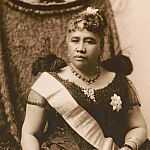
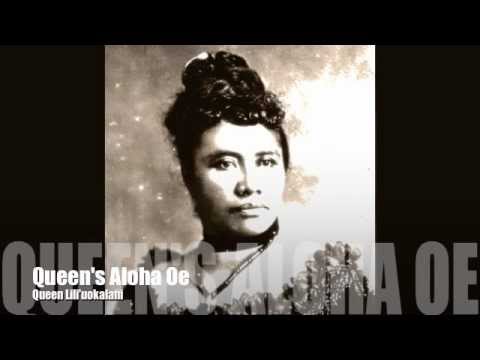
  • This was written by Queen Lili'uokalani (the last Hawaiian monarch) in 1878. Lili'uokalani intended this to be a love song but it ended up being a farewell song. It has since become a worldwide traditional classic farewell song. English lyrics were added in 1923 as well as an alternate title: "Farewell to Thee."
  • Legend has it that Queen Lili'uokalani wrote this song while imprisoned in the 'Iolani Palace during the annexation of Hawai'i to the US, but this is not entirely true. The true story is as follows: she visited the Maunawili Ranch in O'ahu, where Edwin Boyd resided. While riding home on horseback to Honolulu, she turned to look at the view of Kaneohe Bay and suddenly saw Colonel James Boyd and a young Maunawili lady. The inspiration for the song came when she saw the two people slowly and affectionately bid each other farewell. Twenty years later, she used this song as a farewell to Hawai'i as Hawai'i lost its independence and became part of the US.
  • Elvis Presley covered this for the soundtrack of the 1961 movie Blue Hawaii, which he also starred in. >>
    Suggestion credit:
    Jerro - New Alexandria, PA, for all above
  • This was covered by Johnny Cash on American VI: Ain't No Grave, the sixth and final collaboration between The Man in Black and producer Rick Rubin. During the 10-year period in which they were recording together, Rubin and Cash would take turns in sending each other unexpected songs they wanted to try recording. Rubin described this to Mojo magazine March 2010 as "a very bizarre choice" of Cash's. "A Hawaiian song that Johnny always wanted to sing but never seemed to fit anywhere. It's not cheesy at all. It's very moving."

Comments: 4

  • Gerald from Pearl City, HiAloha Lino, you are on the right track, Do not give up about the song our Queen Liliu'okalani wrote, Because it's from her heart, and it sure never be forgotten, Pray hard and it will come to you what you are looking for .The Shining Star had Explode into three little Shining Star over me from the sky well holding Queen Liliu`okalani song she wrote Aloha Oe. made me understand the meaning of the song . the three little Shining Star was the meaning of Aloha HELLO,LOVE and GOODBYE. I could not believe what I saw with my own eyes, It was a beautiful sight. I know it was the Queen spirit, it were beautiful like her heart. Keep searching
  • Evan from Honolulu, HiHey Lino I'm from Hawaii born and raised and part Hawaiian and I just would like to tell you we youngsters still love this song and me as an individual am still a bit upset on what happened but understand that what is done is done so all I can do is try and preserve the little culture we have left and I just want to say thank you for researching this. It makes me happy to know people still want to preserve our culture. Keep going Imua!
  • Lalah from Wasilla, AkHey Lino, maybe this song has waned in popularity in its original home but good National songs have a way of coming back in a generation. Good luck with your research and preserve it for them. What about the Hawaiian War Chant? I haven't heard it in years. Ray Charles singers recorded it with brass back up and it was catchy. Years later I found out that Hawaiian warriors would stamp their feet and wave their spears while yelling the war chant just before they battled. Perhaps the first white to hear it was Captian Cook moments before they ran him through. Ask any Hawaiian, I bet they're still proud of that! At least enough to provide you some research.
  • Lino from San Francisco, CaI have been working on the history of "Aloha Oe" for some time, hoping to write a good article with my findings. I have run into snags along the road but I am not going to give up the ship! Perhaps the people of Hawaii, particularly the young sprouts, have grown tired of Queen Liliu'okalani's famed melody. It, like other famous world-class songs--"Cielito lindo," "O Sole mio," "Santa Lucia" and others--has suffered from overkill over the long years since its birth. Still it remains a very special song and one with a colorful history. George S. Kanahele mentioned that "minor controversy has surrounded its origin." This may be somewhat of an understatement, yet it adds to the fascination of this shining star of the Hawaiian Hit Parade!
see more comments

Editor's Picks

Jon Anderson of Yes

Jon Anderson of YesSongwriter Interviews

From the lake in "Roundabout" to Sister Bluebird in "Starship Trooper," Jon Anderson talks about how nature and spirituality play into his lyrics for Yes.

Charlotte Caffey of The Go-Go's

Charlotte Caffey of The Go-Go'sSongwriter Interviews

Charlotte was established in the LA punk scene when a freaky girl named Belinda approached her wearing a garbage bag.

Chris Frantz of Talking Heads

Chris Frantz of Talking HeadsSongwriter Interviews

Talking Heads drummer Chris Frantz on where the term "new wave" originated, the story of "Naive Melody," and why they never recorded another cover song after "Take Me To The River."

Does Jimmy Page Worship The Devil? A Look at Satanism in Rock

Does Jimmy Page Worship The Devil? A Look at Satanism in RockSong Writing

We ring the Hell's Bells to see what songs and rockers are sincere in their Satanism, and how much of it is an act.

Wherefore Art Thou Romeo Lyric

Wherefore Art Thou Romeo LyricMusic Quiz

In this quiz, spot the artist who put Romeo into a song lyric.

Timothy B. Schmit of the Eagles

Timothy B. Schmit of the EaglesSongwriter Interviews

Did this Eagle come up with the term "Parrothead"? And what is it like playing "Hotel California" for the gazillionth time?