All the Rowboats

Album: What We Saw from the Cheap Seats (2012)
Play Video

Songfacts®:

  • This is the first single by Regina Spektor, taken from her sixth studio album, What We Saw from the Cheap Seats. The song finds Spektor singing about someone who wants to liberate works of art from the museum where they are kept. It was released for streaming on February 27, 2012, and for digital download the following day.
  • This song, along with the rest of What We Saw from the Cheap Seats, was recorded by Spektor with Mike Elizondo in Los Angeles during the summer of 2011. Whilst Elizondo is best known for his writing and production work alongside Dr. Dre, Eminem and other Hip-Hop artists, he and Spektor had previously worked together. The pair collaborated on several tracks on Spektor's 2009 album Far, including "Eet" and "The Calculation."
  • Spektor told NME the song was penned several years before the release of the album. "It has been around since 2004 or 2005," she said.
  • Spektor told the New York edition of The Metro that the "Cheap Seats" title was in her head before she even knew what the album was going to sound like. "I've been in all kind of seats," she said, "and everything has its beauty, and that's sort of the whole point of the world -- you always get something and you let go of something and each thing has its pluses and its minuses."
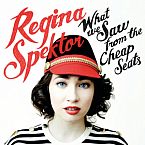
  • The album cover features Spektor wearing peculiar black-and-red headgear. "I got that hat in Japan when I played there," she told Rolling Stone. "I tried this hat on and it had this fun conductor-hat vibe, and the drummer I was playing with was like, 'You have to get the hat. you have to get it.' I got it and brought it home and was like, 'Great, I'm never going to wear this hat.'"
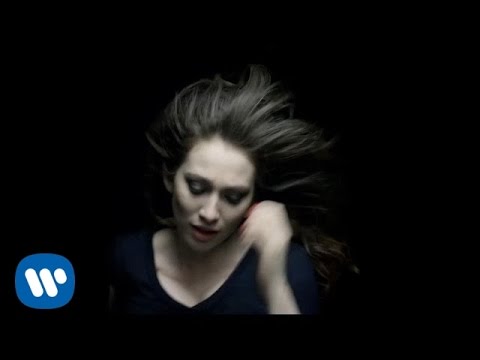
  • The song's music video was directed by Adria Petty, who has collaborated with Spektor on almost all her visuals. Petty, who is the daughter of Tom Petty, told American Songwriter magazine about their collaborations: "I'm really careful not to be too literal with her videos because the music has such a voice," she said. "It's just a matter of being able to move through these spaces with her and go on a trip with her as the narrator, without having it proscribe how you hear the song or digest the lyrics. Like a good book, it should be personal to whoever's listening to it."

Comments

Be the first to comment...

Editor's Picks

Howard Jones

Howard JonesSongwriter Interviews

Howard explains his positive songwriting method and how uplifting songs can carry a deeper message.
Susanna Hoffs - "Eternal Flame"

Susanna Hoffs - "Eternal Flame"They're Playing My Song

The Prince-penned "Manic Monday" was the first song The Bangles heard coming from a car radio, but "Eternal Flame" is closest to Susanna's heart, perhaps because she sang it in "various states of undress."

Brandi Carlile

Brandi CarlileSongwriter Interviews

As a 5-year-old, Brandi was writing lyrics to instrumental versions lullabies. She still puts her heart into her songs, including the one Elton John sings on.

Meshell Ndegeocello

Meshell NdegeocelloSongwriter Interviews

Meshell Ndegeocello talks about recording "Wild Night" with John Mellencamp, and explains why she shied away from the spotlight.

Dave Alvin - "4th Of July"

Dave Alvin - "4th Of July"They're Playing My Song

When Dave recorded the first version of the song with his group the Blasters, producer Nick Lowe gave him some life-changing advice.

Bass Player Scott Edwards

Bass Player Scott EdwardsSong Writing

Scott was Stevie Wonder's bass player before becoming a top session player. Hits he played on include "I Will Survive," "Being With You" and "Sara Smile."