Kohoutek

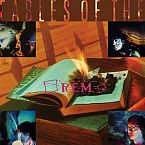
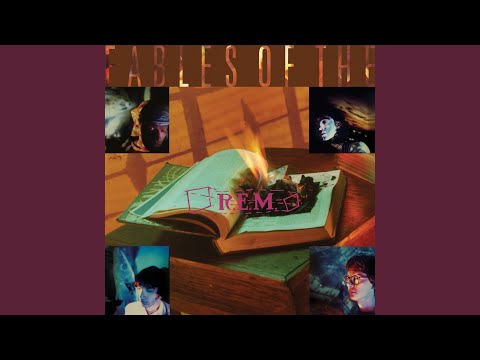
Album: Fables of the Reconstruction (1985)
Play Video

Songfacts®:

  • Comet Kohoutek, formally known to astronomers as C/1973 E1 (and to everyone else simply as "a bit of a let-down"), was discovered by Czech astronomer Luboš Kohoutek on March 7, 1973. It swept past the sun that December, dazzling scientists who predicted it would blaze across the night sky as the "Comet of the Century." Instead, it showed up with all the underwhelming brilliance of a torch with dying batteries, then scurried off on a 75,000-year orbit that means we won't be seeing it again for a long, long time.

    R.E.M. found inspiration in this brief celestial cameo for their song "Kohoutek," a track recorded for their third album, Fables of the Reconstruction (1985).
  • Michael Stipe uses the comet as a metaphor for a fleeting relationship: brilliant at the start, over-hyped, and gone far too soon. "You were gone, like Kohoutek," he sings, turning astronomical disappointment into a painfully human one.

    Bassist Mike Mills told Uncut magazine: "It was meant to be really bright, the 'comet of the century,' but it was a disappointment and soon it was off on its lonely journey through the stars. That line was a fascinating parallel for a relationship."
  • There's an unusual twist in the lyrics: Stipe actually refers to himself by name: "Michael built a bridge, Michael tore it down."

    For a writer so famously elliptical in his early work, this kind of direct self-reference stands out, as if he's pulling back the curtain on his own culpability. He frames the relationship as something started in courage but marred by impulse, envy, and misplaced expectations. Just as America's disappointment in Kohoutek was really a case of over-zealous hype, Stipe admits that he only has himself to blame for the heartbreak.
  • It's also worth noting the lyrical camouflage at work

    She carried ribbons, she wore them out

    Throughout R.E.M.'s early catalog, Michael Stipe almost always used female pronouns in love songs, even when they didn't quite fit. This wasn't so much deceit as survival strategy: in the early '80s, he wasn't ready to sing openly about same-sex love, so he leaned on ambiguity or misdirection. It wasn't until the late 1990s and beyond, after publicly coming out, that Stipe began referencing gay relationships more openly in his music and interviews.
  • "Kohoutek" joins a small constellation of songs inspired by comets. Billie Eilish and Sarah Darling both took turns with tracks titled "Halley's Comet." Conor Oberst (as Bright Eyes) used "Comet Song" to frame cycles of loss and renewal, saying the comet symbolized "the circle of life." Meshell Ndegeocello's "Comet, Come to Me" burns with longing and unattainable desire, while Björk's "The Comet Song," written for Moomins and the Comet Chase, channels childlike awe at the universe.

Comments

Be the first to comment...

Editor's Picks

Jethro Tull

Jethro TullFact or Fiction

Stage urinals, flute devices, and the real Aqualung in this Fact or Fiction.

Tom Bailey of Thompson Twins

Tom Bailey of Thompson TwinsSongwriter Interviews

Tom stopped performing Thompson Twins songs in 1987, in part because of their personal nature: "Hold Me Now" came after an argument with his bandmate/girlfriend Alannah Currie.

Christopher Cross

Christopher CrossSongwriter Interviews

The man who created Yacht Rock with "Sailing" wrote one of his biggest hits while on acid.

Glen Burtnik

Glen BurtnikSongwriter Interviews

On Glen's résumé: hit songwriter, Facebook dominator, and member of Styx.

Matt Sorum

Matt SorumSongwriter Interviews

When he joined Guns N' Roses in 1990, Matt helped them craft an orchestral sound; his mezzo fortes and pianissimos are all over "November Rain."

The Untold Story Of Fiona Apple's Extraordinary Machine

The Untold Story Of Fiona Apple's Extraordinary MachineSong Writing

Fiona's highly-anticipated third album almost didn't make it. Here's how it finally came together after two years and a leak.