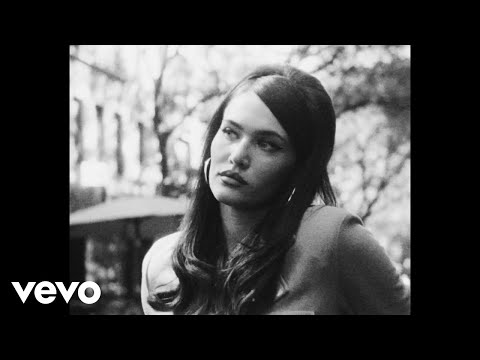
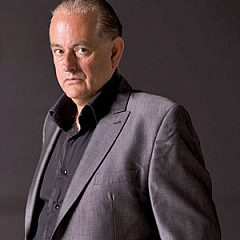
"Die On This Hill" is Sienna Spiro's lush, piano-driven ballad about stubborn love and the struggle to let go of a relationship even when she knows she should. It belongs to that same family of heartbreak songs that includes Billie Eilish's "
Happier Than Ever," The Lumineers' "
Stubborn Love," and, for the more masochistic listener, Fleetwood Mac's "
Go Your Own Way."
The title phrase references the expression die on this hill," which Spiro often heard growing up from her mother. It borrows from the language of argument, meaning a belief or stance you're so committed to, you'd defend it to the bitter end. In Spiro's case, the "hill" is the relationship she clings to long after the movie's ended, the credits are rolling, and the lights are back on in the theater.
At her headline show at KOKO in London on September 10, 2025, Spiro introduced "Die On This Hill" by saying: "This song was about being stubborn. It's about staying with someone who doesn't give a f--k. It's about not even knowing why you're there anymore, but you're there because you've said you're there, and now you don't even know what you're doing with yourself."
Sienna Spiro wrote the song with producers Omer Fedi (known for work with SZA and Lil Nas X), Michael Pollack (Miley Cyrus, Lewis Capaldi), and Blake Slatkin (The Kid Laroi, Lizzo) at Valentine Recording Studios in Los Angeles.
"I made this song on the very first day I met Michael," she said. "I showed up to Valentine in a suit & tie at 10 a.m., played him and Omer the verse, and then we wrote the rest together. It's gone through soooo many versions, but I think it's finally where it needs to be."
The opulent string arrangement was crafted by Rob Moose, whose résumé includes work with Taylor Swift, Ed Sheeran and Lorde.
Spiro told the KOKO crowd that the song nearly drove her mad in the making:
"It was faster, then it was slower, then it was higher, and it was lower. Oh, my life, it was a hundred different versions of this song. And I think this song is the only time I've felt a sense of pride making something. We came back to it one day, listened through, and we were just sat there in silence. We looked at each other, and it was insane. It was like a moment where you know you've made something that makes you feel, which is all you could ever ask."
"Die On This Hill" isn't strictly autobiographical. "I didn't write it about one specific story,"
Spiro told TMRW magazine. "More about a lifetime of stubbornness and showing up for people that never did for me."
In another conversation at All Points East 2025, Spiro expanded:
"I think my life is a big inspiration to me... not just romantic relationships, like friendships as well are a huge thing. I think stories inspire me - the way other humans interact."
That distinction matters. Where Taylor Swift mines her own diary and Olivia Rodrigo replays real heartbreak like a favorite sad film, Spiro is more of an emotional documentarian, fascinated by human behavior, whether it's hers or not. "Die On This Hill" feels lived in, but it's more like method acting than autobiography.
Released on October 10, 2025, just a few weeks after its KOKO debut, "Die On This Hill" entered the UK Singles Chart at #26, trouncing her previous best chart position of #75 for "
Maybe."
The seed for "Die On This Hill" came from a mistake while Sienna Spiro was trying to teach herself "
Bohemian Rhapsody" on piano. She kept fumbling the chords, but one wrong move produced a progression she liked so much that she chased it into an entirely new song. Even though "Die On This Hill" sounds nothing like Queen, she credits Freddie & Co. for the happy accident that sparked it.
"Die on This Hill" went through several transformations before arriving at its final form. "It was in another key, and it was fast, it had trumpets,"
Spiro told Billboard. "Then it was a stripped-back, Lauryn Hill kind of thing. Then it was a Silk Sonic kind of thing. It was a Teddy Pendergrass thing at one point."
Ultimately, it was Spiro's co-writers and co-producers Omer Fedi and Michael Pollack who convinced her to slow things down and lean into her own style. Spiro admitted that she initially thought the track "sounds s--t," but that frustration and emotional resistance ended up shaping the song's heart. "I [had] so much resentment and anger, which honestly kind of helped the performance... And then I remember we just sat there, and we listened, and we all were quiet."
The song tackles a type of emotional stubbornness rarely explored in pop. "It's a song about being stubborn and caring, which I don't think is spoken about too much," Spiro explained. "There's been this really big wave of nonchalance, of it being really cool to not care. I think a lot of people aren't like that."
The song explores the mental tug-of-war between what a partner says and what someone instinctively that people can sometimes convince themselves of a relationship's strength simply by trying to persuade others it still exists. "Sometimes when you convince other people, you start convincing yourself,"
she reflected to Genius. "And that's when I think really toxic cycles begin."
"Die On This Hill" is also about Spiro's belief that abandonment can take many forms
The way that someone leaves this world
Is all just levels to me now, oh, to me now
That's Spiro's favorite lyric from the song. She is suggesting that being left by someone who is still alive can feel more painful than losing someone to death, because it carries a sense of personal rejection rather than unavoidable loss. "People have died in my life, but I think the most hurtful way that somebody could leave you is them still being alive and being gone," she told Genius. "It is levels."
The track's bridge was written separately. It arrived almost accidentally during a guitar session. "I don't even know how it happened. It was like it was it was honestly supernatural," Spiro told Genius. "And you know, sometimes that's why it's good to allow, you know, music to go different directions because we wouldn't have got to that bridge if it wasn't super fast and on guitar."
I'll be here the whole night
I'll be here 'cause I can
Yeah, I know you don't care
I know nothing could matter
God, I wish something mattered to you
Spiro believes the bridge captures the song's emotional peak, balancing stubborn loyalty with the self-awareness that the narrator may be staying in a relationship long after it has become unhealthy.
"Die on This Hill" plays during a closing montage during the Season 2 finale of Fox's Doc. It scores the moments where Michael and the team face major staff departures and grapple with Joan's heartbreaking illness.