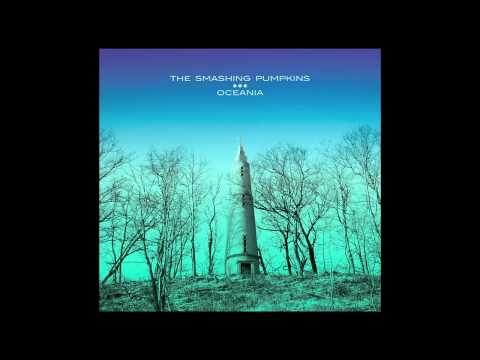
Oceania

Album: Oceania (2012)
Play Video

Songfacts®:

  • This 9-minute epic is the title track from Smashing Pumpkins' ninth studio album. Billy Corgan explained the significance of the Oceania title to Australia's Channel-V. "There's a couple of symbols there that are pretty easy to access," he said. "One, of course, is that I've had an interesting romantic association with Australia, with my woman Jess [Origliasso, one half of The Veronicas]. And Australia as a symbol, as an independent spirit. There's the famous quote 'No man is an island,' we all have to reconcile our own 'islandness,' for lack of a better word."
  • Regarding Oceania's themes, Corgan told The Australian that the 13 tracks address modern-day isolation. "I think we're all going through unique isolation right now, particularly as it applies to technology," he said. "Walking down the street with the phone - that's the new walk. You see it everywhere. I've started now... if I go for a walk I shut the phone off so I won't even be tempted to look... so I can walk for 10 minutes and just look at the trees. This is an isolation that is unprecedented. This is part of the Orwellian thinking of 'what does it mean to be part of a collective if everyone's brain is shut off.'"
  • Corgan explained to Music Radar how this multi-sectioned song came together: "For the longest time, we just had the opening figure and some other parts," he said. The way that it's broken into three sections wasn't the original intention. It was meant to be a long song, but we were like, 'This is going nowhere.' So the arrangement that is there came together the day we recorded it. I just winged it. We felt strongly about it, and that was it."

    "If you take those changes, Section Two and Section Three, and played them over the opening beat," he continued, "they would feel kind of unremarkable. It was something about placing them in a different context a la Yes, with a little nod at the end to Vangelis [laughs], and it just seemed to work. We didn't sit around and intellectualize it. There it is - it works."
  • Corgan told Artist Direct that "there's a lot of unconscious stuff on Oceania." He continued: "What's weird is there are some lyrics on here lifted from other songs of mine. I'll hear a line and say, 'Did I rip that off from another song?' I wasn't even conscious of if I was appropriating my own material. It's kind of strange. In 'G.L.O.W.', which we did a few years ago, the first line of the song is 'I'm so alone.' The chorus of 'Oceania' is 'I'm so alone, I'm so alone.' In the past, if I saw a repetition, I would've just canceled it on form. It never even crossed my mind until the record was done. I thought, 'Oh s--t!' [Laughs] It hearkens back to little touchstones and moments, but it wasn't done consciously. I wasn't trying to be cute."

Comments

Be the first to comment...

Editor's Picks

Who's Johnny, And Why Does He Show Up In So Many Songs

Who's Johnny, And Why Does He Show Up In So Many SongsSong Writing

For songwriters, Johnny represents the American man. He has been angry, cool, magic, a rebel and, of course, marching home.

Zakk Wylde

Zakk WyldeSongwriter Interviews

When he was playing Ozzfest with Black Label Society, a kid told Zakk he was the best Ozzy guitarist - Zakk had to correct him.

Art Alexakis of Everclear

Art Alexakis of EverclearSongwriter Interviews

The lead singer of Everclear, Art is also their primary songwriter.

John Lee Hooker

John Lee HookerSongwriter Interviews

Into the vaults for Bruce Pollock's 1984 conversation with the esteemed bluesman. Hooker talks about transforming a Tony Bennett classic and why you don't have to be sad and lonely to write the blues.

Tim McIlrath of Rise Against

Tim McIlrath of Rise AgainstSongwriter Interviews

Rise Against frontman Tim McIlrath explains the meanings behind some of their biggest songs and names the sci-fi books that have influenced him.

80s Video Director Jay Dubin

80s Video Director Jay DubinSong Writing

Billy Joel and Hall & Oates hated making videos, so they chose a director with similar contempt for the medium. That was Jay Dubin, and he has a lot to say on the subject.