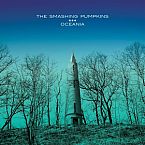
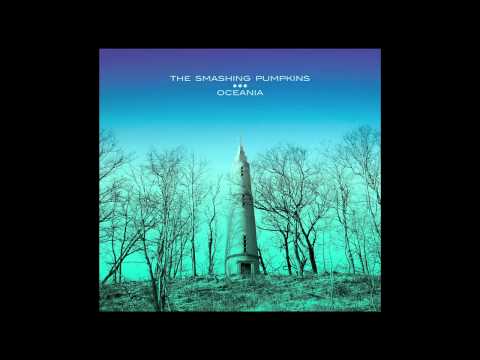
Album: Oceania (2012)
Play Video

Songfacts®:

  • Smashing Pumpkins open their ninth studio album, Oceania, with this upbeat number. Speaking with Music Radar, drummer Mike Byrne said it has a very "Led Zeppelin-vibe." "At the beginning of the record we have a real one-two punch with real furious drumming," he explained. "We [have] a song called 'Quaser,' which has flam fives all over the thing. We spent all night honing the parts and didn't do a single take, just ironing out every fill.

    The next day we came in and did the check your tones take," he continued, "and by the time I was finished they called me into the control room and we'd done it on the first take. That was the happiest surprise of the three weeks."
  • The riff had been lying around for a while. Frontman Billy Corgan told Music Radar: "Actually, I think it went back to when I started working with Mike Byrne in 2009. The original riff was called 'Nero Riff-O.' So it sat around for a long time, and I was finally able to turn it into a song.

    It's a little bit of what I used to do, even in terms of process," he continued. "The way I wrote when I first got into rock was, I'd write these crazy riffs and time signatures, and then I'd sit there and think, OK, what the hell am I going to sing over this? It was a way of working backwards."
  • The song's opening lyrics find Corgan referencing the Judeo-Christianity God and the Hindu deity Krishna, as well as "Yod, He, Vau, He," which are a Hebrew phrase known as the tetragrammaton, that approximates the father, mother, son and daughter. Corgan incorporates elements of Catholicism and Buddhism into his own spiritual philosophy. Though he has not publicly aligned himself with any one faith, he has said he prays to be able to see through Christ's eyes and feel with his heart at the beginning and the end of the day.
  • Corgan explained to NME that Oceania is structured around the tarot (those ancient playing cards that users claim can predict the future). "It's what's called the hero's journey or the fool's journey," he said. "You start from a place of innocence and you're happy. The first card of the tarot is the Fool, and the Fool is standing on a cliff, and he's like, 'La la, life is wonderful.'"
  • Corgan described this riff-based cut to Artist Direct as, "obviously a song," but "also a 'thing.' 'Whole Lotta Love' is a 'thing' built around a riff," he continued. "Sometimes, those riffs work, and other times they don't."

Comments

Be the first to comment...

Editor's Picks

Robert DeLeo of Stone Temple Pilots

Robert DeLeo of Stone Temple PilotsSongwriter Interviews

Stone Temple Pilots bass player Robert DeLeo names the songs that have most connected with fans and tells the stories behind tracks from their Tiny Music album.

Rick Astley

Rick AstleySongwriter Interviews

Rick Astley on "Never Gonna Give You Up," "Cry For Help," and his remarkable resurgence that gave him another #1 UK album.

Justin Hayward of The Moody Blues

Justin Hayward of The Moody BluesSongwriter Interviews

Justin wrote the classic "Nights In White Satin," but his fondest musical memories are from a different decade.

Chris Squire of Yes

Chris Squire of YesSongwriter Interviews

One of the most dynamic bass player/songwriters of his time, Chris is the only member of Yes who has been with the band since they formed in 1968.

Charles Fox

Charles FoxSongwriter Interviews

After studying in Paris with a famous composition teacher, Charles became the most successful writer of TV theme songs.

Donnie Iris (Ah! Leah!, The Rapper)

Donnie Iris (Ah! Leah!, The Rapper)Songwriter Interviews

Before "Rap" was a form of music, it was something guys did to pick up girls in nightclubs. Donnie talks about "The Rapper" and reveals the identity of Leah.