Grinnin' In Your Face

Album: Father Of The Folk Blues (1965)
Play Video

Songfacts®:

  • The message in "Grinnin' In Your Face" is to live life the way that suits you without concern for gossipers and naysayers. Your friends may betray you, your own family, even, but you just keep on living your life as it feels right to you.

    The title and chorus suggest a subtle manner in which to judge a true friend from a false one. A person might be kind to your face, but if they've got that certain kind of grin when you're telling them something important, it probably means they're talking bad about you behind your back. Pay it no mind – keep doing your thing, but be wary of false friends. That's House's message.
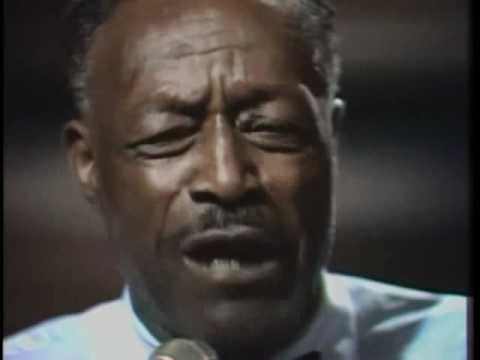
  • The song has no instrumentation. It's just House clapping, tapping his foot, and singing.
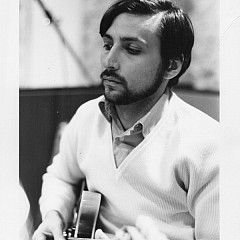
  • "Grinnin' In Your Face" was recorded during bluesman Son House's musical rebirth. He'd recorded music in 1930 and 1941, but the songs didn't make much impact, so he returned to life driving tractors for farmers. House's music was rediscovered in 1964, the time of a major folk-blues revival in the United States (the same revival from which a young Bob Dylan made his fame). It was during this period in April 1965 that House recorded "Grinnin' In Your Face" for Columbia on the Father of the Folk Blues album.

    House was born in Lyon, Mississippi, in 1902, but during his "rediscovery" he was working in a New York train station. The location was fortuitous, as the American folk-blues revival was centered in New York.
  • The Pointer Sisters covered the song on That's a Plenty in 1974. Their version has full instrumentation and studio arrangement.
  • In the documentary It Might Get Loud, Jack White cites "Grinnin' In Your Face" as his favorite song and one of the central inspirations of his musical career.

    "By the time I was 18, someone played me Son House," he said. "That was it for me. It spoke to me in a thousand different ways. I didn't know that you could do that just singing and clapping, and it meant everything, it meant everything about rock and roll, it meant everything about expression and creativity and art. One man against the world, in one song. That's my favorite my song. Still is. It became my favorite song the first time I heard it, and it still is."

Comments

Be the first to comment...

Editor's Picks

Amanda Palmer

Amanda PalmerSongwriter Interviews

Call us crazy, but we like it when an artist comes around who doesn't mesh with the status quo.

Ben Kowalewicz of Billy Talent

Ben Kowalewicz of Billy TalentSongwriter Interviews

The frontman for one of Canada's most well-known punk rock bands talks about his Eddie Vedder encounter, Billy Talent's new album, and the importance of rock and roll.

Chris Frantz of Talking Heads

Chris Frantz of Talking HeadsSongwriter Interviews

Talking Heads drummer Chris Frantz on where the term "new wave" originated, the story of "Naive Melody," and why they never recorded another cover song after "Take Me To The River."

Lace the Music: How LSD Changed Popular Music

Lace the Music: How LSD Changed Popular MusicSong Writing

Starting in Virginia City, Nevada and rippling out to the Haight-Ashbury, LSD reshaped popular music.

Ian Anderson of Jethro Tull

Ian Anderson of Jethro TullSongwriter Interviews

The flautist frontman talks about touring with Led Zeppelin, his contribution to "Hotel California", and how he may have done the first MTV Unplugged.

Kelly Keagy of Night Ranger

Kelly Keagy of Night RangerSongwriter Interviews

Kelly Keagy of Night Ranger tells the "Sister Christian" story and explains why he started sweating when he saw it in Boogie Nights.