When It's Over

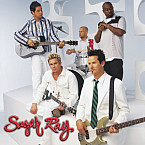
Album: Sugar Ray (2001)
Charted: 32 13
Play Video

Songfacts®:

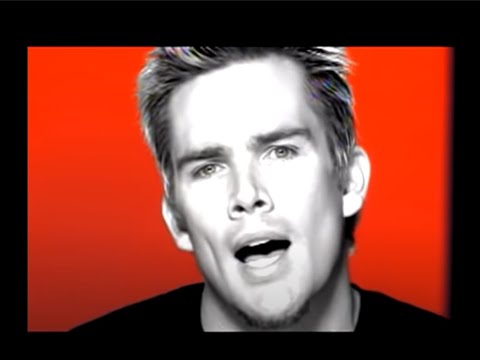
  • Mark McGrath is suffering from a case of breakup remorse in this song, which finds the Sugar Ray frontman reminiscing over memories of his ex-girlfriend. Much of the lyrical content, however, was inspired by drummer Stan Frazier's relationship, which was headed out the window. Frazier was cruising around in his car, where he gets a lot of his songwriting ideas, listening to a recording of Rodney Sheppard's guitar riff and contemplating the state of his relationship.

    "Writing the tune, I was thinking about where the relationship I was in was headed, and I wanted to put some meat on the bone, as they say," he explained in a song breakdown video with Sugar Ray bassist Murphy Karges. "So I wanted to get some imagery in there about TV shows or remote controls or the things you do with your significant other that you're gonna miss after that's gone."
  • The chorus was originally an octave higher but was lowered to better suit the melody and make it easier for fans to sing along.
  • For their self-titled fourth album, Sugar Ray worked with producer Don Gilmore (Linkin' Park, Eve 6). Although Karges thought Gilmore made the band sound better, he admitted something was lacking with the original version of "When It's Over."

    "We sort of felt like when the song got finished in the studio it needed that extra special rub," he explained.

    That's when they brought in David Kahne, who produced their smash singles "Fly" and "Every Morning," to remix the tune and it became the album's lead single.
  • The song title also foretold the demise of Sugar Ray's relationship with the Billboard Hot 100. After the single peaked at #13, the band never made the chart again, although they did manage to land a couple Adult Contemporary hits ("Mr. Bartender," "Is She Really Going Out With Him?").
  • The band members all had their own ideas for the music video concept, so their director, McG, decided to use them all. In the clip, each of the guys fantasizes about their own scenario: Frazier sees the band performing and destroying a soundstage after a gig, Karges reimagines them as an Irish-rock group, DJ Homicide takes the band to a strip club, and Sheppard conjures a kung-fu fight scene inspired by the 1972 martial arts film Game Of Death with Kareem Abdul-Jabbar (as Bruce Lee) as his opponent.

    McGrath takes the band back to the '80s with a retro video in the style of Duran Duran's "Is There Something I Should Know?" music video, with nods to "I Ran (So Far Away)" by A Flock of Seagulls and "Cars" by Gary Numan.

    At the end, the guys come back to reality and ride scooters to a beach party. Frazier says his wreck was unintentional - he hit a patch of sand and lost control of the bike. The crash left him with a sprained wrist.

    Cartoon Network aired an alternate version of the video featuring the band as cartoon characters inspired by The Jetsons, The Flintstones, and Speed Racer.
  • This was used in the 2002 movie The Sweetest Thing, starring Cameron Diaz.

Comments

Be the first to comment...

Editor's Picks

Metallica

MetallicaFact or Fiction

Beef with Bon Jovi? An unfortunate Spandex period? See if you can spot the true stories in this Metallica version of Fact or Fiction.

Grunge Bands Quiz

Grunge Bands QuizMusic Quiz

If the name Citizen Dick means anything to you, there's a chance you'll get some of these right.

Tom Bailey of Thompson Twins

Tom Bailey of Thompson TwinsSongwriter Interviews

Tom stopped performing Thompson Twins songs in 1987, in part because of their personal nature: "Hold Me Now" came after an argument with his bandmate/girlfriend Alannah Currie.

John Doe of X

John Doe of XSongwriter Interviews

With his X-wife Exene, John fronts the band X and writes their songs.

Booker T. Jones

Booker T. JonesSongwriter Interviews

The Stax legend on how he cooked up "Green Onions," the first time he and Otis Redding saw hippies, and if he'll ever play a digital organ.

John Waite

John WaiteSongwriter Interviews

"Missing You" was a spontaneous outpouring of emotion triggered by a phone call. John tells that story and explains what MTV meant to his career.