The Fall Of The House Of Usher

Album: Tales Of Mystery And Imagination (1976)
Play Video

Songfacts®:

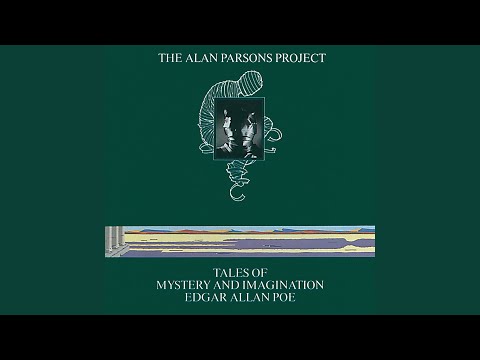
  • "The Fall Of The House Of Usher" is one of two instrumental songs on The Alan Parsons Project's debut album, Tales of Mystery and Imagination (the other being "A Dream Within A Dream"). It's a musical suite composed of five parts and fills up most of the album's second side. Running over 15 minutes long (the exact length fluctuates by a few seconds depending on the release), it includes "Prelude," "Arrival," "Interemezzo," "Pavane," and "Fall."

    Like all the songs on the album, it's based on a short story by American horror-genre pioneer Edgar Allan Poe. Written in 1839 and also titled The Fall Of The House Of Usher, the story is about Roderick Usher, a man dying of an unknown illness. His physical and mental degeneration is paralleled by the crumbling of his house, which might or not be supernaturally alive (we're never sure if Usher is simply going insane).

    Usher plays and writes music, but he's highly sensitive to sound and can only tolerate a narrow range of stringed instruments.

    In a 1976 interview with Fred Dellar and New Musical Express, Parsons explained that The Project wrote the song to be listened to while reading Poe's story: "If you read the story while listening to the music then it's quite a revelation." He further stated that the concluding "Fall" section of the song "is supposed to represent that stringed instrument thing. It's all Hungarian and Greek stringed instruments."
  • This is the only song on Tales of Mystery and Imagination written by Andrew Powell, Alan Parsons, and Eric Woolfson. All others are credited to just Parsons and Woolfson. Powell arranged and conducted the orchestra for the song.
  • Parsons remixed Tales of Mystery and Imagination in 1987 and added two monologues from Welles, one of which precedes this song. Welles seems to have composed it from Poe's Poems of Youth and his essay titled Marginalia. In the monologue, Welles states that music combined with a worthwhile idea is poetry, whereas music without such an idea is "simply music." He then muses about the importance of music in human life, stating, "Without music or an intriguing idea, color becomes pallor, man becomes carcass, home becomes catacomb, and the dead are for but for a moment motionless."
  • About 200 musicians were used on Tales Of Mystery And Imagination, one of the most experimental albums of the 1970s (some would say of all time). Parsons kept the project's nature secret from most of them, going so far as altering titles. The working title for this one was "From Usher With Love."
  • Parsons took the song's "Prelude" from an opera fragment written by French composer Claude Debussy, who worked on the piece from 1908 to 1917. It's titled "La chute de la maison Usher," which is simply French for "The Fall of the House of Usher." Debussy was an inspiration for the entirety of Tales of Mystery and Imagination.

Comments

Be the first to comment...

Editor's Picks

Chrissie Hynde of The Pretenders

Chrissie Hynde of The PretendersSongwriter Interviews

The rock revolutionist on songwriting, quitting smoking, and what she thinks of Rush Limbaugh using her song.

Evolution Of The Prince Symbol

Evolution Of The Prince SymbolSong Writing

The evolution of the symbol that was Prince's name from 1993-2000.

Facebook, Bromance and Email - The First Songs To Use New Words

Facebook, Bromance and Email - The First Songs To Use New WordsSong Writing

Where words like "email," "thirsty," "Twitter" and "gangsta" first showed up in songs, and which songs popularized them.

Susanna Hoffs - "Eternal Flame"

Susanna Hoffs - "Eternal Flame"They're Playing My Song

The Prince-penned "Manic Monday" was the first song The Bangles heard coming from a car radio, but "Eternal Flame" is closest to Susanna's heart, perhaps because she sang it in "various states of undress."

Allen Toussaint - "Southern Nights"

Allen Toussaint - "Southern Nights"They're Playing My Song

A song he wrote and recorded from "sheer spiritual inspiration," Allen's didn't think "Southern Nights" had hit potential until Glen Campbell took it to #1 two years later.

Chris Robinson of The Black Crowes

Chris Robinson of The Black CrowesSongwriter Interviews

"Great songwriters don't necessarily have hit songs," says Chris. He's written a bunch, but his fans are more interested in the intricate jams.