Flower Of Scotland

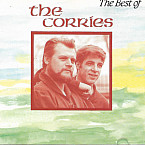
Album: The Best of the Corries (1965)
Play Video

Songfacts®:

  • In 1707, England and Scotland were merged into the United Kingdom of Great Britain, which much later became the United Kingdom of Britain and Ireland, and finally the United Kingdom of Great Britain and Northern Ireland. As such, "God Save The King"/"God Save The Queen" is the national anthem of Scotland as much as that of England, a Scottish king having inherited the English throne as early as 1603. Nevertheless, there are two songs which are regarded as unofficial national anthems of the junior partner in their own right: "Scotland The Brave" and "Flower Of Scotland."

    Though both are modern songs, the latter, which is also known as "O Flower Of Scotland" ("Flùr Na H-Alba" in Scottish Gaelic, and "Flouer O Scotland" in Scots) is probably nearest in temperament to an independent anthem as it alludes to the only significant victory the Scots ever scored over England in their centuries long and at times strained relationship.

    Robert I (1274-1329) known as Robert The Bruce, defeated the English at the Battle of Bannockburn in 1314. He declared himself King of Scotland in 1306, but the King of England had other ideas, and he found himself outlawed. He is said to have been inspired to eventual victory by watching a spider trying repeatedly to fasten its thread on a beam in his hut on the island of Rachrin where he was living in exile.

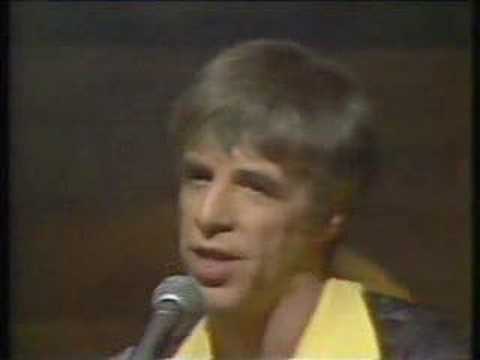
    "Flower Of Scotland" does not allude to this inspirational story but to the victory over Edward II. The lyrics were written by Roy Williamson (1936-90) and the song was performed initially by The Corries. The music is actually somewhat older, and was composed by Peter Dodds McCormick (c1834-1916) who immigrated to Australia as a young man, and also composed the National Anthem of Australia, "Advance Australia Fair."
  • "Flower Of Scotland" is often sung at major sporting events and similar. A full arrangement for orchestra (by Chris Allen) was published by Goodmusic of Tewkesbury some nine years after the death of Roy Williamson.
  • The title has also been used for a history book: The Flower Of Scotland: A History Of Scottish Monarchy by James J. Sharp, and for the biography of Roy Williamson, which was published by his daughter Karen in 1993. >>
    Suggestion credit:
    Alexander Baron - London, England, for above 3
  • "Flower Of Scotland" can't be played properly on the bagpipes because it contains a note - a flattened seventh - that the pipes cannot produce.

Comments

Be the first to comment...

Editor's Picks

Francesca Battistelli

Francesca BattistelliSongwriter Interviews

The 2011 Artist of the Year at the Dove Awards isn't your typical gospel diva, and she thinks that's a good thing.

Julian Lennon

Julian LennonSongwriter Interviews

Julian tells the stories behind his hits "Valotte" and "Too Late for Goodbyes," and fills us in on his many non-musical pursuits. Also: what MTV meant to his career.

Victoria Williams

Victoria WilliamsSongwriter Interviews

Despite appearances on Carson, Leno and a Pennebaker film, Williams remains a hidden treasure.

Macabre Mother Goose: The Dark Side of Children's Songs

Macabre Mother Goose: The Dark Side of Children's SongsSong Writing

"London Bridge," "Ring Around the Rosie" and "It's Raining, It's Pouring" are just a few examples of shockingly morbid children's songs.

Motley Crue

Motley CrueFact or Fiction

Was Dr. Feelgood a dentist? Did the "Crüecifixion" really happen?

Randy Houser

Randy HouserSongwriter Interviews

The "How Country Feels" singer talks Skynyrd and songwriting.