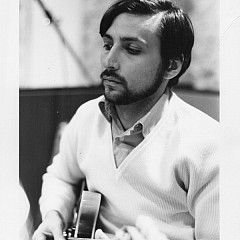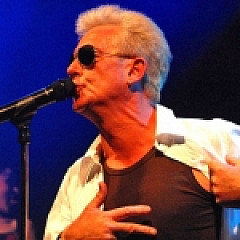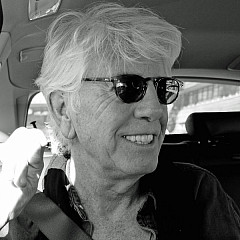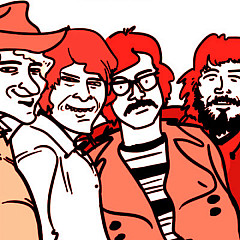
The Lovin' Spoonful

The Lovin' Spoonful Artistfacts

  • 1965-1968
    John SebastianLead vocals, harmonica, guitar, autoharp
    Zal YanovskyGuitar
    Steve BooneBass
    Joe ButlerDrums
  • The group was only active from 1965-1968, which John Sebastian described as "two glorious years and a tedious one." (A 1969 release attributed to the band featured only Joe Butler from the lineup.) Their short-lived career was extremely successful, earning them entry into the Rock and Roll Hall of Fame in 2000.
  • Their first seven singles charted in the Top 10 of the Hot 100. Their only #1 was "Summer In The City," but they had two songs reach #2: "Daydream" and "Did You Ever Have to Make up Your Mind?"
  • Sebastian and Zal Yanovsky were part of the Greenwich Village folk scene in New York City; Steve Boone and Joe Butler were veterans of the Long Island bar scene. Sebastian credits Boone and Butler for pushing them away from blues and folk and toward a more upbeat, commercial sound that reached a wider audience.
  • The band name comes from a lyric in the Mississippi John Hurt song "Coffee Blues":

    I love by baby by the lovin' spoonful

    It was Fritz Richmond of the Kweskin Jug Band who came up with the name after John Sebastian told him that his new group would sound like a combination of Chuck Berry and Mississippi John Hurt. This being the '60s, many thought the name was a drug reference, but according to Sebastian, it's actually a reference to cunnilingus (Sebastian had been performing with Hurt around this time). When asked about the name, they would tell the truth, creating some awkward moments when the question came during a live broadcast.
  • John Sebastian wrote the majority of their songs. He scored a #1 hit as a solo artist in 1976 with "Welcome Back," the theme song to the TV series Welcome Back, Kotter.
  • They were one of the most successful American bands during the reign of The Beatles. Like Creedence Clearwater Revival, they found a niche with buoyant, compact songs that offered an alternative to the British Invasion sound. Like CCR, they had one primary songwriter who went through legal tribulations after the band split up: John Sebastian had a lot of trouble freeing himself from his contract so he could record as a solo artist.
  • Sebastian and Yanovsky formed the band after Cass Elliot, who was in a group called The Mugwumps with Yanovsky, introduced them. When the Mugwumps disbanded, Elliot formed The Mamas & the Papas while Yanovsky paired up with Sebastian for the Lovin' Spoonful.
  • During Butler's audition, he broke a stick but kept playing, pounding away with his bare hand. The cymbal was a sizzle model with rivets in it that cut his hand, so by the end of the song, he was covered in blood. He got the gig.
  • The band was kaput by the time Woodstock rolled around, but John Sebastian performed solo at the festival. His rendition of the Spoonful song "Younger Generation" appears in the documentary.

Comments

Be the first to comment...

Editor's Picks

Spooner Oldham

Spooner OldhamSongwriter Interviews

His keyboard work helped define the Muscle Shoals sound and make him an integral part of many Neil Young recordings. Spooner is also an accomplished songwriter, whose hits include "I'm Your Puppet" and "Cry Like A Baby."

Chris Isaak

Chris IsaakSongwriter Interviews

Chris tells the story of "Wicked Game," talks milkshakes and moonpies at Sun Records, and explains why women always get their way.

Roger McGuinn of The Byrds

Roger McGuinn of The ByrdsSongwriter Interviews

Roger reveals the songwriting formula Clive Davis told him, and if "Eight Miles High" is really about drugs.

Robert DeLeo of Stone Temple Pilots

Robert DeLeo of Stone Temple PilotsSongwriter Interviews

Stone Temple Pilots bass player Robert DeLeo names the songs that have most connected with fans and tells the stories behind tracks from their Tiny Music album.

Rupert Hine

Rupert HineSongwriter Interviews

Producer Rupert Hine talks about crafting hits for Tina Turner, Howard Jones and The Fixx.

Facebook, Bromance and Email - The First Songs To Use New Words

Facebook, Bromance and Email - The First Songs To Use New WordsSong Writing

Where words like "email," "thirsty," "Twitter" and "gangsta" first showed up in songs, and which songs popularized them.