Goliath

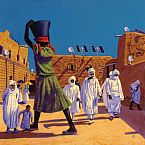
Album: The Bedlam In Goliath (2008)
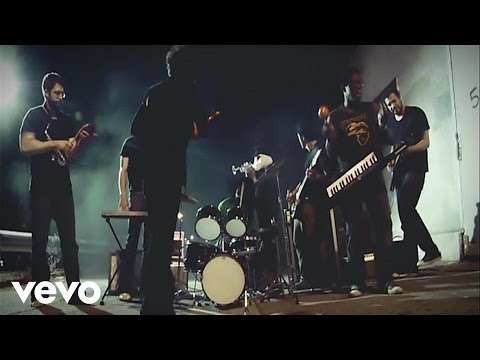
Play Video

Songfacts®:

  • Goliath was a name of three different people that appeared in the form of one, that contacted the band via an Ouija board. Guitarist Omar Rodriguez-Lopez had bought the Ouija for singer Cedric Bixler-Zavala from an antiques shop in Jerusalem. Bixler-Zavala incorporated themes and names into the lyrics for The Bedlam In Goliath from messages given by the board. He also included excerpts from poems that were found attached to the Ouija.

    Bixler-Zavala told Mojo magazine February 2008: "We called the Ouija Soothsayer or Goliath. It was the sum of three voices, but the male voice tried to take over a lot. For me, the story (in his lyrics) touches heavily on the topic of honor killings in the Middle East."

    The duo believe that the board, which has since been buried in the ground, cursed their recording sessions. They endured power outages, studio floods, the original engineer's nervous breakdown and tracks disappearing while recording in Los Angeles.

    Rodriguez-Lopez added in the same interview: "The man who mixes our records, Rich Costey, doesn't believe in superstition. He was dismissive of it until he kept seeing tracks disappearing with his own eyes. Rich came up with his own explanation, which he called 'quantum entanglement.' To us, that was his scientific way of saying there was a curse. If we were to do an interview in South America or the Caribbean, they wouldn't question it."
  • Originally their label wanted to release this as a single to introduce the album but the band wouldn't have it. Bixler-Zavala explained to MTV news: "'Goliath' is about 9, 10 minutes long, and the end of it is so interesting, we didn't really want it to be used as a single," he said. "It kept getting butchered and came off really bad. If you edit our songs and you take away all the extra stuff, then that song might've just sounded like Wolfmother - and we never want to compete with that. They're their own thing, and we're our own thing."
  • Bixler-Zavala told MTV news that the whole frightening experience with the Ouija board became the theme for the album: "Because such a strange impact was left by using the board, we decided to make a record based on the stories we were getting from the things or spirits we were contacting. The album is basically like the 'Ghostbusters,' when they want to catch a ghost, they throw out this little trap on the floor, and they open it. The record serves as a bunch of little traps, so when the record comes out, people will have those traps, and they can play the game and try to reverse the bad luck we've had come from it. It's our way of creating a little infernal machine, but we've reversed it, for good luck."

Comments: 1

  • Jack from Baltimore, MdThis song was also originally released at a slower tempo with different lyrics on an Omar Rodriguez Lopez solo record named "No Dice Bisonte, No Buffalo" under the name "Rapid Fire Tollbooth"
see more comments

Editor's Picks

Gary Lewis

Gary LewisSongwriter Interviews

Gary Lewis and the Playboys had seven Top 10 hits despite competition from The Beatles. Gary talks about the hits, his famous father, and getting drafted.

Jello Biafra

Jello BiafraSongwriter Interviews

The former Dead Kennedys frontman on the past, present and future of the band, what music makes us "pliant and stupid," and what he learned from Alice Cooper.

Chris Squire of Yes

Chris Squire of YesSongwriter Interviews

One of the most dynamic bass player/songwriters of his time, Chris is the only member of Yes who has been with the band since they formed in 1968.

Krishna Das

Krishna DasSongwriter Interviews

The top chant artist in the Western world, Krishna Das talks about how these Hindu mantras compare to Christian worship songs.

Dave Mason

Dave MasonSongwriter Interviews

Dave reveals the inspiration for "Feelin' Alright" and explains how the first song he ever wrote became the biggest hit for his band Traffic.

The Truth Is Out There: A History of Alien Songs

The Truth Is Out There: A History of Alien SongsSong Writing

The trail runs from flying saucer songs in the '50s, through Bowie, blink-182 and Katy Perry.