Higher and Higher

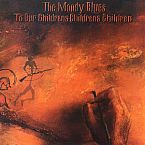
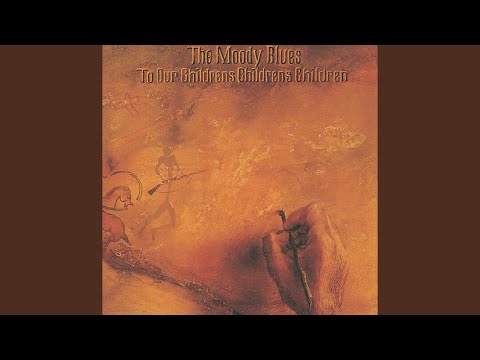
Album: To Our Children's Children (1969)
Play Video

Songfacts®:

  • "Higher and Higher" is the opening track of The Moody Blues' 1969 album To Our Children's Children's Children and serves as a euphoric declaration of humanity's conquest of space. Written in the immediate aftermath of the first manned lunar landing on July 20, 1969, in the Sea of Tranquility, the song uses space travel as a metaphor for limitless human potential. The title captures the song's central theme: humanity perpetually advancing - going higher and higher - breaking free from the gravitational pull not just of Earth, but of self-imposed limits.
  • Some fans noted a secondary meaning given that the Moody Blues - and keyboardist Mike Pinder in particular - were closely associated with psychedelic exploration: "higher and higher" may also allude to achieving higher states of consciousness.
  • The song is a poem written by the band's drummer, Graeme Edge, recited in Pinder's whispery baritone voice. It was the first full-length Moody Blues song penned by Edge. Prior to this, Edge's role as a writer had been confined to the short spoken-word interludes that bookended the band's earlier concept albums. Edge felt his own voice was too high-pitched for the song at the time, so he passed the spoken verses to Pinder to recite. Edge later performed the song live after years of smoking gave his voice a more gravelly texture. He was inducted into the Rock and Roll Hall of Fame as a member of the Moody Blues in 2018.
  • The album's concept was largely driven by producer Tony Clarke, who had recently seen Stanley Kubrick's 2001: A Space Odyssey and was fascinated by astronomy. He even had a telescope on the roof of his house for stargazing, and NASA staff were among his contacts. Clarke's vision was that the album would act as a kind of time capsule, a message to our children's children's children, drifting somewhere out there, ideally with better record players.
  • Originally, "Higher and Higher" was meant to open with an authentic NASA rocket launch recording. Unfortunately, the real thing proved underwhelming. "They sent us these rocket sounds, but they all sounded like damp squids, so we made our own," bassist John Lodge recalled to Mojo magazine. "We recorded amp feedback, the Mellotron motor and the sound of a piano falling off the roof of Decca Studios. We sent it to NASA saying, 'This is what a rocket sounds like!'"
  • The moon landing sparked a wave of musical responses, from earlier cosmic meditations like "Astronomy Domine" by Pink Floyd (1967) and "Space Oddity" by David Bowie (released just five days before Apollo 11 launched) to later space-age reflections like "Rocket Man" by Elton John (1972). Compared to those, "Higher and Higher" feels less like a story and more like a mission statement: humanity, having successfully visited the Moon, now intends to keep going, preferably with better sound effects.
  • To Our Children's Children's Children was the Moody Blues' fifth album and their first release on their own Threshold Records label. It reached #2 in the UK and #14 in the US. As the album's opening track, "Higher and Higher" functions as a literal and symbolic launchpad; the sound effects of a rocket igniting give way to Edge's ecstatic poetry about ascending beyond the atmosphere, setting the conceptual tone for the entire record: humanity reaching outward, sending a message across time to future generations.
  • To Our Children's Children's Children was among the music listened to on cassette tape by the crew of Apollo 15 during their 1971 mission, alongside On the Threshold of a Dream. The cassettes were arranged by music producer Mickey Kapp, who worked with NASA to curate music for astronauts based on their personal preferences.

Comments

Be the first to comment...

Editor's Picks

Rob Thomas of Matchbox Twenty

Rob Thomas of Matchbox TwentySongwriter Interviews

Rob Thomas on his Social Distance Sessions, co-starring with a camel, and his friendship with Carlos Santana.

Jon Foreman of Switchfoot

Jon Foreman of SwitchfootSongwriter Interviews

Switchfoot's frontman and main songwriter on what inspires the songs and how he got the freedom to say exactly what he means.

Donald Fagen

Donald FagenSongwriter Interviews

Fagen talks about how the Steely Dan songwriting strategy has changed over the years, and explains why you don't hear many covers of their songs.

Sarah Brightman

Sarah BrightmanSongwriter Interviews

One of the most popular classical vocalists in the land is lining up a trip to space, which is the inspiration for many of her songs.

Trans Soul Rebels: Songs About Transgenderism

Trans Soul Rebels: Songs About TransgenderismSong Writing

A history of songs dealing with transgender issues, featuring Pink Floyd, David Bowie, Morrissey and Green Day.

Guy Clark

Guy ClarkSongwriter Interviews

Vince Gill, Emmylou Harris and Lyle Lovett are just a few of the artists who have looked to Clark for insightful, intelligent songs.