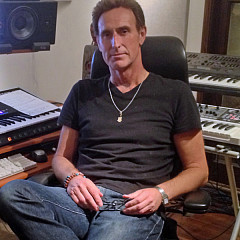
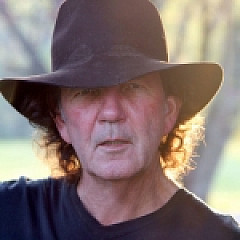
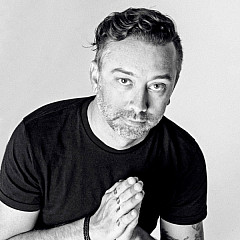
1972-1978Alex HarveyLead vocals, guitar, harmonica1972-1977, 1978
Zal CleminsonGuitar1972-1978
Chris GlenBass1972-1978
Hugh McKennaKeyboards, synthesizer1972-1978
Ted McKennaDrums1972-1978
The Sensational Alex Harvey Band (SAHB) were a Scottish rock group who's wild, genre-defying mix of glam, hard rock, vaudeville, and cabaret made them one of the most mesmerizing live acts of the 1970s. Fronted by the magnetic Alex Harvey, the band specialized in turning songs into miniature, gritty stage plays, combining dark humor, social commentary, and comic-book characters in a style that left a permanent mark on theatrical rock.
Harvey had already spent more than a decade scraping by in the music industry before SAHB came together. Born in Glasgow in 1935, he fronted beat and R&B groups through the late 1950s, and in 1956 won a Scottish talent contest that crowned him "Scotland's answer to Tommy Steele," landing him a record label audition.
In May 1960, his group, Alex Harvey and his Beat Band, appeared as the support act on a Scottish tour headlined by teen idol Johnny Gentle, who, in a twist of rock history, was backed on that same tour by a young, pre-fame group called the Silver Beetles, soon to become The Beatles.
Harvey later worked as a soul shouter and folk singer and even played in the pit orchestra for the London production of the counterculture musical Hair. Finally, in 1972, he recruited the progressive rock outfit Tear Gas to form his definitive backing band.
Rather than chasing straightforward radio hits, SAHB focused on raw, eccentric storytelling. Their albums juxtaposed punchy originals with highly stylized covers. Harvey was drawn to tragic antiheroes, carnival hustlers, and societal outcasts, routinely blurring the line between rock frontman and method actor.
Their commercial breakthrough arrived with the 1973 album
Next, anchored by a
menacing, violin-driven cover of Jacques Brel's "
Au Suivant." Follow-up albums
The Impossible Dream (1974) and
Tomorrow Belongs to Me (1975) established them as a massive concert draw across the UK.
Though the SAHB were critical darlings, their biggest singles chart success came unexpectedly with a live cover of "
Delilah" in 1975. Their version stripped the campy polish from Tom Jones' original, transforming it into an unsettling piece of performance art where Harvey's manic acting forced audiences to confront the song's dark, violent undercurrent.
On stage, SAHB was unmatched. Harvey would pace the stage in his signature striped shirts and leather jackets, commanding the crowd with the timing of a seasoned vaudevillian. Between Harvey's tough-guy theatrics and Cleminson's expressive, silent-movie grimaces, a SAHB concert felt less like a standard rock show and more like a bizarre, high-energy circus where Shakespeare had somehow been appointed ringmaster.
By late 1976, the relentless touring schedule took its toll. Harvey briefly stepped away to recover and record a peculiar spoken-word documentary album about the Loch Ness Monster, while the band released a record without him, Fourplay, under the moniker "SAHB (Without Alex)." He returned for 1978's Rock Drill, but chronic back problems, worsened by his incredibly physical performances, forced him to leave for good, leading to the band's dissolution.
Tragically, on February 4, 1982, just a day before his 47th birthday, Harvey suffered a fatal heart attack while waiting for a ferry home from a gig in Zeebrugge, Belgium.
While the Sensational Alex Harvey Band never conquered the US or achieved the massive global sales of their arena-rock peers, their legacy is incredibly far-reaching. From Iron Maiden and Def Leppard to Marillion and Nick Cave, generations of artists have credited Harvey and his band with proving that a rock show could be a canvas for genuine, unfiltered theater.
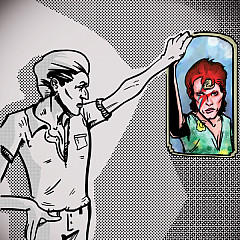
Alex Harvey brought a unique theatrical edge to The Sensational Alex Harvey Band's live shows, drawing on an eclectic mix of influences. In 1967, his friend David Bowie introduced him to mime artist and choreographer Lindsay Kemp, whose influence, combined with Harvey's love for Marvel Comics and an obsession with military strategy, helped shape his dramatic stage persona.
Tragedy also fueled his raw energy on stage. "Alex always seemed to be channeling his anger," guitarist Zal Cleminson told Mojo magazine. "Perhaps the sudden, tragic death of his younger brother Leslie left him so bereft as to be consumed." (Leslie, the guitarist for Stone the Crows, was fatally electrocuted on stage in Swansea in 1972).