Stop Me If You Think You've Heard This One Before

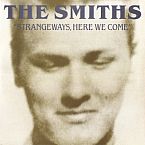
Album: Strangeways, Here We Come (1987)
Play Video

Songfacts®:

  • This song is written from the perspective of a cheating drunkard who tells his wife increasingly absurd lies in an attempt to answer for his absence.
  • This was banned by the BBC because of the lyric, "And the pain was enough to make a shy, bald Buddhist reflect and plan a mass murder." It was deemed insensitive as it came out not long after the Hungerford massacre, when 27-year-old Michael Ryan shot and killed 16 people in Berkshire, England. The Smiths subsequently decided to not release the song in the UK.
  • The promotional video features front man, Morrissey and a cluster of young men in Smiths shirts cycling around Manchester. One of the buildings that the cyclists pass is Salford Lads Club, a youth recreational club located in the Ordsall area of Manchester. Allan Clarke, front man of The Hollies, and Graham Nash, of Crosby, Stills and Nash, both attended this club as boys. In 1986, The Smiths were photographed standing in front of the building for the inside gatefold of their album, The Queen Is Dead. The club has since become a place of pilgrimage for Smiths fans seeking to recreate the legendary image.
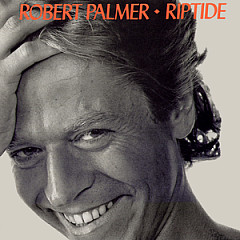
  • The single artwork is a still of the British actor, Murray Head, from the 1966 film, The Family Way.
  • This features on The Smiths' fourth and final studio album, Strangeways, Here We Come. Both Morrissey and guitarist, Johnny Marr have stated that this is their favorite Smiths album. Morrissey told Melody Maker in 1987: "Strangeways, Here We Come perfects every lyrical and musical notion The Smiths have ever had. It isn't dramatically, obsessively different in any way and I'm quite glad it isn't because I've been happy with the structure we've had until now. It's far and away the best record we've ever made."
  • In 2007, the British producer, Mark Ronson reorchestrated this song with "You Keep Me Hangin' On" by The Supremes. The cover – which featured Daniel Merriweather on lead vocals – attracted severe criticism from many Smiths fans, including Alex Turner, front man of the Arctic Monkeys, who told NME: "Let me tell you what I can't stand - that f***ing R&B cover version of 'Stop Me If You Think You've Heard This One Before.'" Mass vilification aside, the song was a smash hit, peaking at #2 on the UK chart – the highest ever chart position for a Smiths song. Ronson later defended his decision to reorchestrate the track and even claimed Morrissey and Marr approved of the cover: "I found out that Morrissey liked it, and especially liked Daniel's vocal, you can imagine how I felt when Marr approved it as well. This is not an apology but a way of showing respect for people who love The Smiths like I do."

Comments: 1

  • Daniel from Melbourne AuStructurally the song shares a number of similarities with Frankenstein by the New York Dolls. It definitely sounds like it was inspired by that track in the same way Panic was inspired by T-Rex's Metal Guru.
see more comments

Editor's Picks

Tom Waits Lyrics Quiz

Tom Waits Lyrics QuizMusic Quiz

Pool balls, magpies and thorns without roses - how well do you know your Tom Waits lyrics?

Curt Kirkwood of Meat Puppets

Curt Kirkwood of Meat PuppetsSongwriter Interviews

The (Meat)puppetmaster takes us through songs like "Lake Of Fire" and "Backwater," and talks about performing with Kurt Cobain on MTV Unplugged.

Christopher Cross

Christopher CrossSongwriter Interviews

The man who created Yacht Rock with "Sailing" wrote one of his biggest hits while on acid.

Band Names

Band NamesFact or Fiction

Was "Pearl" Eddie Vedder's grandmother, and did she really make a hallucinogenic jam? Did Journey have a contest to name the group? And what does KISS stand for anyway?

Chris Frantz of Talking Heads

Chris Frantz of Talking HeadsSongwriter Interviews

Talking Heads drummer Chris Frantz on where the term "new wave" originated, the story of "Naive Melody," and why they never recorded another cover song after "Take Me To The River."

David Gray

David GraySongwriter Interviews

David Gray explains the significance of the word "Babylon," and talks about how songs are a form of active imagination, with lyrics that reveal what's inside us.