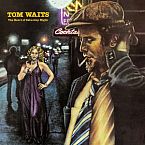
(Looking For) The Heart Of Saturday Night

Album: The Heart Of Saturday Night (1974)
Play Video

Songfacts®:

  • This is the sixth and final track on Side 1 of The Heart Of Saturday Night, making it the mirror image of "Ghosts Of Saturday Night," which is the final track on the album. This placement probably wasn't accidental, as "Heart" has Waits driving out in search of the heart of Saturday night, while "Ghosts" has him sweeping up its remains. Both songs also have parenthetical subtitles (none of the nine other songs on the album have those).

    The song is a third-person account of a young man driving a boulevard and looking for the heart of Saturday night, by which Waits seems to mean the essence of the vitality that weekends have had for young working people for generations.

    Finding the "heart" of this feeling is a poetically ambiguous concept, which is probably its primary draw. What can never be truly found can also never be truly lost, so the quest to find it can give us direction as long as we'd like. It's not about the thing we're looking for, but rather it's about the looking for the thing.

    There's a flip side to all that, of course, because the quest can become a pointless pursuit that leaves us running in circles until one day waking up and realizing we've wasted our lives. In this song, it's not clear which form the quest has taken for the central character.
  • The character in the song drives along the boulevard with a six-pack of beer and his "sweet one" on his arm on a Saturday night. He shaves his face, gets a call from his second cousin, stops on a red and goes on a green. Nothing obvious or explosive happens, but that's not the point. It's just a portrait of life in all its mystical simplicity.

    Even though he's cruising the strip and hitting the bars, the song has a peaceful ease about it, not a raucous party vibe.

    One single line turns the whole song its head and potentially recasts it all (depending on how much you want to read into it). Halfway through the song, Waits sings, "Magic of the melancholy tear in your eye."

    Nothing else in the song seems obviously sad. Really, the song comes across as wholly life-affirming. We never hear anything about the character's sadness again. Still, the line's put there for a reason, and if it's taken seriously, then the glowing sentimentality of the music starts to take on a morose air.

    Ultimately, the song is either about a young man truly digging on the heart of Saturday night, or it's a song about a young man trapped in a meaningless quest for something that isn't fulfilling him. It's up to listener to decide.
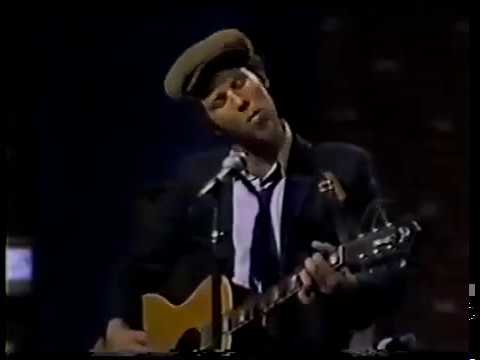
  • Speaking before the first-ever performance of this song, which appeared on radio station KFPK, Waits said it was a tribute to "Kerouacians," meaning fans of American novelist Jack Kerouac. Kerouac's rambling, plain-language style, which sometimes incorporated elements of jazz improvisation, gave a mystical shine to the simplest aspects of American life. Other than Charles Bukowski, no other literary influence is more obvious to Waits' work, especially his earlier stuff.
  • Waits explained that initially he had no music in mind, just this notion of searching for the heart of Saturday night, which he frequently discussed with Bob Webb. Webb was owner of the Heritage, a club where Waits sometimes collected admission at the door and sometimes performed. From this raw concept, the final song was eventually born.

Comments

Be the first to comment...

Editor's Picks

Justin Timberlake

Justin TimberlakeFact or Fiction

Was Justin the first to be Punk'd by Ashton Kutcher? Did Britney really blame him for her meltdown? Did his bandmates think he was gay?

Prince

PrinceFact or Fiction

Prince is shrouded in mystery, making him an excellent candidate for Fact or Fiction. Is he really a Scientologist? Does he own an exotic animal?

Paul Williams

Paul WilliamsSongwriter Interviews

He's a singer and an actor, but as a songwriter Paul helped make Kermit a cultured frog, turned a bank commercial into a huge hit and made love both "exciting and new" and "soft as an easy chair."
Mac Powell of Third Day

Mac Powell of Third DaySongwriter Interviews

The Third Day frontman talks about some of the classic songs he wrote with the band, and what changed for his solo country album.

Who Did It First?

Who Did It First?Music Quiz

Do you know who recorded the original versions of these ten hit songs?

Dennis DeYoung

Dennis DeYoungSongwriter Interviews

Dennis DeYoung explains why "Mr. Roboto" is the defining Styx song, and what the "gathering of angels" represents in "Come Sail Away."