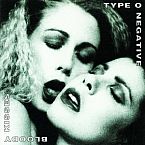
Black No. 1 (Little Miss Scare-All)

Album: Bloody Kisses (1993)
Play Video

Songfacts®:

  • "Black No. 1 (Little Miss Scare-All)" is somehow both a tribute to, and satire of, goth girls. Type O Negative frontman Peter Steele was really into these girls and often saw them at New York City clubs like the Limelight and the Pyramid Lounge. But there was one girl in particular that inspired the song.

    "It's about the girl I f--king slashed my wrists over," he said in the liner notes to the 2009 CD reissue of the Bloody Kisses album. "She was the ultimate goth girl, and I was poking fun at her because she was in love with herself."
  • The song gets a bit campy in an Addams Family way as Peter Steele sings like a mock vampire (think, Count Chocula) in places. It's hard to know how seriously to take the song, considering it was driven by piercing heartbreak. Type O keyboard player Josh Silver offered his thoughts on the matter: "A lot of the fans we picked up from Bloody Kisses just saw the slick side and never got the sarcasm. Like with 'Black No. 1,' there's a whole group of people that didn't get it - and they still don't. They think Type O is a serious rock band. Even some of the band members have become quite serious about themselves, and that to me is a bigger loss than the fans. When you can't spoof on yourself, you're f--ked."
  • "Black No. 1" is the most popular Type O Negative song and helped Bloody Kisses go Platinum, a rare accomplishment for a goth-rock album. Their previous albums were very dark but less refined, with more of a hardcore sound. The music got more melodic, and crucially, Peter Steele cut back on the screaming and relied on his exceptionally emotive, bass-heavy voice, augmented with some guttural growls.

    If you were into goth culture (unlike Peter Murphy of Bauhaus, Steele didn't mind the term "goth"), "Black No. 1" was right in the sweet spot, with intense passion behind it but also an outsider awareness that it was laced with sarcasm. It found a sizable audience that intersected with the hard rock crowd; Type O found themselves touring with Mötley Crüe. It was all very surprising for the band, which didn't quit their day jobs until after the album started selling and it was clear they could make a living from music (Steele worked for the New York City parks department, which he enjoyed).

    Making music full-time was appealing, but what really got Peter Steele's attention was all the girls they attracted with their new sound. Suddenly, all those goth girls he so admired were throwing themselves at them. He was the cover model in the August 1995 issue of Playgirl, which further aroused his female fanbase. The album went on to sell an amazing one million copies in America. Type O Negative was so busy touring they didn't release their next album, October Rust, until 1996. That one was even more directed at the ladies.

    The band became headliners at Ozzfest but Steele refused to assimilate. In interviews, he sometimes came off as a depressive, other times as a nihilist. The visual and promotional side of the business, he explained, were simply part of his job.

    It was around this time that Steele got into drugs, which dogged him for years to come. The band released three more modestly successful albums before he died of heart failure in 2010 at age 48.
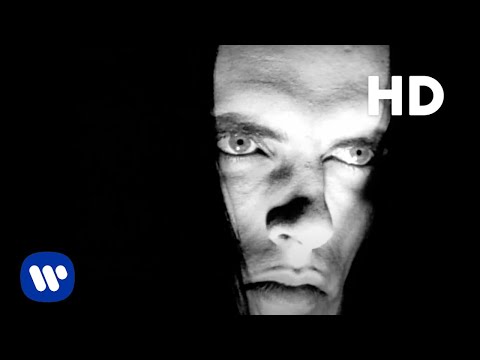
  • The music video has a vampire influence and is in black and white, like the original vampire movie, Nosferatu (1922). It was directed by Parris Mayhew, who made his first video seven years earlier when he shot behind-the-scenes footage of his hardcore band Cro-Mags and turned it into the video for their song "We Gotta Know." In a Songfacts interview with Mayhew, he talked about making the "Black No. 1" video. "One of the main reasons why I got the video was because of many conversations I had with Pete Steele for years about wanting to project to the world what I saw when I heard Type O Negative," he said. "I thought if people could understand them the way I did, that they would be a huge band."

    He added: "I'd just been reading Interview With The Vampire... you must get the Tom Cruise movie out of your head because I didn't have that in my head at the time. I was just reading this very dark, very descriptive encounter that this college kid has interviewing a vampire. It's such a great premise for a story, and the book [by Anne Rice] was amazing.

    But in the beginning of the book, he encounters this person who thinks they're a vampire, and he's interviewing him in the back of this dark room, and the only thing that is lighting up the room is this lightbulb over the table. The vampire is sitting recessed very far back in the shadows, and it is only when this vampire leans into the light that there's this primal fear with just the sight of the vampire. I remember that being such a striking image to me, so I pitched that to Pete.

    After I delivered the video, Pete called me immediately and left a voicemail, and it was pure gratitude. He said, 'I would have made this video funny, out of insecurity. I would have gone out of my way to hide behind the joke and try to make the video stupid. You just showed me as what you see, and I'm so proud of what I see that I can't even tell you.' That was the best part of it."
  • Other highlights from the album include "Christian Woman," also released as a single, and a cover of the Seals & Crofts yacht rock classic "Summer Breeze."
  • The line, "Oh baby, Lily Munster ain't got nothing on you," is a reference to the vampire matriarch on The Munsters, a TV series from the '60s that spoofed horror movies.

Comments

Be the first to comment...

Editor's Picks

When Rock Belonged To Michelob

When Rock Belonged To MichelobSong Writing

Michelob commercials generated hits for Eric Clapton, Genesis and Steve Winwood in the '80s, even as some of these rockers were fighting alcoholism.

Mike Campbell

Mike CampbellSongwriter Interviews

Mike is lead guitarist with Tom Petty & the Heartbreakers, and co-writer of classic songs like "Boys Of Summer," "Refugee" and "The Heart Of The Matter."

Protest Songs

Protest SongsMusic Quiz

How well do you know your protest songs (including the one that went to #1)?

Best Band Logos

Best Band LogosSong Writing

Queen, Phish and The Stones are among our picks for the best band logos. Here are their histories and a design analysis from an expert.

Michael Schenker

Michael SchenkerSongwriter Interviews

The Scorpions and UFO guitarist is also a very prolific songwriter - he explains how he writes with his various groups, and why he was so keen to get out of Germany and into England.

American Hits With Foreign Titles

American Hits With Foreign TitlesSong Writing

What are the biggest US hits with French, Spanish (not "Rico Suave"), Italian, Scottish, Greek, and Japanese titles?