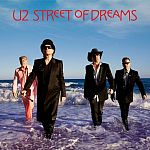
Street Of Dreams
by U2

Album: yet to be titled (2026)
Play Video

Songfacts®:

  • "Street of Dreams" is U2's hymn-like anthem that combines spiritual yearning with a message of collective freedom. Rooted in both Mexico City and the band's involvement with the Street Child World Cup, the song presents the street not as a place of danger or poverty, but as a space where hope, belonging, and transformation can flourish.
  • The song opens with an Auto-Tuned vocal chant adapted from Psalm 61:1-2:

    God hear me shout
    Lend your ear to my prayer
    When I'm far from anywhere
    Down to my last breath of air


    It's familiar territory for Bono, who has long mined the Book of Psalms for inspiration. U2's 1983 song "40," for instance, lifted its lyrics almost directly from Psalm 40, and "Street of Dreams" continues that tradition by turning an ancient prayer into a modern cry for refuge and hope.
  • Following the intro, the song broadens its scope. Bono returns to a familiar theme in U2's music: the street as a shared space where lives cross paths regardless of background or status. He turns typical ideas about power on their head, suggesting that people who have faced severe hardship often hold the deepest resilience. Rather than viewing freedom as a solitary effort, the refrain ("Be here. Be free. Be yourself. And then free me") argues that genuine liberation is something people offer to one another.

    Bono has explored this concept throughout his career. On "Where The Streets Have No Name," he envisions a spiritual space removed from social markers, a street where class divides disappear and society's rules no longer hold people down.

    In "Angel Of Harlem" the setting shifts to a real street in New York. There, music is the great equalizer, bringing diverse lives and the memory of Billie Holiday together on common ground. This sets up the approach taken on "Street of Dreams," which uses the streets of Mexico City to transform specific, lived hardship into a universal message of hope.
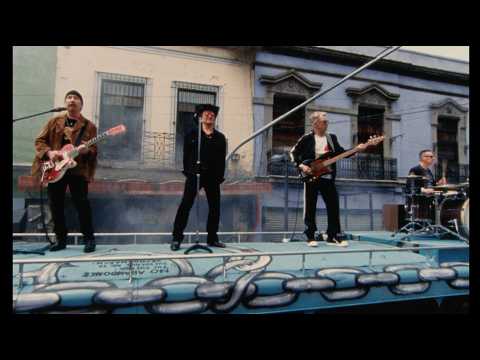
  • The bilingual chorus, "La calle, calle de los sueños" ("The street, street of dreams"), grounds the track in Mexico City while giving its message a universal appeal. The phrase also appears on the destination board of the graffiti-covered school bus that takes center stage in the music video.
  • U2 wrote the track in partnership with the Street Child World Cup, an international soccer tournament and advocacy campaign for street-connected children across the globe. This collaboration mirrors the song's core themes of dignity, inclusion, and opportunity.
  • Jacknife Lee produced the track and also contributed keyboards, additional guitar, programming, and backing vocals. Lee is one of U2's closest collaborators, having first worked on How to Dismantle an Atomic Bomb as an additional producer and keyboardist before taking on a central production role for Songs of Experience. He's also remixed several U2 songs over the years, including "Vertigo" and "Bullet The Blue Sky."
  • U2 filmed the music video over several days in Mexico City during May 2026. The band premiered "Street of Dreams" on May 12 during a public performance in Plaza de Santo Domingo, playing atop a custom-painted school bus before over 1,000 invited fans who had registered through U2.com. Mexico City graffiti artist Chavis Mármol decorated the bus with chains intertwined with roses and thorns, creating a visual metaphor for hope emerging from hardship.
  • Directed by Cliqua, a directing duo known for their frequent collaborations with The Weeknd, the video follows the band performing on and inside a vividly painted bus as it winds through the city streets pursued by cheering fans. Production hit a brief snag when a thunderstorm knocked out the generators during the Plaza de Santo Domingo shoot. Rather than calling it a day, the band accepted an invitation from a nearby family to use their apartment balcony. There, the group finished filming and rewarded their impromptu audience with an acoustic performance.

    Filming wrapped over the following days at the historic Salón Los Angeles dance hall and in the Mirador de Juchitepec region.

    Throughout the video, the brightly painted bus serves as a centerpiece, carrying the song's message directly through the streets that inspired it.

Comments

Be the first to comment...

Editor's Picks

Chris Squire of Yes

Chris Squire of YesSongwriter Interviews

One of the most dynamic bass player/songwriters of his time, Chris is the only member of Yes who has been with the band since they formed in 1968.

Linda Perry

Linda PerrySongwriter Interviews

Songwriting Hall of Famer Linda Perry talks about her songs "What's Up" and "Beautiful," her songwriting process, and her move into film music.

Billy Joe Shaver

Billy Joe ShaverSongwriter Interviews

The outlaw country icon talks about the spiritual element of his songwriting and his Bob Dylan mention.

Butch Vig

Butch VigSongwriter Interviews

The Garbage drummer/songwriter produced the Nirvana album Nevermind, and Smashing Pumpkins' Gish and Siamese Dream.

Joe Ely

Joe ElySongwriter Interviews

The renown Texas songwriter has been at it for 40 years, with tales to tell about The Flatlanders and The Clash - that's Joe's Tex-Mex on "Should I Stay or Should I Go?"

Second Wind Songs

Second Wind SongsSong Writing

Some songs get a second life when they find a new audience through a movie, commercial, TV show, or even the Internet.