O Sole Mio

Album: various (1898)
Play Video

Songfacts®:

  • The words "o sole mio" mean "my sun" or "my sunshine" in the Neapolitan language, which is a used in parts of Italy, the nation where this song was written.

    "O Sole Mio" may in fact be the most famous Neapolitan-language song of all time. Over 150 after the song was written, artists in Europe, the United States, and all over the world continue to perform and record it.
  • This is a love song. It starts talking about a sunny day and quickly turns to describing the sun beaming from a lover's face and then about watching her up in her window.

    The song closes with the singer weirdly declaring that he would stay below his love's window after the sun goes down. What exactly that means is unclear to our modern sensibilities, but almost certainly was not nearly as creepy as it sounds today.
  • Giovanni Capurro, one of Italy's most celebrated poets, wrote the lyrics. He presented it to Eduardo di Capua, who brought the music to the words. For almost 75 years it went unknown that Capua had based his song off of a melody he purchased from Alfredo Mazzucchi sometime in 1897. Capua build upon that melody significantly, but it was not originally his.

    Eventually, Mazzucchi's role was uncovered and his daughter fought for him to get credit. The matter wasn't settled until October of 2002, when the Italian court decided to legally give Mazzucchi credit.
  • Charles W. Harrison did the first English translation of the song in 1915.
  • This song has been recorded hundreds of times, with renditions by Vic Damone, Enrico Caruso, Mario Lanza, Bing Crosby, and many others.

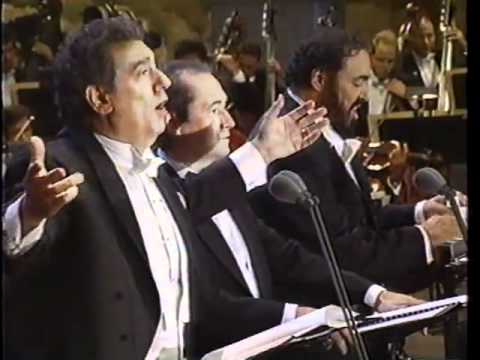
    In 1980, Luciano Pavarotti's performance of "O Sole Mio" won him a Grammy Award for Best Classical Vocal Performance.
  • Elvis Presley's "It's Now or Never" is based on this song.

Comments

Be the first to comment...

Editor's Picks

Who's Johnny, And Why Does He Show Up In So Many Songs

Who's Johnny, And Why Does He Show Up In So Many SongsSong Writing

For songwriters, Johnny represents the American man. He has been angry, cool, magic, a rebel and, of course, marching home.

Justin Hayward of The Moody Blues

Justin Hayward of The Moody BluesSongwriter Interviews

Justin wrote the classic "Nights In White Satin," but his fondest musical memories are from a different decade.

Soul Train Stories with Stephen McMillian

Soul Train Stories with Stephen McMillianSong Writing

A Soul Train dancer takes us through a day on the show, and explains what you had to do to get camera time.
Dick Wagner (Alice Cooper/Lou Reed)

Dick Wagner (Alice Cooper/Lou Reed)Songwriter Interviews

The co-writer/guitarist on many Alice Cooper hits, Dick was also Lou Reed's axeman on the Rock n' Roll Animal album.

Paul Stanley of Kiss, Soul Station

Paul Stanley of Kiss, Soul StationSongwriter Interviews

Paul Stanley on his soul music project, the Kiss songs with the biggest soul influence, and the non-make-up era of the band.
Bill Withers

Bill WithersSongwriter Interviews

Soul music legend Bill Withers on how life experience and the company you keep leads to classic songs like "Lean On Me."