Album: West Side Story (1957)
Play Video

Songfacts®:

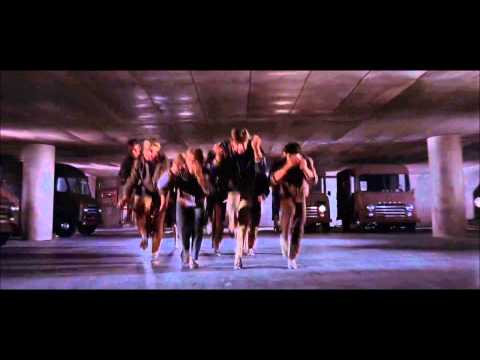
  • Written by Stephen Sondheim (lyrics) and Leonard Bernstein (music), this song first came to life in the 1957 stage production of West Side Story when Riff (Michael Callan), the leader of the Jets, urges his guys to stay cool ahead of their meeting with their rival street gang, The Sharks.

    In the 1961 film adaptation, the musical number is moved to a scene after the deadly rumble that kills Riff, with Ice (Tucker Smith), the new Jets leader, singing it to calm their nerves after the bout of violence.
  • In Steven Spielberg's 2021 remake of West Side Story, "Cool" takes place before the rumble and finds Tony (Ansel Elgort) - the young protagonist who is in love with the rival gang leader's sister, Maria - trying to talk Riff out of bringing a gun to the fight.

    "We wanted the gun to play an important part in the story and to be a character," Spielberg told Entertainment Weekly. "In the play, of course, 'Cool' is what they do when they cool off. After the rumble, they're needing to bleed off that excess energy and rage, and 'Cool' is an expression of that."

    "We very much wanted that to be our own," he continued. "It was important that 'Cool' for us come with Tony's attempt to stop Riff from bringing a gun to a fistfight. We thought it was important to repurpose 'Cool' not as a way of cooling off, but as a way of staying cool. 'Do not bring that gun to the fight.'"
  • This was the first song that Sondheim and Bernstein wrote together. In the film's 2012 commentary track, the lyricist explained that Bernstein likely wrote the opening line ("Boy, boy, crazy boy"), because Sondheim had an aversion to melisma (vocal runs).
  • The chill song title was an exception to the rule when it came to writing street slang for the production. According to Stephen Sondheim, West Side Story playwright Arthur Laurents didn't want to use actual gang lingo because he knew it would sound dated by the time the musical premiered a couple years later. Instead, he invented his own form of street talk mixed with a few actual slang words.

    "One of the very few pieces of actual street argot we used was the word 'cool,' which still meant the same thing back in 1957 that it had meant to jazz musicians earlier," Sondheim told NPR's Fresh Air in 2010. "And that's a word that has stayed, pretty much in the language meaning approximately the same thing, although it changes a little bit. Now of course it just means OK, but 'cool' meant 'better than OK' before, so we kept that."
  • In the 2015 Castle episode "Cool Boys," Castle (Nathan Fillion) and Detective Slaughter (Adam Baldwin) sing this to distract the criminals who are about to shoot them.
  • This was used on Glee in the 2011 episode "Asian F." Mike Chang (Harry Shum Jr.) sings it in his audition to play Riff in a high school production of West Side Story.

Comments

Be the first to comment...

Editor's Picks

Harry Wayne Casey of KC and The Sunshine Band

Harry Wayne Casey of KC and The Sunshine BandSongwriter Interviews

Harry Wayne Casey tells the stories behind KC and The Sunshine Band hits like "Get Down Tonight," "That's The Way (I Like It)," and "Give It Up."

Peter Lord

Peter LordSongwriter Interviews

You may not recognize his name, but you will certainly recognize Peter Lord's songs. He wrote the bevy of hits from Paula Abdul's second album, Spellbound.
Scott Stapp

Scott StappSongwriter Interviews

The Creed lead singer reveals the "ego and self-fulfillment" he now sees in one of the band's biggest hits.
Sub Pop Founder Bruce Pavitt On How To Create A Music Scene

Sub Pop Founder Bruce Pavitt On How To Create A Music SceneSong Writing

With $50 and a glue stick, Bruce Pavitt created Sub Pop, a fanzine-turned-label that gave the world Nirvana and grunge. He explains how motivated individuals can shift culture.

Sam Hollander

Sam HollanderSongwriter Interviews

The hitmaking songwriter/producer Sam Hollander with stories about songs for Weezer, Panic! At The Disco, Train, Pentatonix, and Fitz And The Tantrums.

Yoko Ono

Yoko OnoSongwriter Interviews

At 80 years old, Yoko has 10 #1 Dance hits. She discusses some of her songs and explains what inspired John Lennon's return to music in 1980.